|
MiG-21 F-13
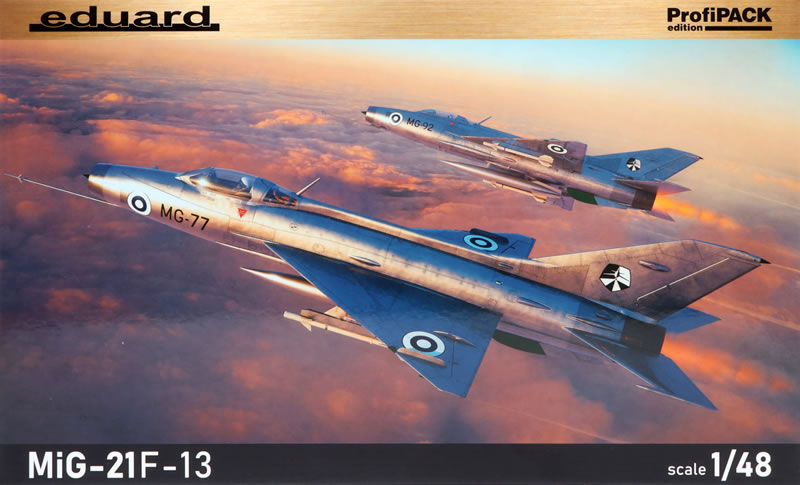
Eduard, 1/48 scale
S
u m m a r y |
| Catalogue Number: |
Eduard Kit No.82191 - MiG-21 F-13 |
| Scale: |
1/48 |
| Contents and Media: |
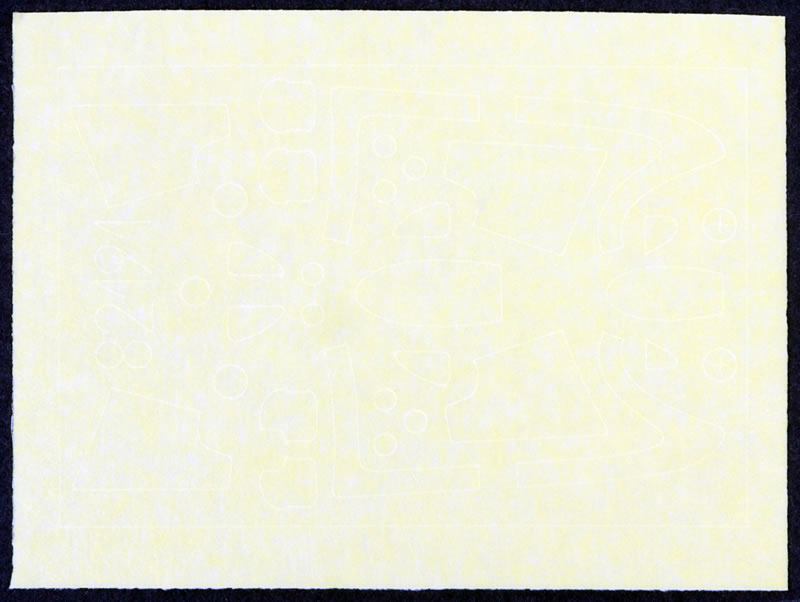
203 grey plastic parts (eight unused), 20 clear parts (four unused), a colour photo-etched fret, self-adhesive die-cut masks and markings for six aircraft.. |
| Price: |
USD$84.95 plus shipping,
available online from Eduard
GBP£47.50 EU Price (GBP£39.58 Export Price) plus shipping available online from Hannants |
| Review Type: |
FirstLook |
| Advantages: |
Superb detail; crisply recessed panel lines and rivets; appropriate use of multimedia; plenty of ordnance: useful options. |
| Disadvantages: |
|
| Conclusion: |
Eduard’s 1/48 scale MiG-21 F-13 is an outstanding new-tool entry to their Fishbed family.
Refined surface textures, smart engineering and impressive detail combine to deliver a kit that is properly world class.
The colour photo-etch and nice selection of ordnance add further value, while the restrained parts count will keep construction approachable.
This is a superb modern rendering of the early MiG-21, and an exciting indication of what Eduard might have in store for the rest of the series. |
Reviewed by Brett Green

The MiG-21 F-13 marked a pivotal moment in Soviet fighter design, encapsulating Mikoyan-Gurevich’s quest to combine high performance with the emerging tactics of guided-missile combat. In many ways, the lean and purposeful F-13 was the first true production MiG-21, setting the pattern for the thousands of Fishbeds that would follow.
Development of the MiG-21 lineage began in the early 1950s when Soviet engineers explored the potential of delta-wing aerodynamics and lightweight airframes. Early prototypes such as the Ye-2 and Ye-4 pointed the way, but it was the Ye-5 and Ye-6 series that delivered the defining combination: a tailless 57-degree delta, a simple circular nose intake and a minimalist, missile-centric weapons fit.
The F-13, introduced in 1959, emerged as the first standardised operational variant. Its designation reflected its intended armament - F for “Forsirovannyy” (uprated engine) and 13 for the new K-13 (NATO: AA-2 Atoll) infrared-guided missile.
To save weight and improve performance, the airframe was stripped to essentials. Armament was limited to a single NR-30 cannon with 30 rounds and two K-13 missiles. In return, the aircraft offered an outstanding climb rate, high-altitude capability and excellent acceleration in the transonic regime. Powered by the R-11F-300 turbojet, the F-13 gave its pilots raw speed and simplicity, although at the cost of endurance and low-speed handling.
Operationally, the MiG-21 F-13 saw extensive use within the Soviet Air Forces from the early 1960s, but its reputation was cemented by its export record. Warsaw Pact and non-aligned nations alike adopted the type, including East Germany, Poland, Czechoslovakia, China (which licence-built it as the J-7), Egypt and North Vietnam. In combat, the F-13 achieved its most notable successes over Southeast Asia. North Vietnamese pilots exploited its agility and small radar signature to execute slashing, hit-and-run attacks against American strike packages. Although the primitive radar and limited weapon load were constraints, the F-13 demonstrated that a lightweight, high-energy fighter could remain a dangerous opponent in skilled hands.
By the mid-1960s, more capable Fishbed variants began to eclipse the F-13, but its influence endured. The MiG-21 F-13 established the aerodynamic, operational and export template for one of the most widely produced jet fighters in history - an elegant, needle-nosed reminder of the era when speed and simplicity defined air combat.
MiG-21 F-13 in 1/48 scale
The only previous 1/48 scale MiG-21 F-13 that I can recall is Trumpeter’s offering, released in 2012.
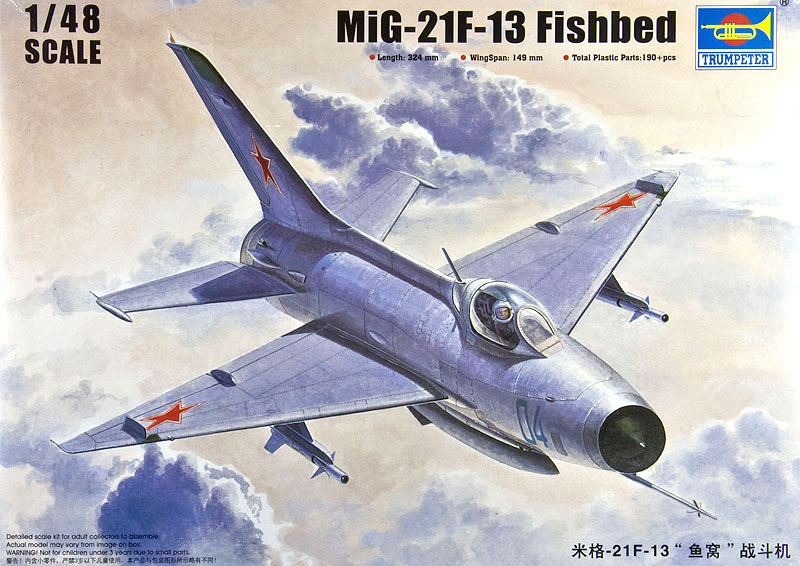
This kit features recessed surface textures and a modest parts count. Shape issues persist around the nose and spine, and the cockpit is fairly basic, but fit is good according to those who have built it. The included weapons and decals are usable.
In short, a typical Trumpeter Curate’s Egg – it’s good in parts.
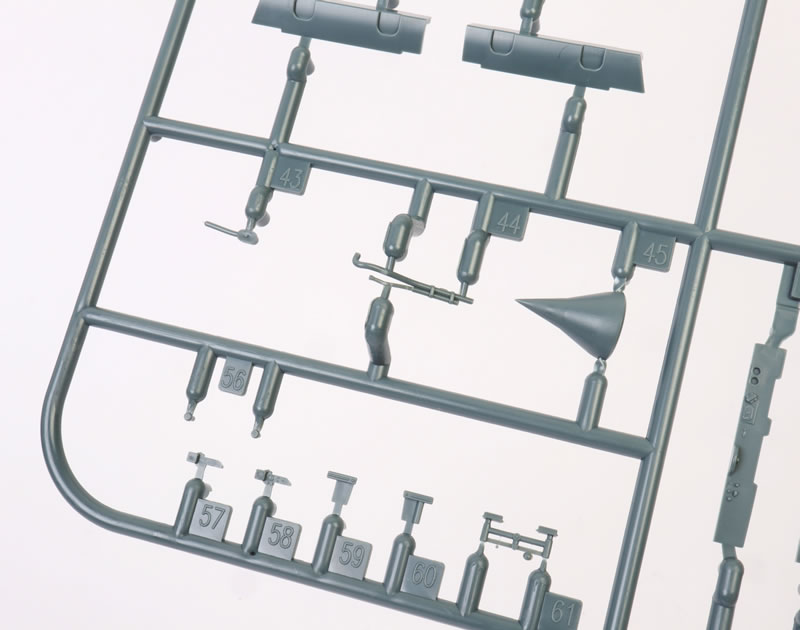
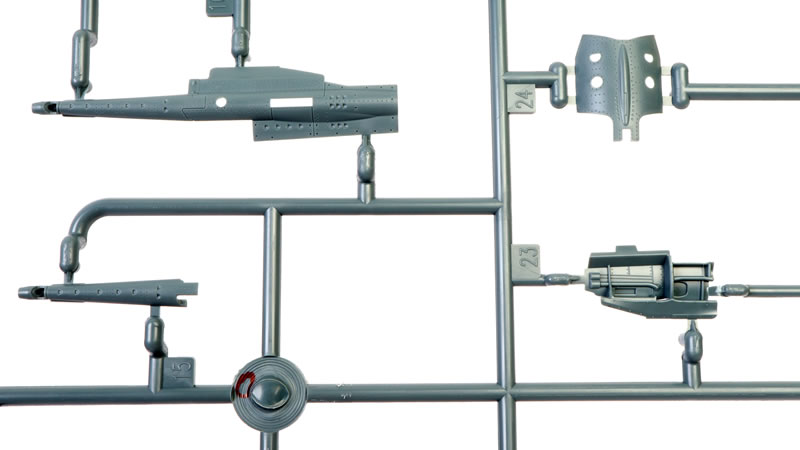
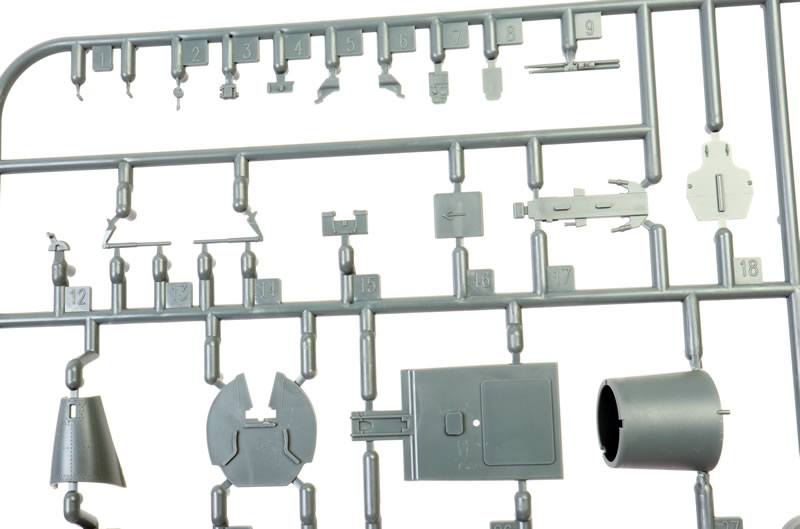
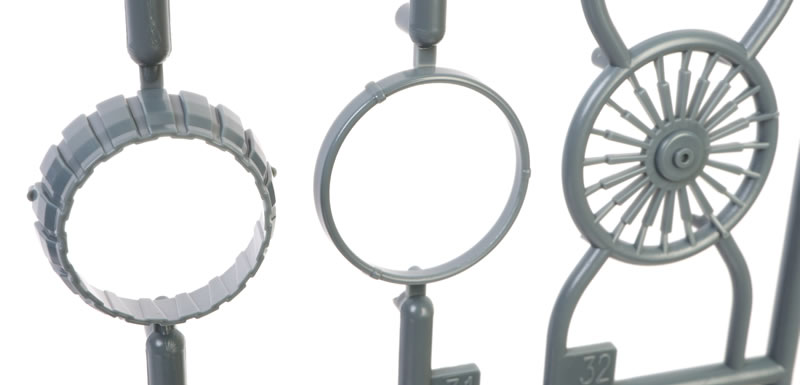
Eduard’s all-new 1/48 scale MiG-21 F-13 comprises 203 grey plastic parts (eight unused), 20 clear parts (four unused), a colour photo-etched fret, self-adhesive die-cut masks and markings for six aircraft.
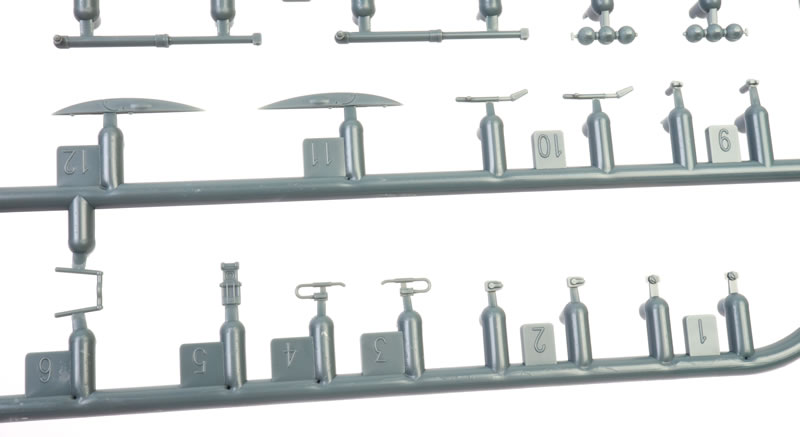
Once you subtract the unused pieces and the 66 items on the ordnance sprue, the unarmed airframe boils down to a very reasonable 129 grey plastic parts.
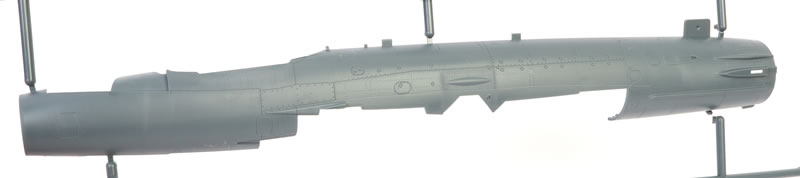
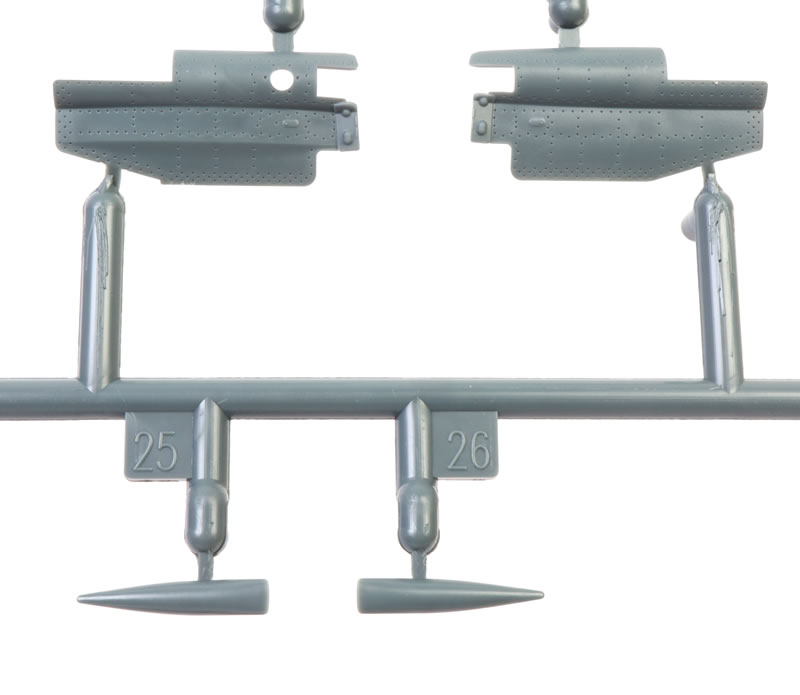
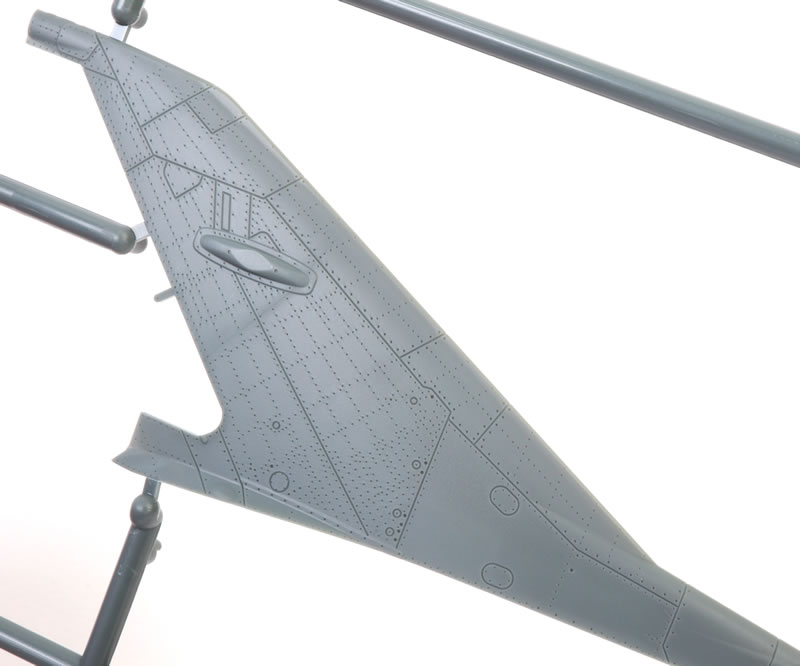
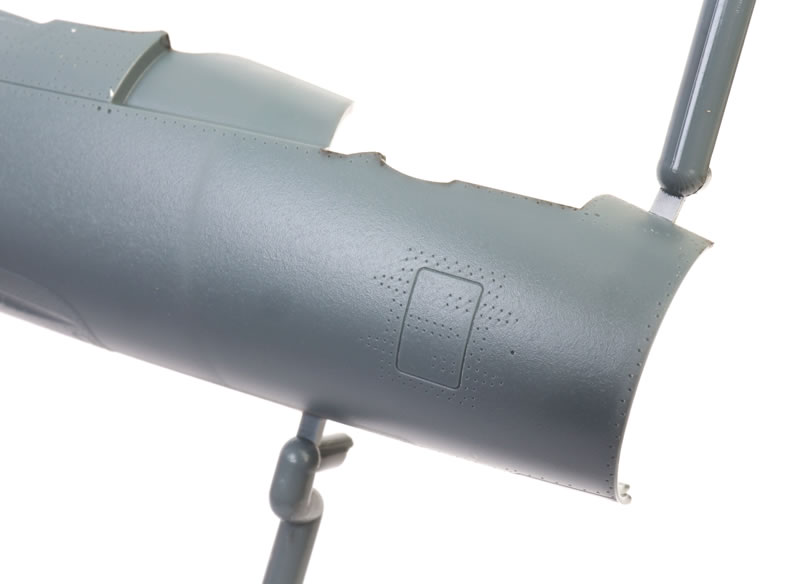
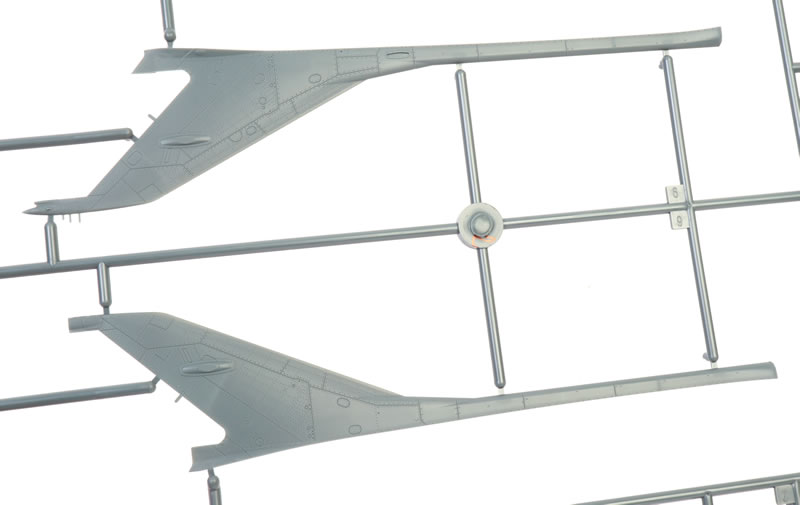
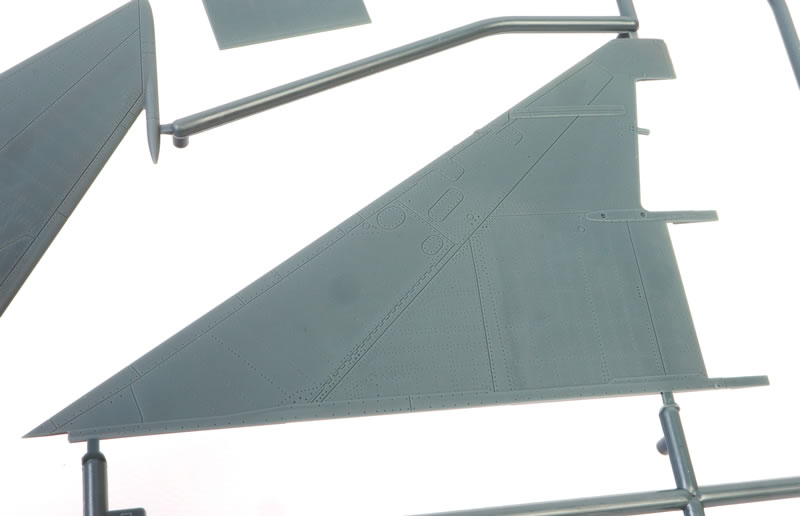
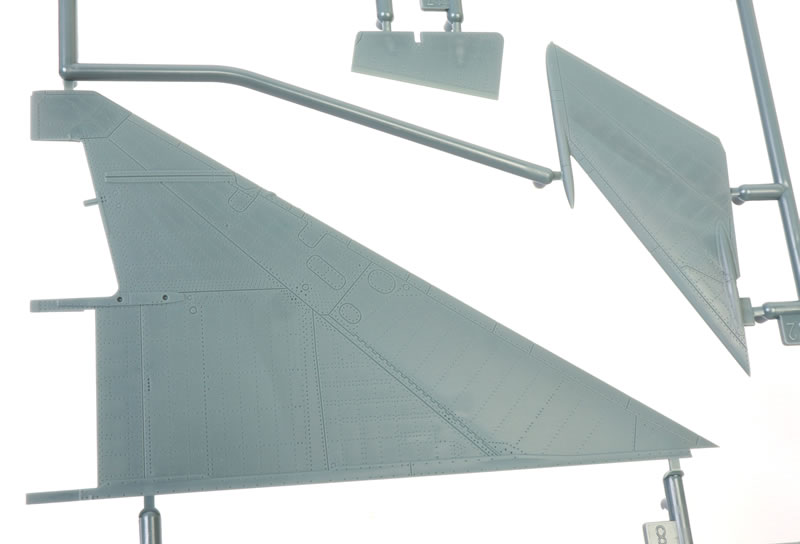
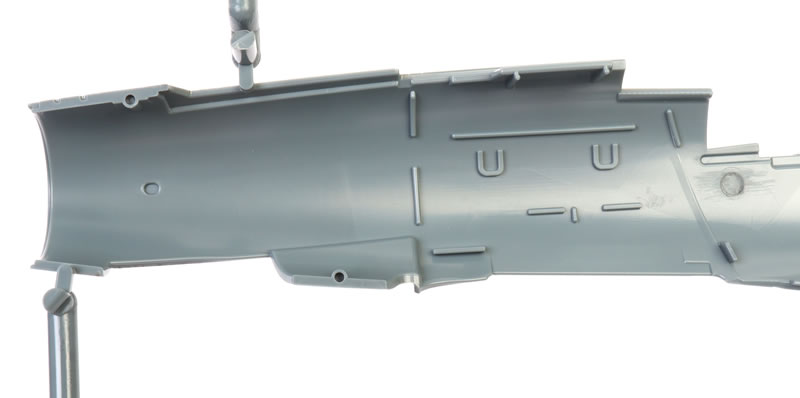
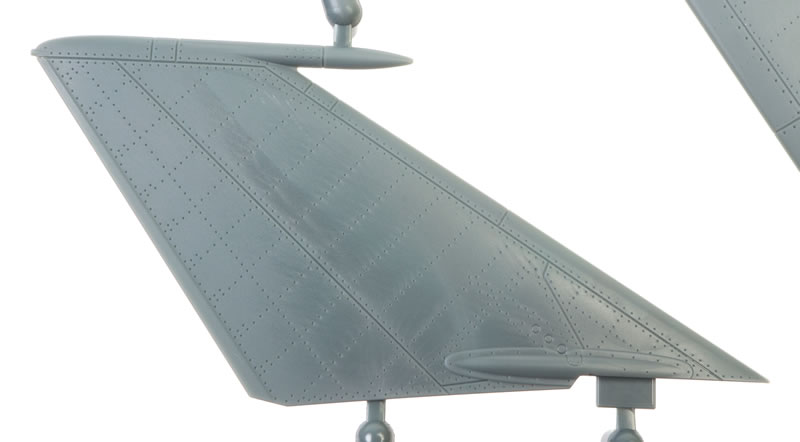
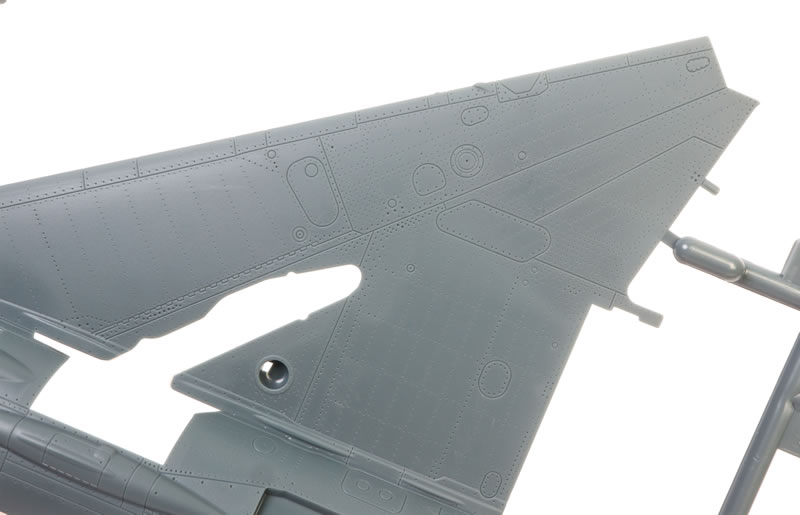
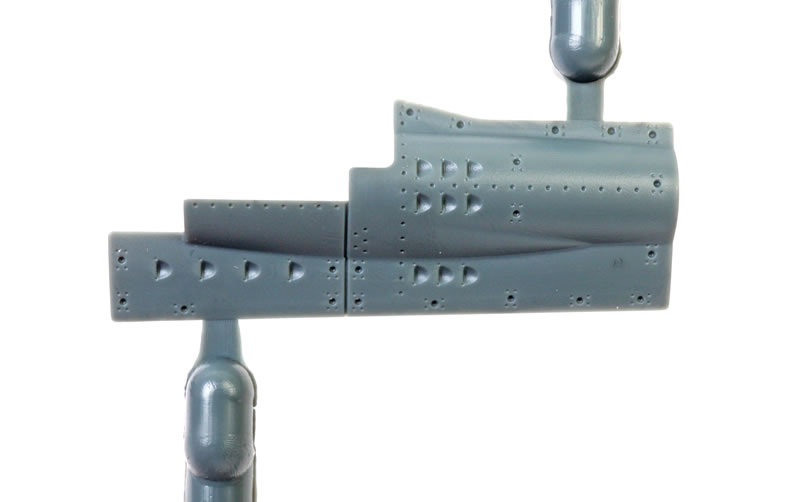
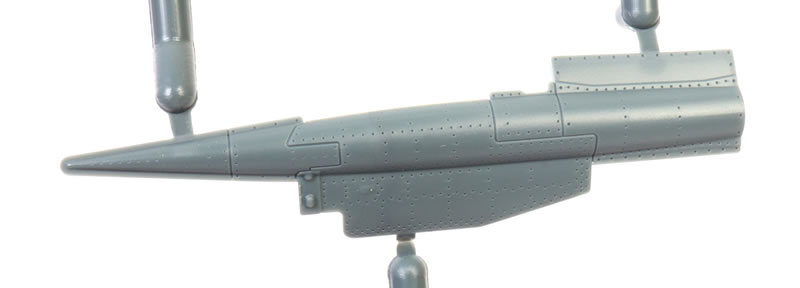
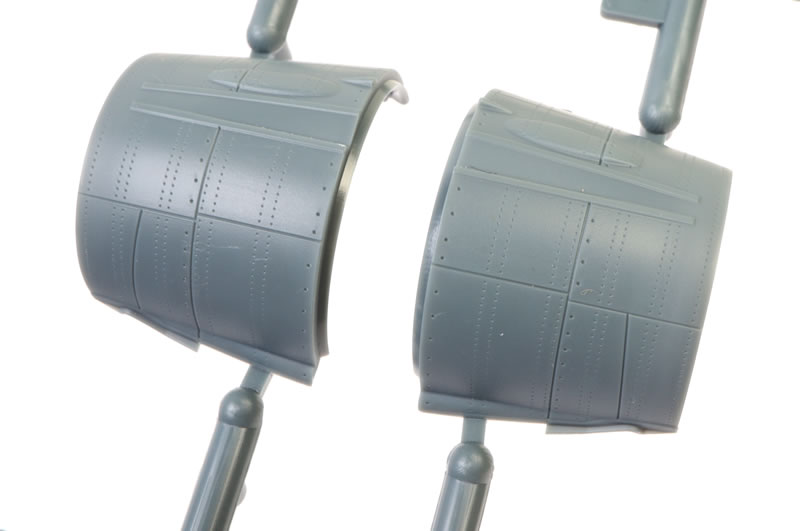
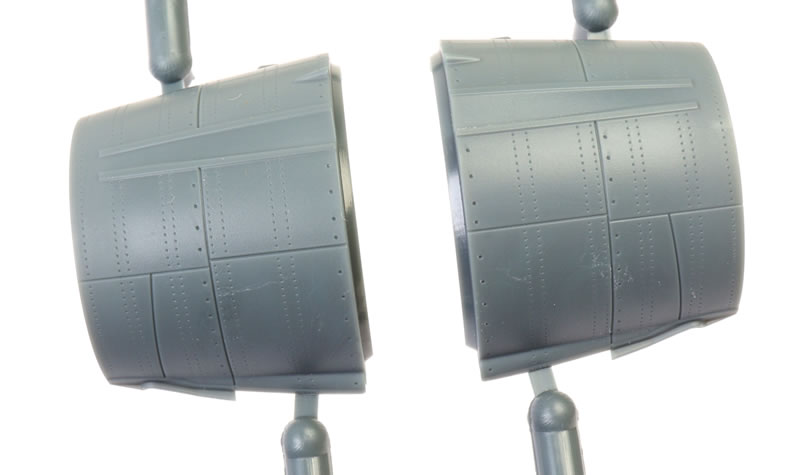
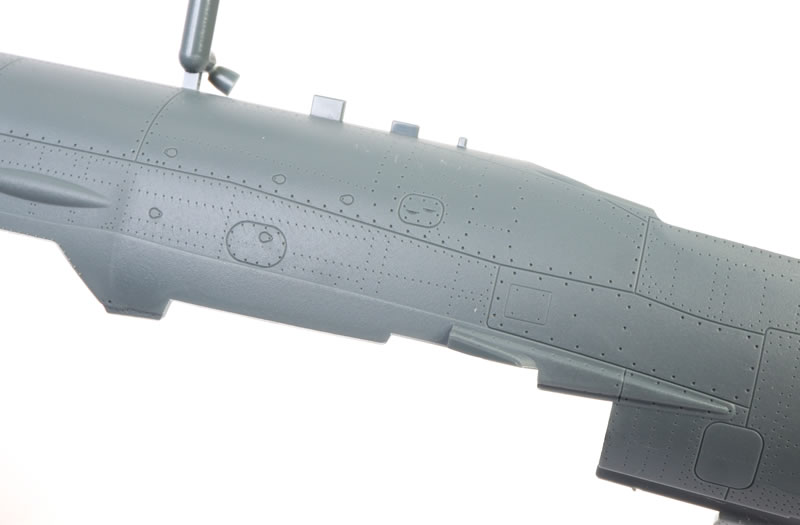
Surface textures are exquisite. Panel lines are crisp and consistently recessed, complemented by beautifully subtle rivet lines. The finish is restrained, refined and very much world class.
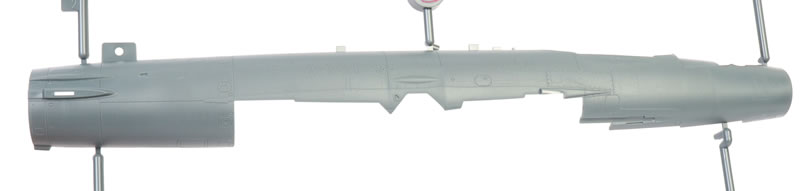
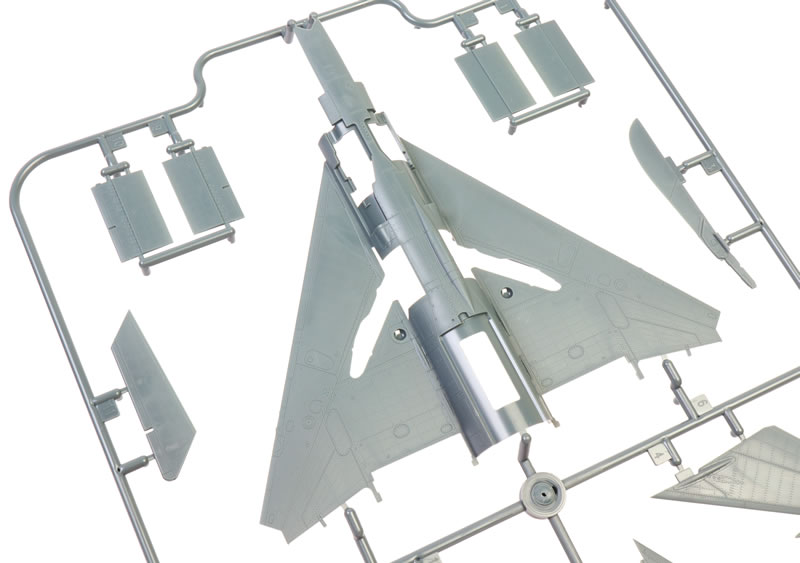
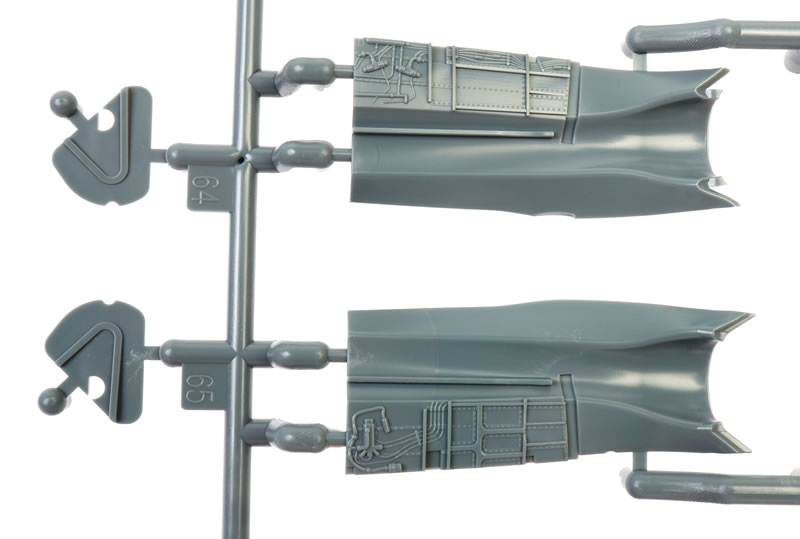
Parts breakdown is straightforward and will feel familiar to anyone who has built Eduard’s earlier 1/48 scale MiG-21s. The fuselage is provided as full-length left and right halves, the wing features a full-span lower section with separate uppers, and the fin and spine are moulded as a single piece. The rudder is separate.
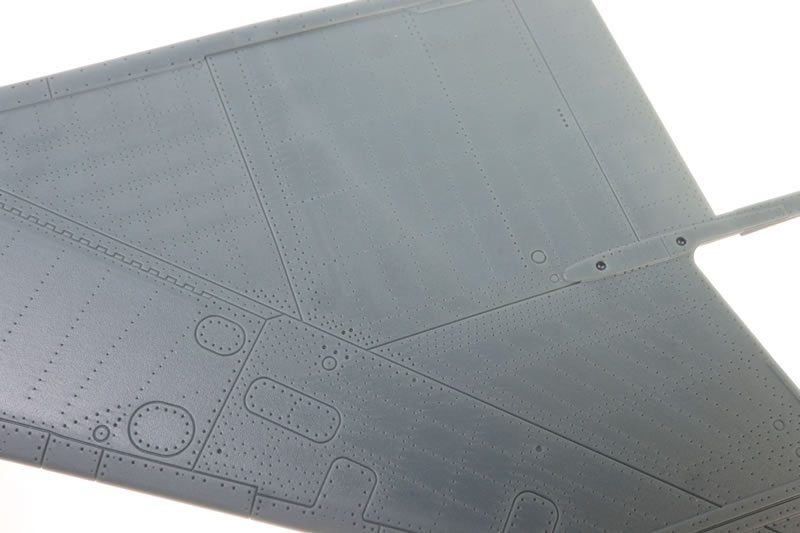
Detail is as good as you’d expect from Eduard.
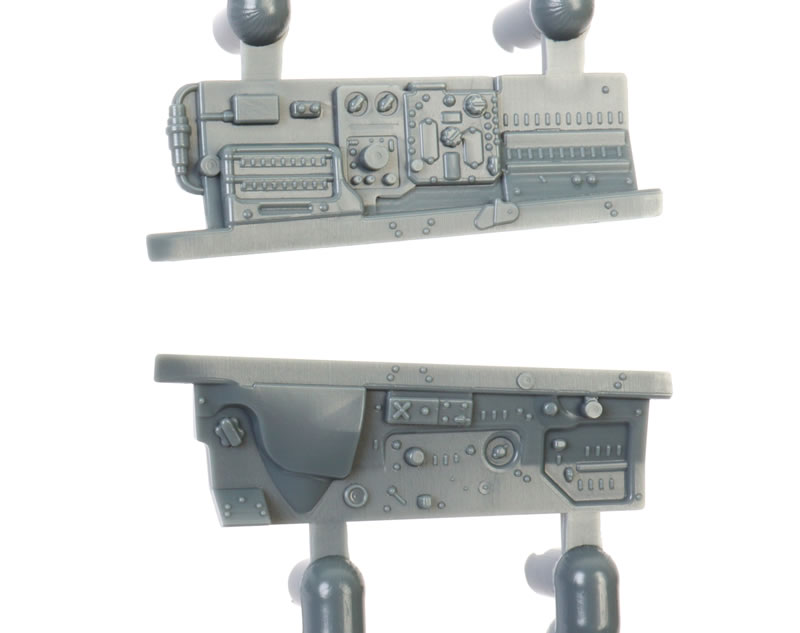
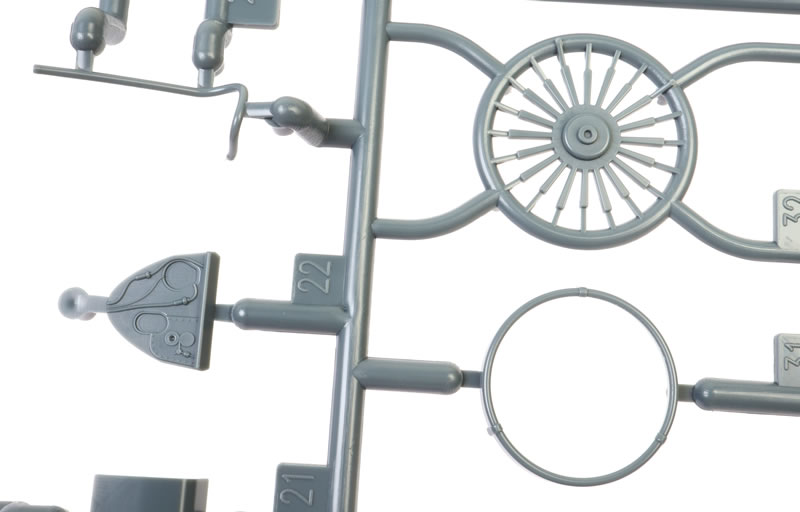
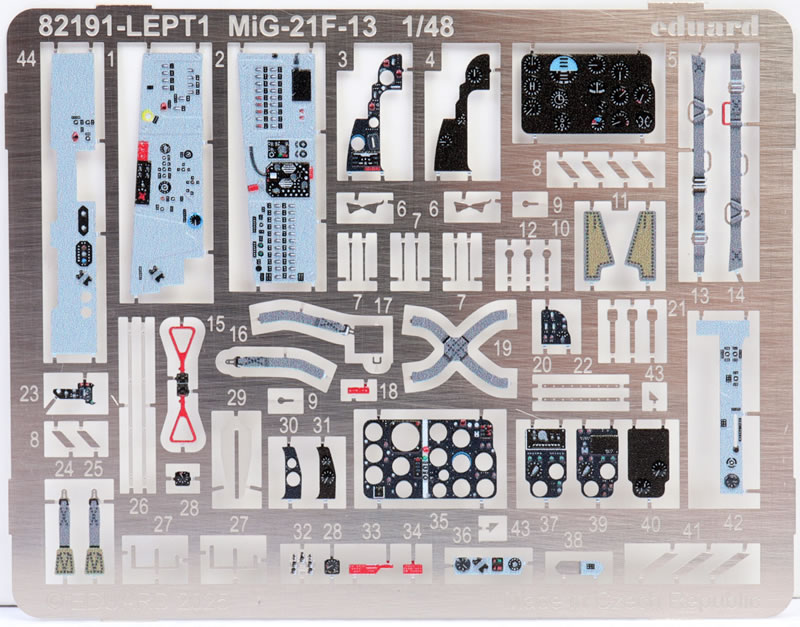
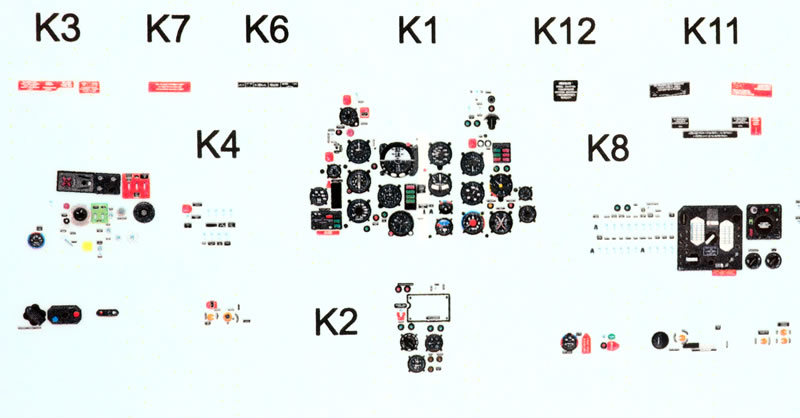
The cockpit receives an instant lift from the colour photo-etched fret, which supplies a layered instrument panel, side consoles and harness straps.
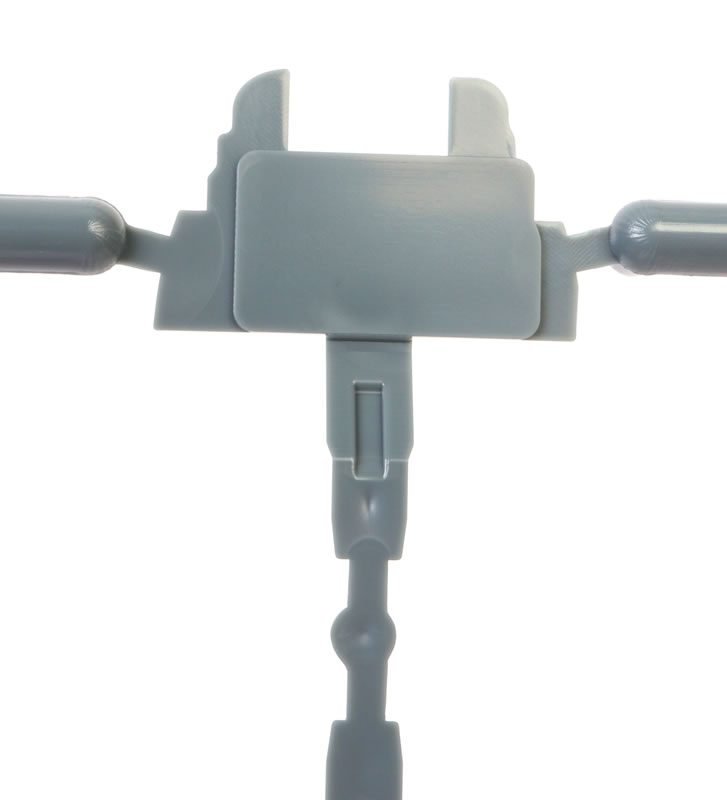
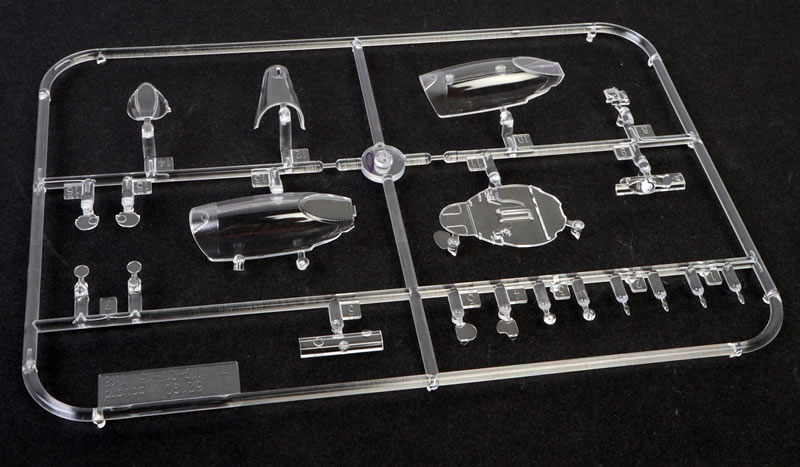
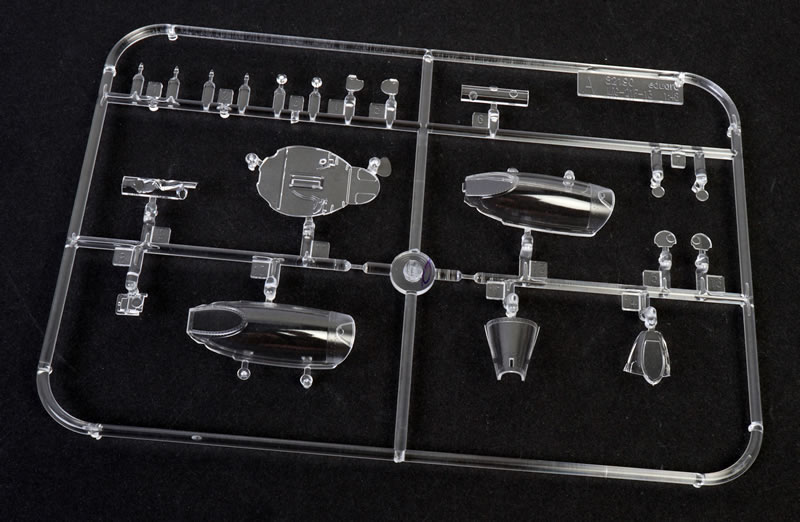
The rear bulkhead is moulded in clear—an elegant piece of engineering that ensures the small quarter windows are transparent, with the surrounding structure moulded in place.
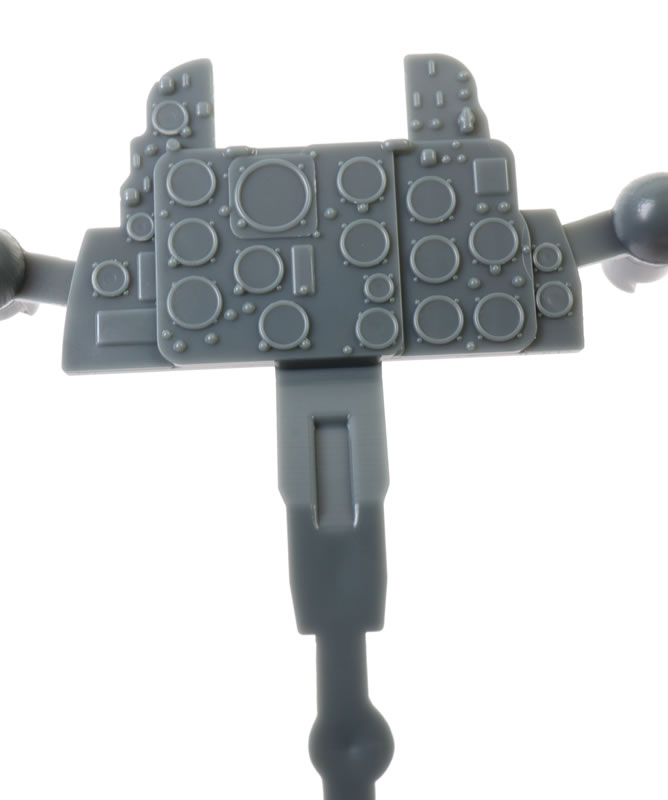
A decal is provided as an alternative overlay for the clear instrument-panel base.
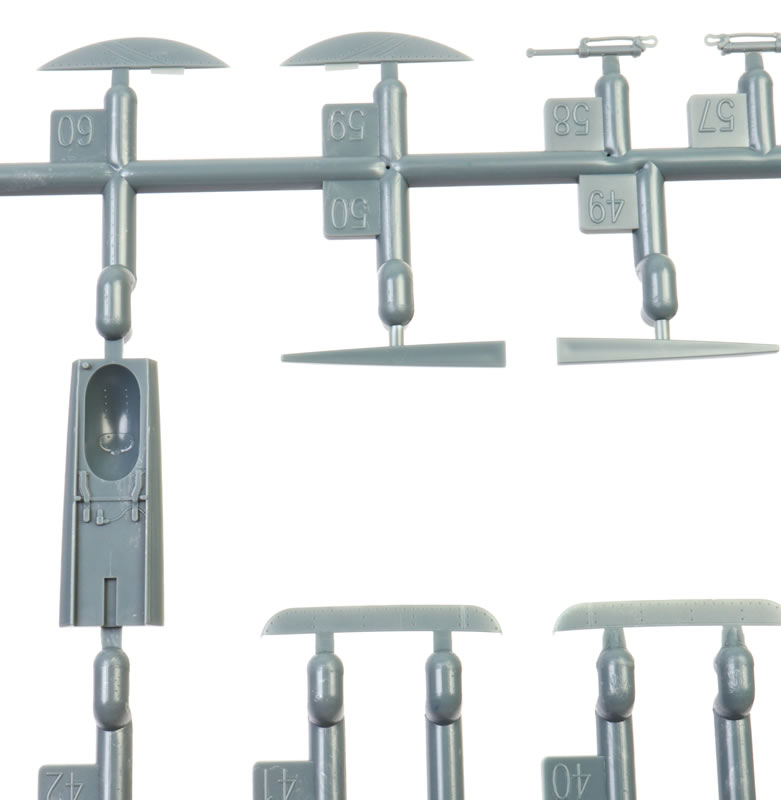
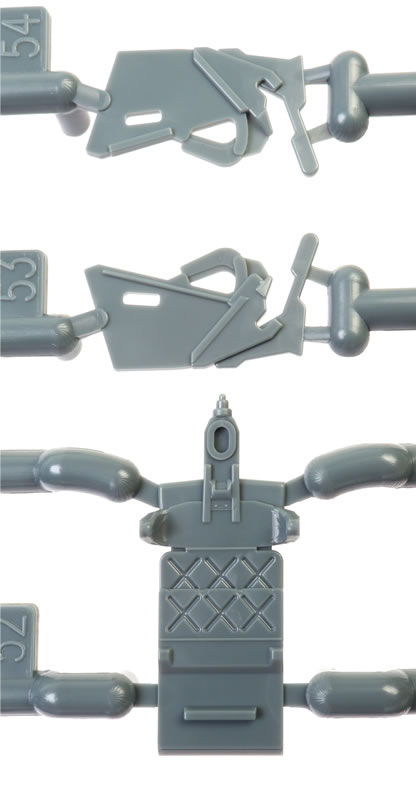
The plastic and photo-etched pilot’s seat will look good with its distinctive quilted backrest.
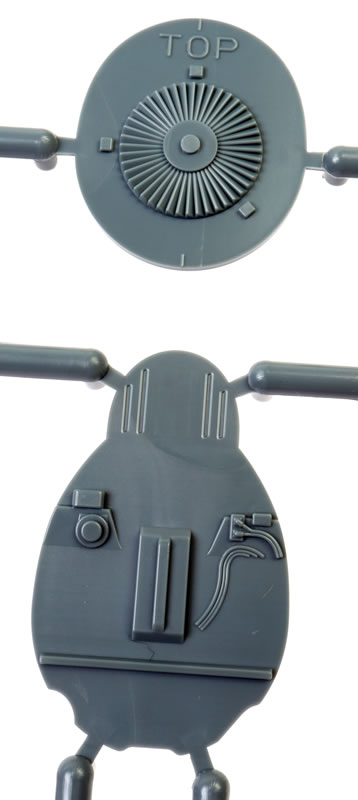
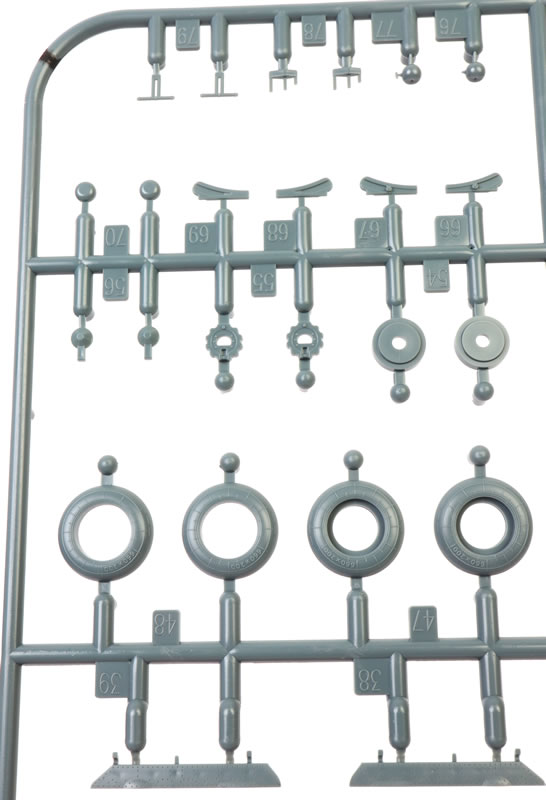
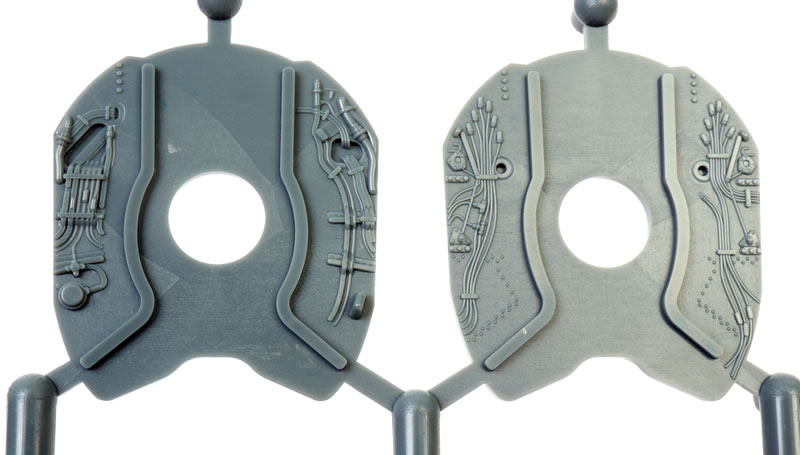
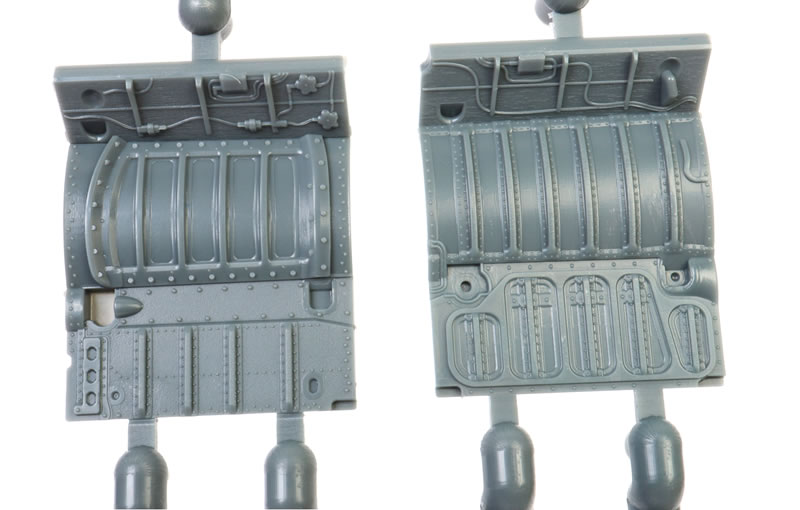
Wheel well and undercarriage detail is equally impressive. Interior areas feature raised hydraulic lines, electrical cabling and structural elements.
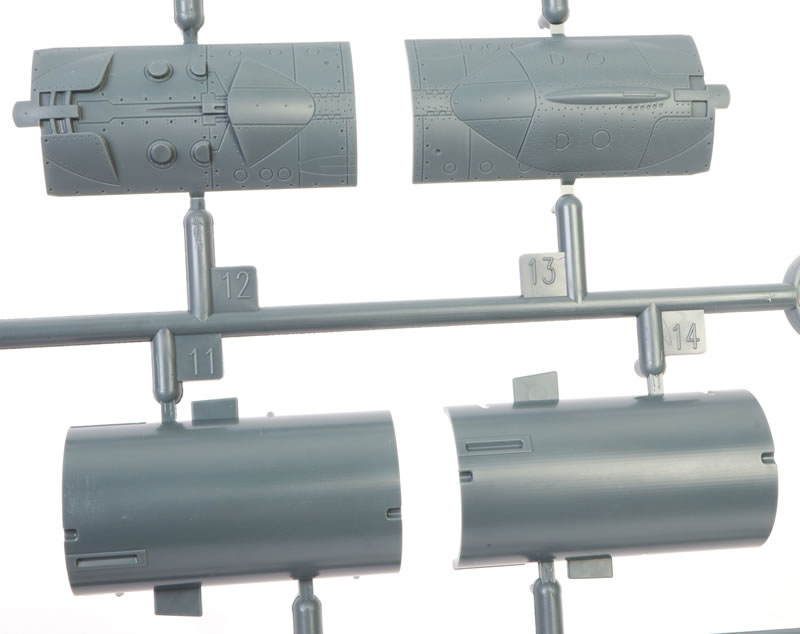
Flaps are separate and may be posed raised or lowered; the airbrake may also be posed open or closed. Options include two styles of wheel hub.
The clear parts are thin, sharp and free from distortion. The windscreen is separate, allowing the canopy to be posed either open or closed.
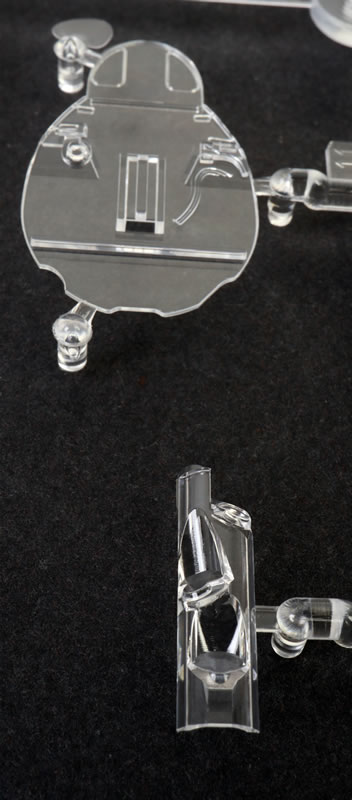
As on the real aircraft, the kit features the MiG-21’s distinctive forward-opening canopy.
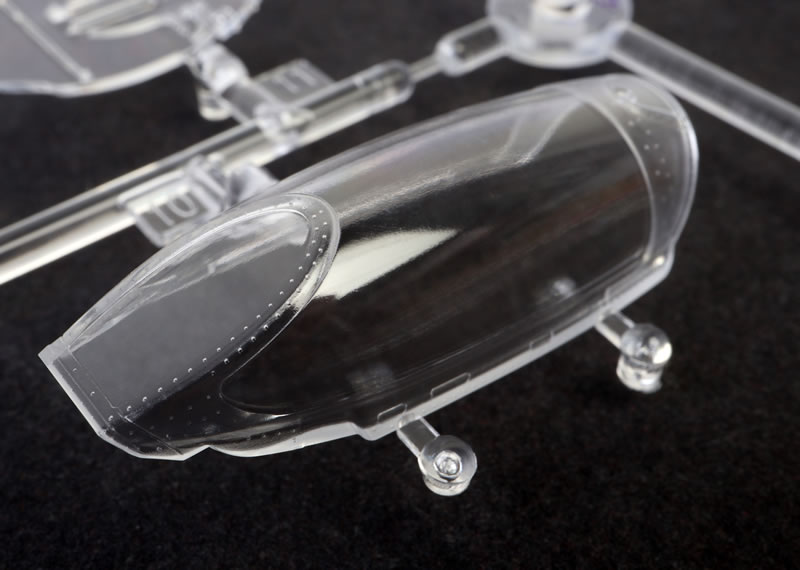
This is a modern, long-run kit with all the expected amenities—positive locating pins, tabs, slots and thoughtful engineering throughout. Self-adhesive masks are provided for the canopy, wheels and the two small cockpit quarter windows.
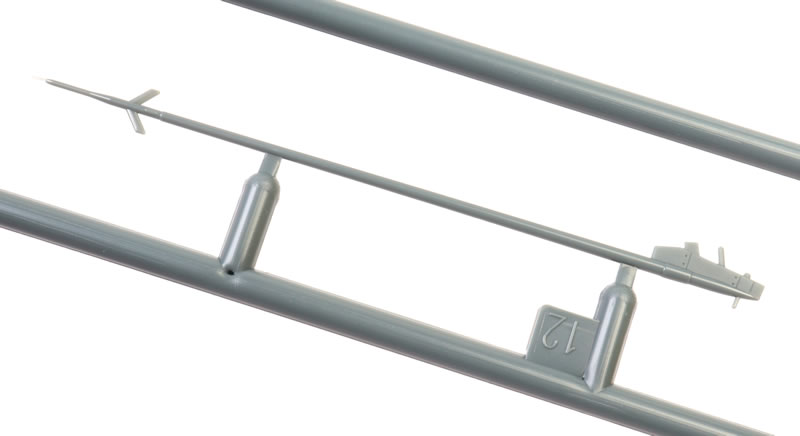
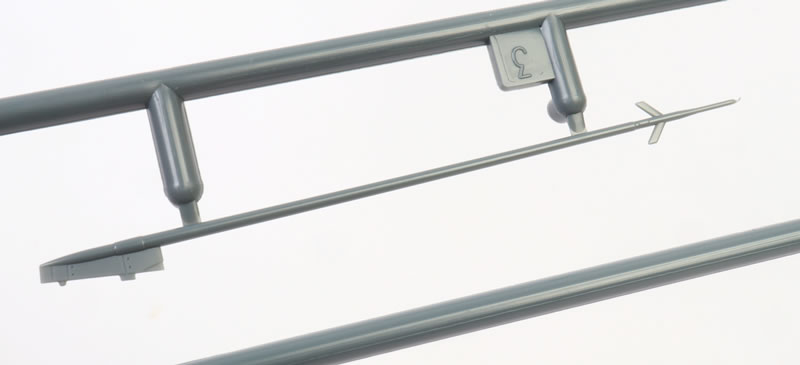
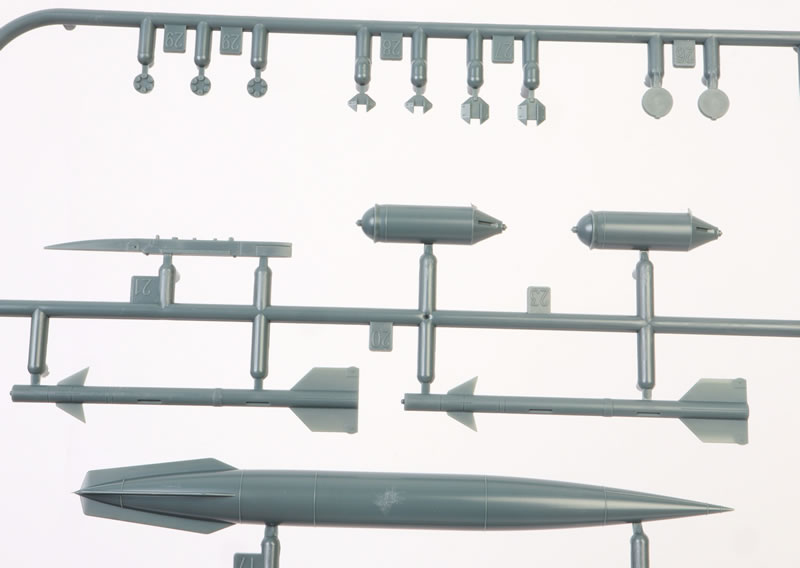
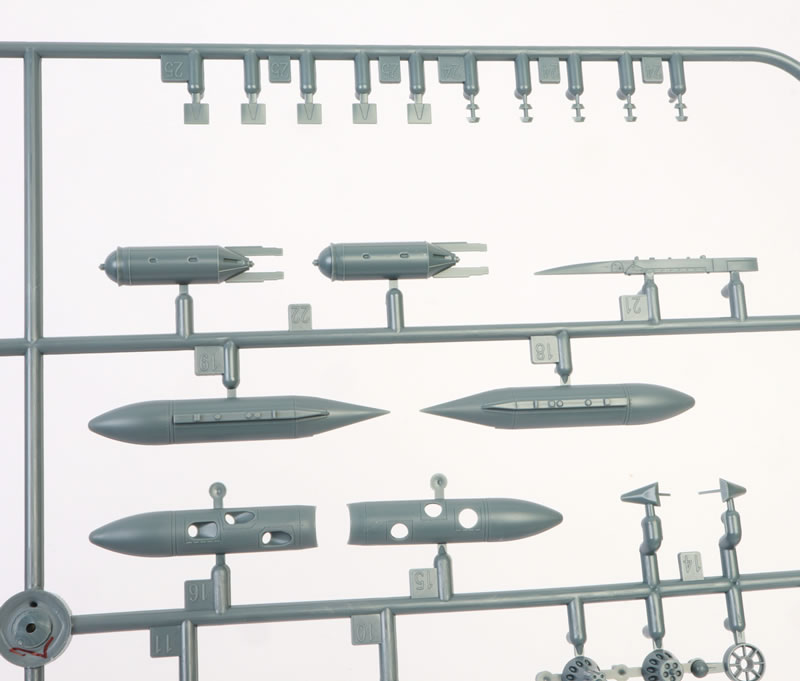
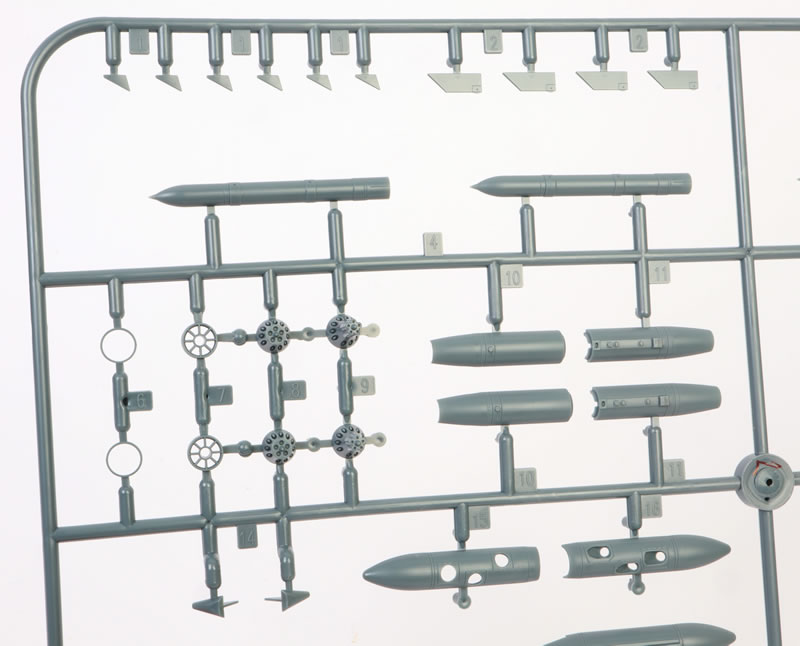
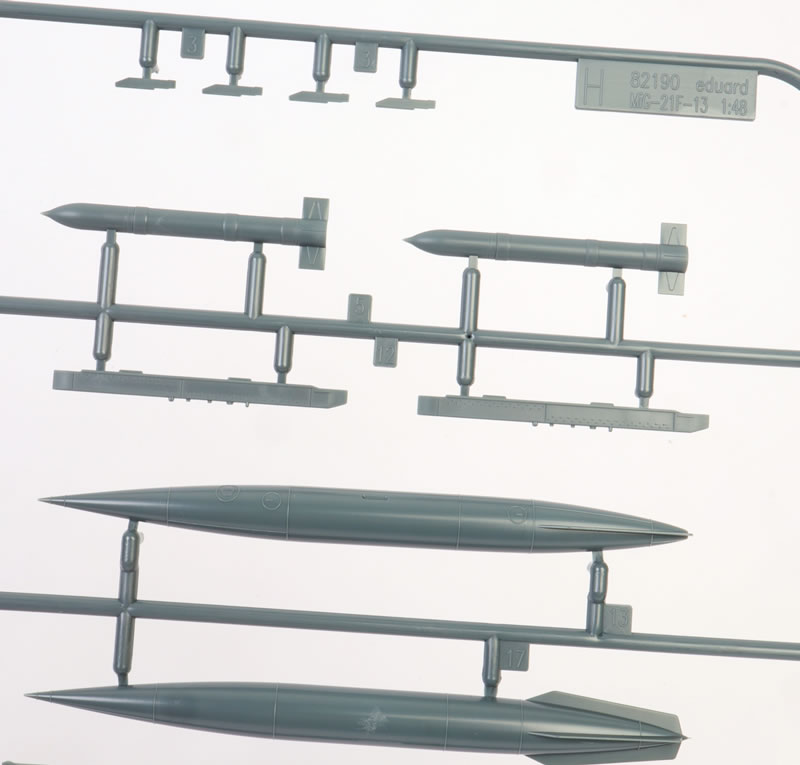
The comprehensive ordnance sprue includes a centreline 490-litre fuel tank, two UB-16 rocket pods, two S-24 rockets, two R-3S missiles and two FAB-250 bombs, plus a selection of pylons.
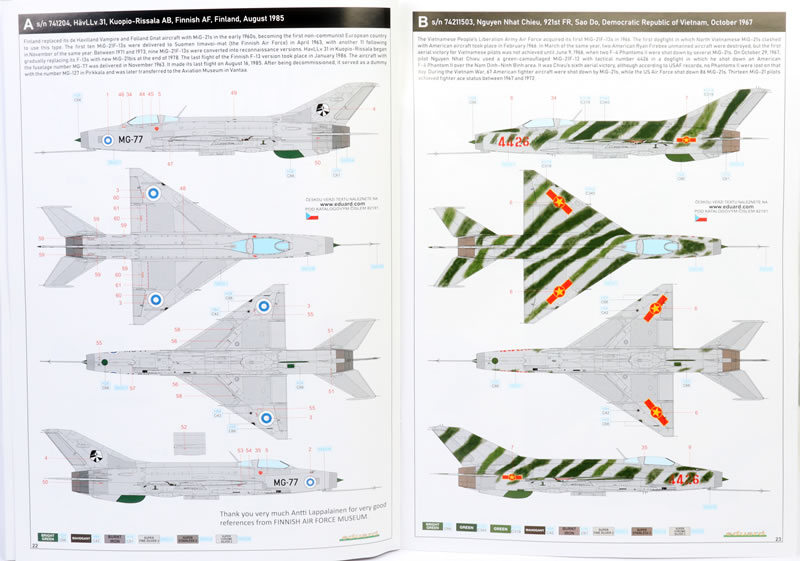
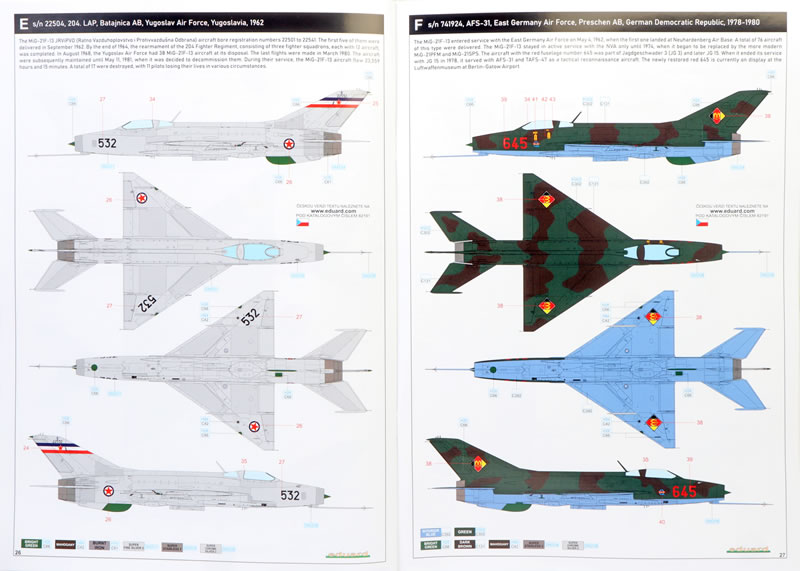
Instructions come in a glossy 32-page booklet, with full-colour marking guides, stencil placement diagrams and weapons-fit options.
Markings
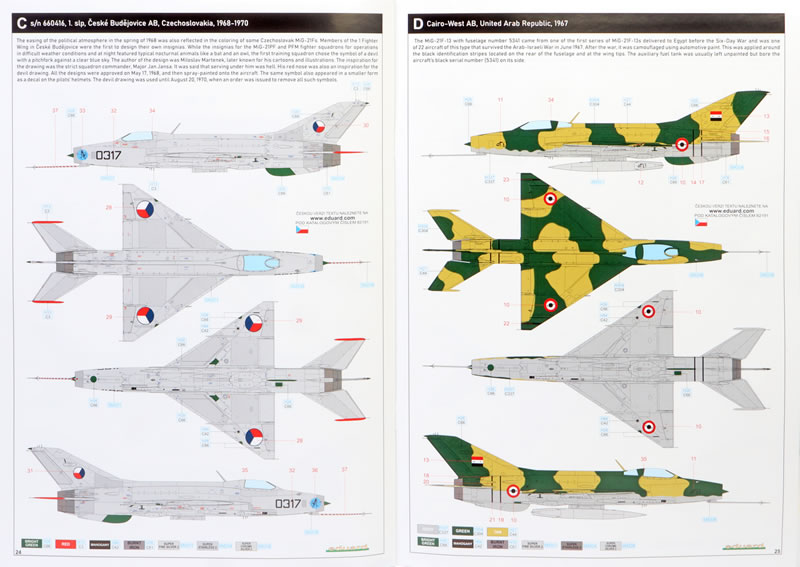
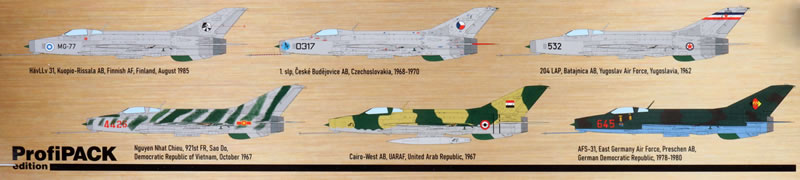
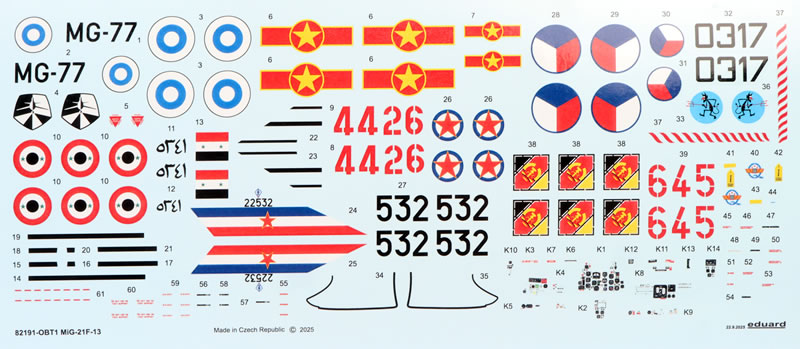
Six varied and colourful marking options for export examples are provided. The main decal sheet is well printed by Eduard.
The decals are glossy and colour saturation looks good.
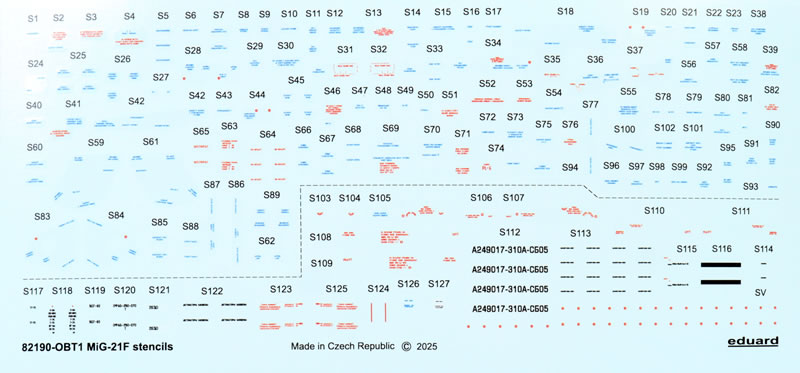
A separate stencil data sheet is also included.
Marking options are:
-
s/n 741204, HavLLv 31, Kuopio-Rissala AB, Finnish AF, Finland, August 1985
-
s/n 74211503, Nguyen Nhat Chieu, 921st FR, Sao Do, Democratic Republic of Vietnam, October 1967
-
s/n 660416, 1. slp, Ceske Budejovice AB, Czechoslovakia, 1968-1970
-
Cairo-West AB, United Arab Republic, 1967
-
s/n 22504, 204. LAP, Batajnica AB, Yugoslav Air Force, Yugoslavia, 1962
-
s/n 741924, AFS-31, East Germany Air Force, Preschen AB, German Democratic Republic, 1978-1980
A separate stencil data sheet is also included.
Eduard’s 1/48 scale MiG-21 F-13 is an outstanding new-tool entry to their Fishbed family.
Refined surface textures, smart engineering and impressive detail combine to deliver a kit that is properly world class.
The colour photo-etch and nice selection of ordnance add further value, while the restrained parts count will keep construction approachable.
This is a superb modern rendering of the early MiG-21, and an exciting indication of what Eduard has in store for the rest of the series.
Thanks to Eduard for the sample
Review Text Copyright © 2025 by
Brett Green
Page Created 28 November, 2025
Last updated
28 November, 2025
Back to HyperScale Main Page
Back to Reviews Page |
 Home
| What's New |
Features |
Gallery |
Reviews |
Reference |
Forum |
Home
| What's New |
Features |
Gallery |
Reviews |
Reference |
Forum |