The Bristol Bulldog
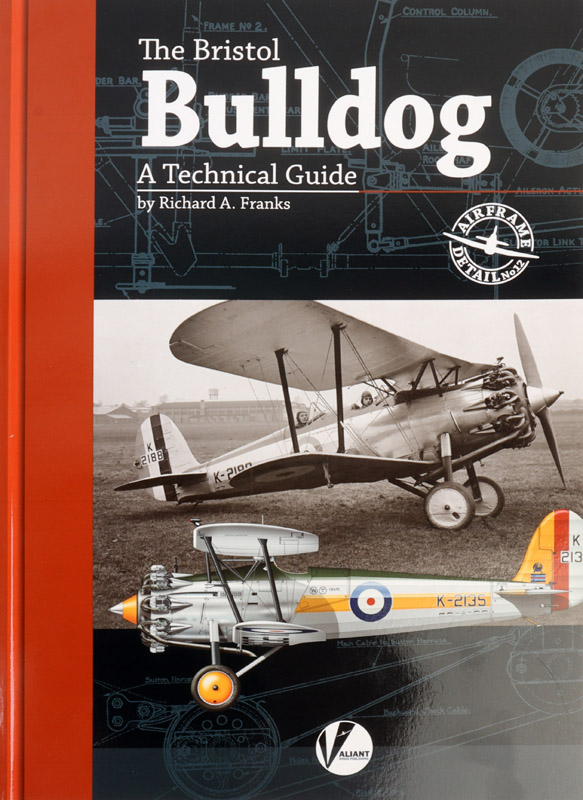
by Richard A. Franks
Valiant Wings Publishing
Airframe Detail No. 12
S u m m a r y |
| Publisher and Title: |
Valiant Wings Publishing
Airframe Detail No. 12
The Bristol Bulldog
by Richard A. Franks
88 pages plus covers, A4 format
Recommended retail price: £19.45, plus postage and packing
|
| ISBN: |
978-1-912932-46-7 |
| Media: |
88 pages plus cover in A4 portrait mode, many photographs and diagrams, colour profiles, historical manual drawings, line drawings and model details. |
| Price: |
GBP£19.45 plus shipping available online from Valiant Wings
GBP£19.45 plus shipping available online from Hannants
and stockists worldwide. |
| Review Type: |
First Read |
| Advantages: |
Presented on quality paper, well bound, lots of photos, drawings and colour schemes; good lists of all things a modeller needs to produce their next miniature masterpiece. |
| Disadvantages: |
None noted. |
| Conclusion: |
At 88 pages plus covers, this is a compact volume, but the material is densely packed and nicely focused.
It succeeds in being both a historical and technical reference and a practical modelling companion without becoming unwieldy.
For anyone contemplating building a Bristol Bulldog in any scale, Airframe Detail No. 12 will be a very useful addition to the reference library. |
Reviewed by Brett Green

The Bristol Bulldog was one of the most recognisable fighters of the Royal Air Force's inter-war years. Designed by Frank Barnwell to meet Air Ministry Specification F.9/26, the prototype made its first flight at Filton on 17 May 1927. Following competitive trials, the refined Bulldog Mk.II was selected for production, with the first RAF examples delivered in May 1929.
Powered by a Bristol Jupiter radial engine and armed with two synchronised .303-inch Vickers machine guns, the Bulldog combined lively handling with relatively straightforward maintenance. It equipped ten of the RAF's thirteen home-defence fighter squadrons at its peak, although it never fired its guns in anger during RAF service. Instead, it became particularly associated with aerobatic displays and the spectacular smoke-trail formations that delighted air-show crowds.
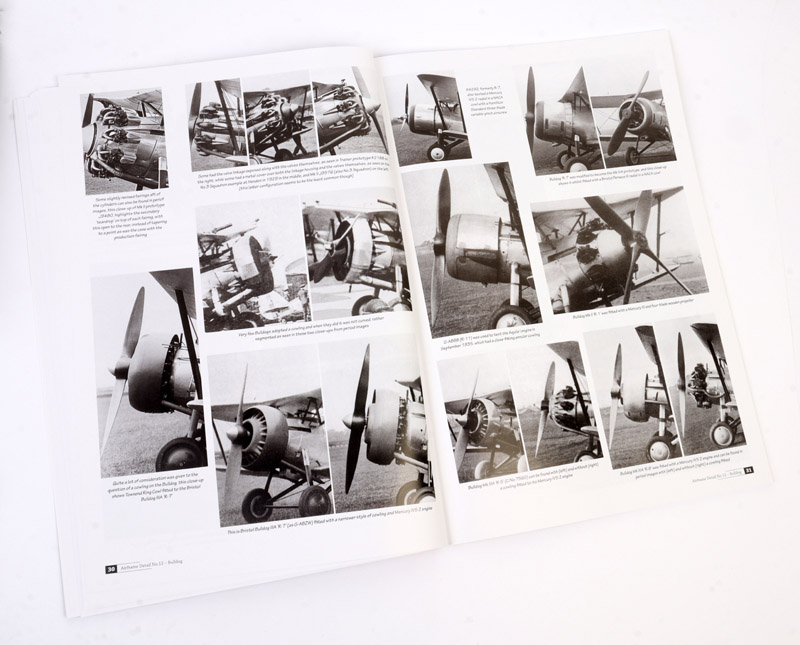
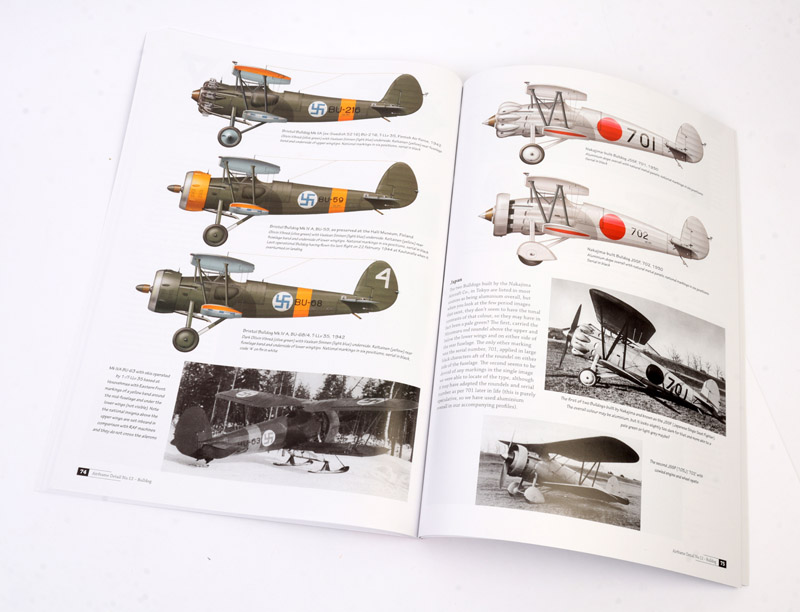
The Bulldog was also widely exported, serving with air forces including those of Australia, Denmark, Estonia, Finland, Latvia and Sweden. Finnish Bulldogs saw combat during the Winter War against the Soviet Union, giving this quintessentially inter-war fighter a brief but genuine combat career.
A Technical Guide
No. 12 in Valiant Wings Publishing’s modeller-friendly Airframe Detail series focuses on the Bristol Bulldog. Written by Richard A. Franks, The Bristol Bulldog – A Technical Guide follows the established Airframe Detail formula, combining historical research, technical reference material, colour artwork, walkaround photography and modelling information in a compact 88-page format.
The result is a useful reference for anyone interested in the Bulldog, but especially for the modeller contemplating one of the available kits.
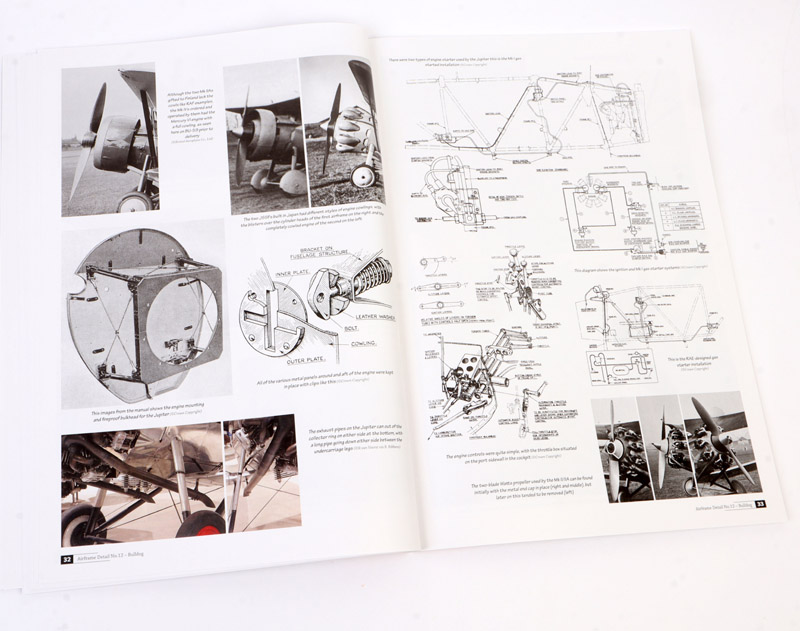
The book opens with period imagery covering the Bulldog during production and testing. These photographs are particularly valuable because they show the aircraft as it actually appeared during its service life, rather than relying exclusively on surviving museum examples. Technical information has also been drawn from original sources including flight manuals and spare-parts catalogues, adding an important layer of primary-source material to the reference.
This is supplemented by a wealth of technical photographs and diagrams. As readers of the Airframe Detail series will expect, the Author has concentrated on the areas that matter to modellers: structure, equipment, cockpit details, undercarriage, engine installation, armament and the many smaller features that can easily be overlooked when working from general photographs.
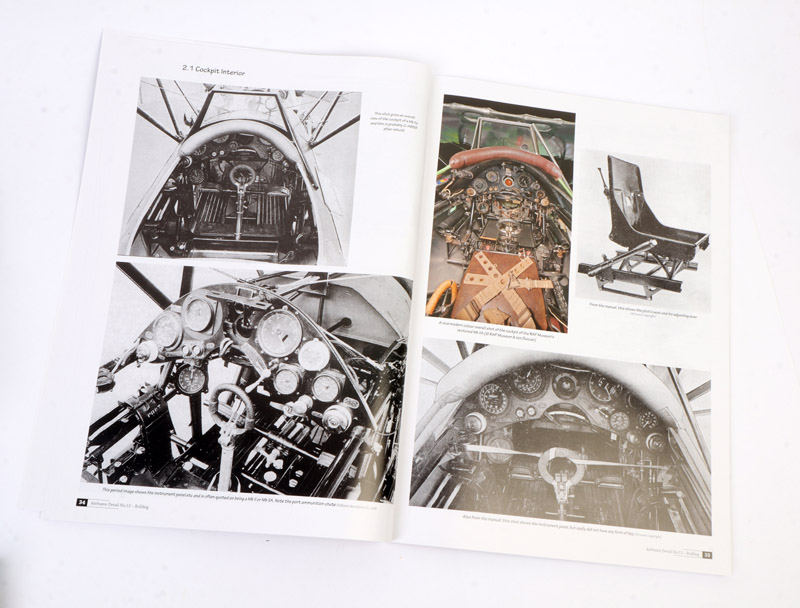
The preserved Bulldogs receive extensive attention too, with detailed walkaround photos providing an opportunity to examine surviving airframes from virtually every angle. Inevitably, there are limitations to using restored aircraft as references for an inter-war subject, but the combination of period photographs, technical documentation and contemporary walkaround material helps provide a much more complete picture.
Richard J. Caruana delivers greater than 50 full-colour profiles for this title. These cover a broad selection of Bulldog schemes and operators and are accompanied by concise notes on camouflage and markings. The profiles are not simply decorative; they provide a useful visual reference for anyone considering one of the many colourful possibilities offered by the Bulldog.
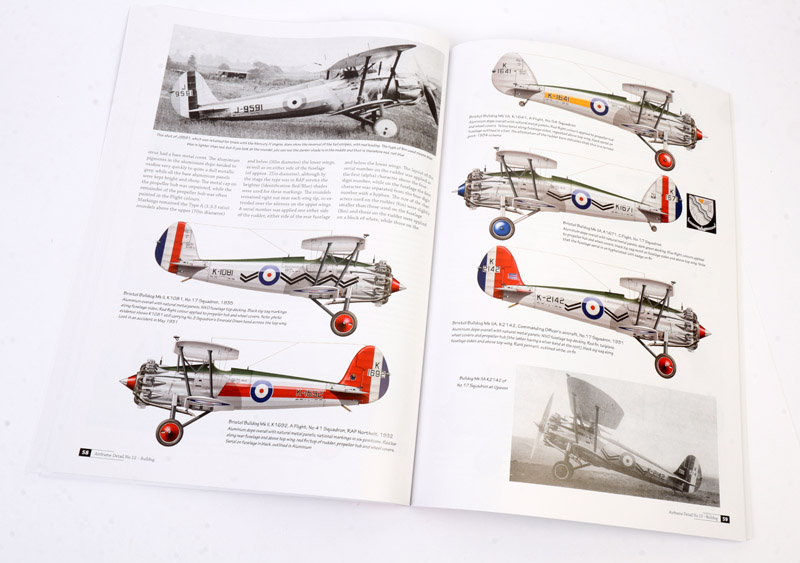
A stencil diagram is also included, rounding out the reference material.
The Modeller's Bulldog
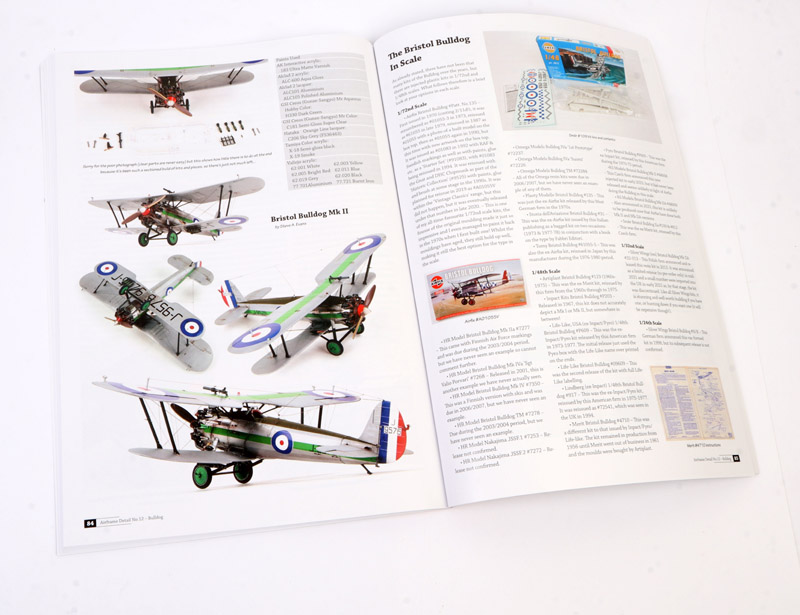
As with previous Airframe Detail titles, significant space is devoted to the scale modeller. A comprehensive listing covers Bulldog kits, accessories and decals produced in various scales. For anyone returning to the subject after several years, this alone is a valuable resource, providing a useful snapshot of the available modelling options.
The centrepiece from a modelling perspective, however, is Steve A. Evans' detailed build of the Airfix 1:48-scale Bristol Bulldog Mk.II.
Construction, painting, finishing and weathering are covered in a sequence of clear photographs, while the finished model provides a useful indication of what can be achieved from the Airfix kit.
This approach is one of the key characteristics of the Airframe Detail concept. Rather than separating historical reference from practical modelling, the two are presented side by side. The reader can examine a period photograph or technical drawing, turn the page and see how that information translates into the scale model.
The Bristol Bulldog's relatively simple external appearance can disguise a wealth of structural and equipment detail, and the reference material in this volume provides plenty of inspiration for those who want to go beyond a basic out-of-the-box build.
Airframe Detail No. 12: The Bristol Bulldog is a broad reference that follows the successful formula established by Valiant Wings' series. Richard A. Franks has blended an impressive recipe of period photographs, technical information, diagrams and contemporary walkaround images, while Richard J. Caruana's colourful profiles add considerable visual appeal and provide numerous marking possibilities.
Modellers are at the forefront of Valiant Wings' approach. The summary of kits, accessories and decals will be useful for modellers, while Steve A. Evans' Airfix 1:48 Bulldog Mk.II build demonstrates how the contents may be put to practical use at the workbench.
At 88 pages plus covers, this is a compact volume, but the material is densely packed and nicely focused. It succeeds in being both a historical and technical reference and a practical modelling companion without becoming unwieldy.
For anyone contemplating building a Bristol Bulldog in any scale, Airframe Detail No. 12 will be a very useful addition to the reference library.
Recommended
Thanks to Valiant Wings Publishing for the sample.
Review Copyright © 2026 by Brett Green
This Page Created on 21 September, 2026
Last updated
22 September, 2026
Back to HyperScale Main Page
Back to Reviews Page
|
 Home
| What's New | Features | Gallery | Reviews | Reference | Resource Guides | Forum |
Home
| What's New | Features | Gallery | Reviews | Reference | Resource Guides | Forum |