|
WILDE SAU
UNTIL THE FALL OF THE EMPIRE
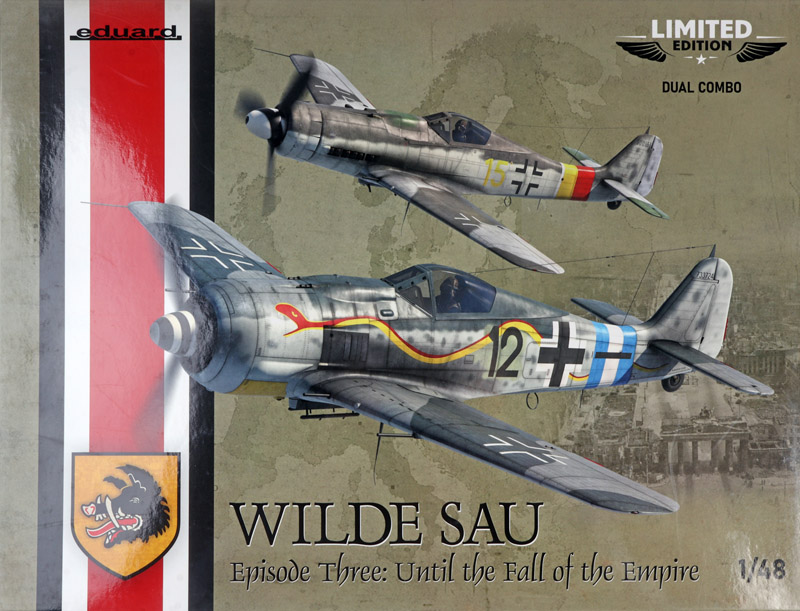
Fw 190A-8
& Fw 190D-9
Eduard Dual Combo 1/48 scale
S
u m m a r y |
| Description and Catalogue Number: |
Eduard Kit No. 11199 - WILDE SAU UNTIL THE FALL OF THE EMPIRE Fw 190A-8 and Fw 190D-9 Dual Combo |
| Scale: |
1/48 |
| Contents and Media: |
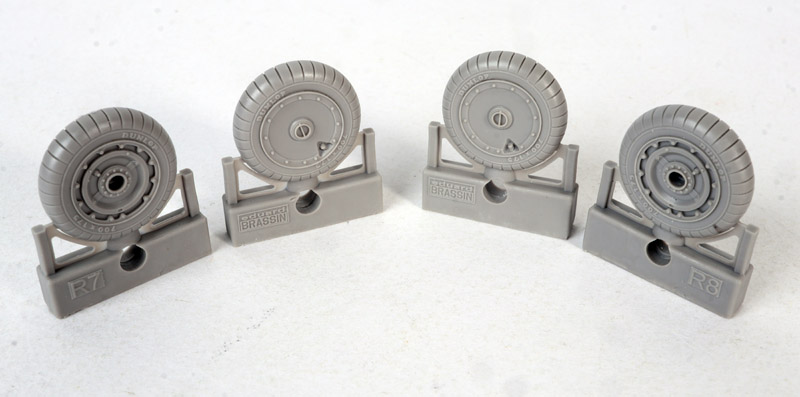
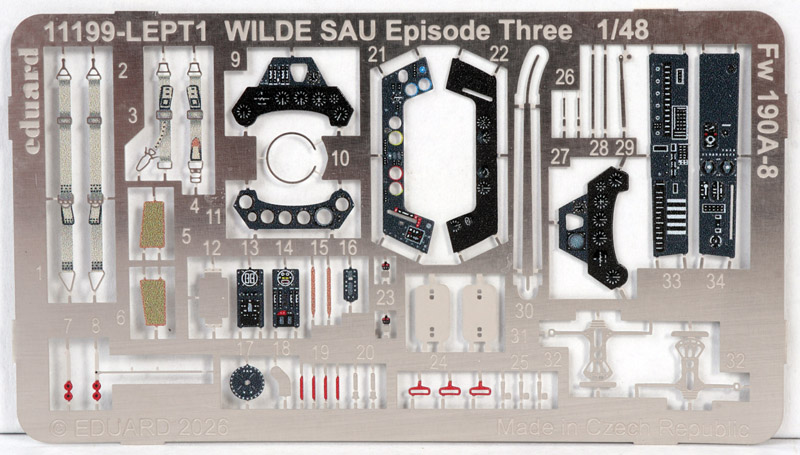
Two complete kits comprising the Fw 190A-8 and Fw 190D-9. The A-8 is made up from approximately 200 grey plastic parts and 10 clear parts; the D-9 includes 136 grey plastic parts and 11 clear parts. Both kits include pre-painted colour photo-etched details, self-adhesive canopy and wheel masks, resin main wheels, and decals for a total of 11 marking options. |
| Price: |
USD$98.95 plus shipping,
available online from Eduard
£54.99 UK Price (£45.83 Export Price) plus shipping available online from Hannants |
| Review Type: |
FirstLook |
| Advantages: |
Excellent modern-tool Fw 190 A-8 with superb surface detail, finely recessed panel lines and rivets, outstanding fit and well-engineered components. The Eduard Fw 190 D-9 remains well detailed, with crisp panel lines, selected rivets, detailed wheel wells and numerous options for open or closed gun bays and canopies. Both kits benefit from colour photo-etch, masks and resin wheels. An attractive selection of 11 late-war Luftwaffe marking options offer considerable scope for individual choice. |
| Disadvantages: |
The D-9 is from an earlier generation of tooling. Assembly can be more demanding, particularly around the wings, gun covers and firewall/ejector chutes. Take your time and test-fit often |
| Conclusion: |
This is an appealing limited-edition Dual Combo package combining an outstanding modern-tool A-8 with a well-detailed D-9 that rewards patience during assembly.
The useful accessories and varied marking options make this an attractive offering for Luftwaffe fans. |
Reviewed by Brett Green

By mid-1943, the RAF’s night-bombing offensive against Germany was placing increasing pressure on the Luftwaffe’s air defences. The established night-fighter system relied heavily on ground-based radar and controlled interceptions, but the British introduction of Window, strips of aluminium foil that confused German radar, seriously disrupted this network.
Major Hans-Joachim “Hajo” Herrmann proposed an alternative: sending single-seat day fighters into the target area to locate bombers visually. Searchlights, target indicators, fires and clouds illuminated by burning cities could reveal the attackers’ silhouettes. The fighters would then intercept without relying on continuous radar guidance. The method became known as Wilde Sau, meaning “Wild Boar”.
Experimental operations began in the summer of 1943, and the tactic’s first notable success came during the RAF raid on Cologne on the night of 3–4 July. Following further successes, Jagdgeschwader 300 was established in August 1943, with JG 301 and JG 302 formed later that year. Initially, the units often had to share aircraft and facilities with existing day-fighter formations.
The Wilde Sau fighters were principally standard Messerschmitt Bf 109s and Focke-Wulf Fw 190s, with limited modifications for night operations. Pilots needed considerable skill to locate bombers in darkness, navigate in poor visibility and land safely at night. They also faced the danger of German anti-aircraft fire, which complicated operations over defended targets.
The tactic achieved notable successes during the latter half of 1943, particularly when German cities were illuminated by large fires. However, its effectiveness depended heavily on weather and visibility. Autumn and winter brought worsening conditions, while accidents, operational losses and the demands of combining night and day sorties steadily reduced the units’ effectiveness.
As German air defences adapted and the pressure of daylight bombing increased, the Wilde Sau formations increasingly undertook conventional day-fighter duties. Their original role diminished during 1944, although aircraft and personnel continued to serve in the defence of the Reich. By the final months of the war, surviving units were increasingly committed to desperate attempts to stem the Allied air offensive.
Eduard's limited-edition Dual Combo brings together two late-war Focke-Wulf fighters in 1:48 scale: the radial-engined Fw 190A-8 and the liquid-cooled Fw 190D-9. With two complete kits, eleven marking options and a generous selection of additional details, this is an attractive package for Luftwaffe enthusiasts.
Titled Wilde Sau Episode Three: Until the Fall of the Empire, the release focuses on aircraft associated with JG 300, JG 301 and German night-fighting units. The name Wilde Sau, or “Wild Boar”, refers to the night-fighting tactics developed to intercept Allied bombers over Germany. Single-seat fighters operated in the illuminated skies above searchlights, fires and burning cities, often without the benefit of conventional ground-controlled interception. These operations placed considerable demands on the pilots and their aircraft, particularly as the Luftwaffe's defensive resources dwindled during the final stages of the war.
Contents
The two kits are supplied on Eduard's injection-moulded plastic sprues, moulded in an attractive medium-grey colour. Each model is accompanied by pre-painted photo-etched details, canopy and wheel masks, and resin main wheels. Decals provide markings for eleven aircraft: seven Fw 190A-8s and four Fw 190D-9s. The package combines the two established Eduard kits with accessories intended to enhance the finished models without requiring the modeller to source additional aftermarket details.
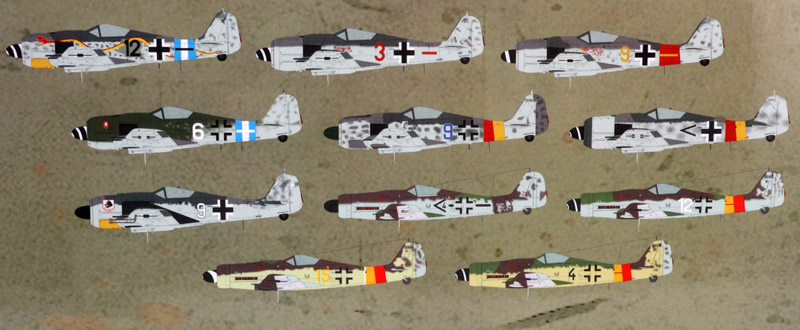
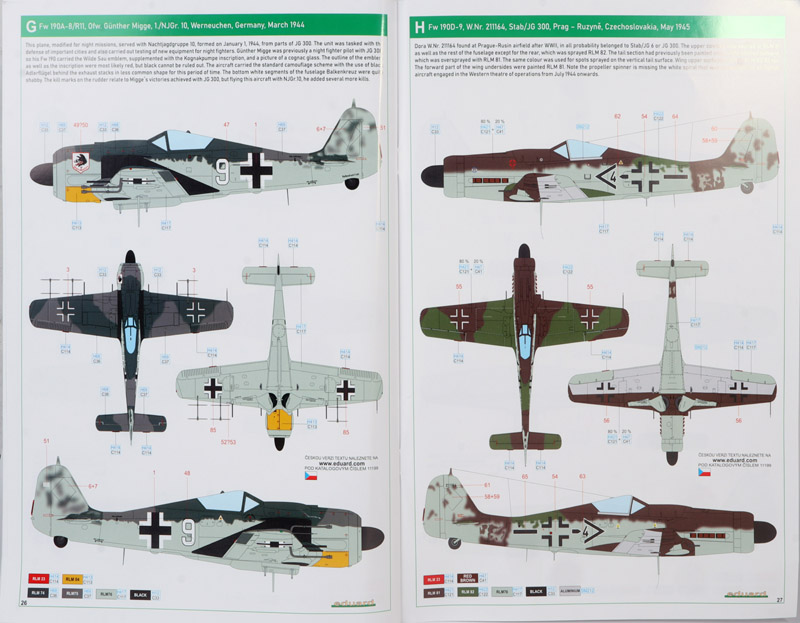
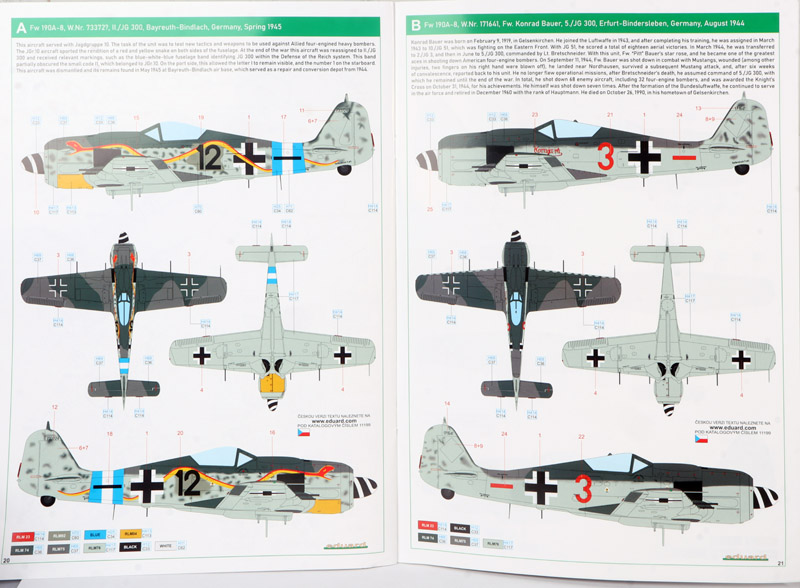
The marking options are a particular strength. They cover aircraft from JG 300 and JG 301, together with an Fw 190A-8/R11 night fighter attacged to 1./NJGr. 10. There is plenty of variety in the unit RV bands, individual markings and camouflage finishes. One particularly striking A-8 carries a large red and yellow snake motif extending from the front of the cowling towards the rear fuselage, accompanied by the blue-white-blue identification band associated with JG 300.
Other A-8 options include aircraft with colourful tactical numbers, prominent unit emblems and heavily mottled fuselages. The selection also includes an aircraft with a black chevron and red-and-white identification markings, as well as the R11 night-fighter variant, which features a distinctive dark area behind the exhausts.
The four D-9 options continue the theme with aircraft associated with JG 300 and JG 301 during the final months of the war. These range from more conventional late-war finishes to less familiar combinations of colours and markings. Yellow 15, for example, features an unusual yellow-green fuselage finish and a contrasting combination of light grey and brown-violet on the upper wings.
Together, the eleven options provide considerable scope for individual interpretation. The modeller can choose between colourful unit markings, subdued late-war finishes and some decidedly unusual camouflage combinations.
The Fw 190A-8
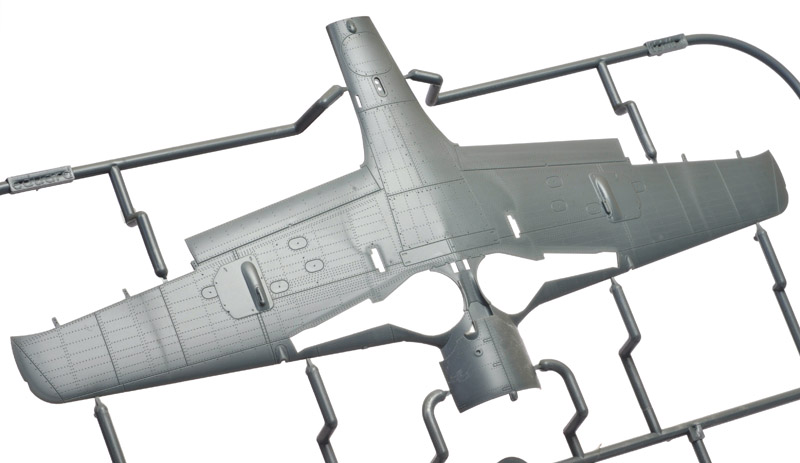
The A-8 is the highlight of the package from an engineering perspective. Eduard's newer-tool kit is an excellent representation of the late radial-engined Focke-Wulf, with finely recessed surface detail, delicate rivet work and a well-appointed cockpit. The moulding is crisp, and the overall presentation reflects the advances in kit design that have taken place in recent years.
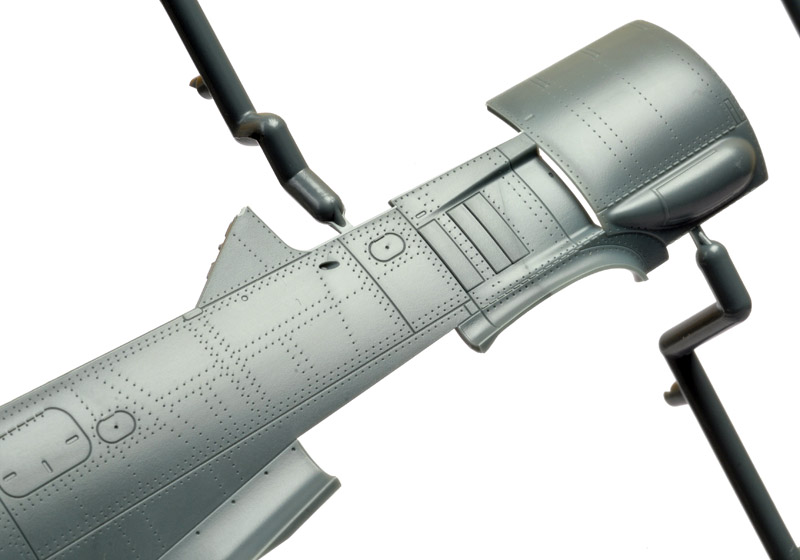
Having built four or five examples of Eduard's newer-generation Fw 190A-8, I can confidently advise that these kits are a pleasure to work on. The engineering is well considered, the parts fit is excellent, and there is very little to complain about. They are among my favourite aircraft kits, and the inclusion of this version in the Dual Combo is a strong point in the set's favour.
The additional photo-etched parts enhance selected areas, while the resin wheels provide a useful alternative to the plastic components. The supplied masks should also simplify the painting of the canopy framing and wheels, particularly for anyone intending to reproduce one of the more elaborate marking options.
Overall, the A-8 is a gem of a kit. It offers an excellent foundation for a straightforward out-of-the-box build, while its refined surface detail and well-engineered components also provide a sound basis for a more ambitious project.
The Fw 190D-9
The D-9 represents an earlier generation of Eduard tooling. The kit dates from 2010, compared with the newer A-8 tooling introduced in 2017, and the difference is apparent in the refinement of the surface detail.
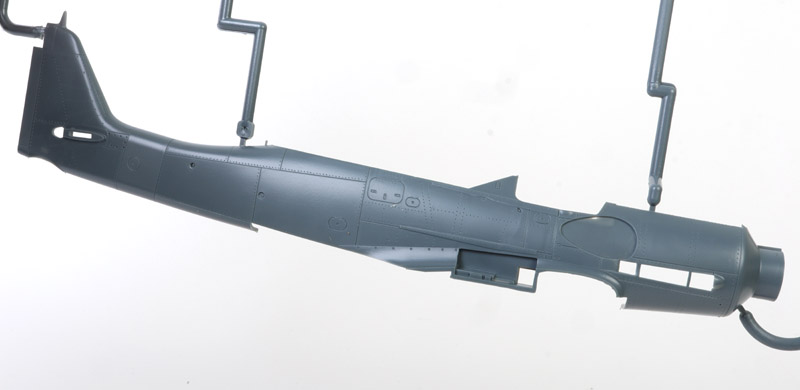
Nevertheless, the D-9 will produce an excellent-looking model. Its distinctive long nose and revised engine installation give it a very different character from the radial-engined A-8, and the two aircraft make an appealing pair.

Assembly does require a little more care. The D-9 has a reputation for being tricky to put together than the newer A-8, so it is worth allowing additional time for test-fitting and checking the alignment of components before applying cement. Pay particular attention around the wings, the gun covers and the firewall / ejector chutes. Take your time and test-fit often - a little patience during these stages will pay dividends later
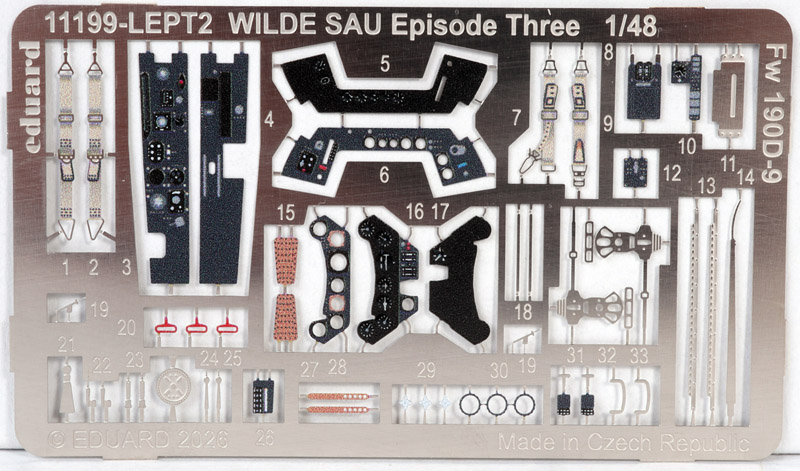
The difference in tooling generation is an interesting aspect of this Dual Combo. The A-8 demonstrates Eduard's more recent approach to surface detail and assembly, while the D-9 remains a worthwhile kit that rewards a more deliberate building process.
Markings
The eleven marking options are arguably the set's greatest attraction. The selection includes colourful identification bands, individual emblems and a range of tactical markings that distinguish the aircraft from one another. The A-8 options offer several eye-catching schemes, while the D-9s provide an opportunity to explore the less standardised finishes associated with the final weeks of the war.
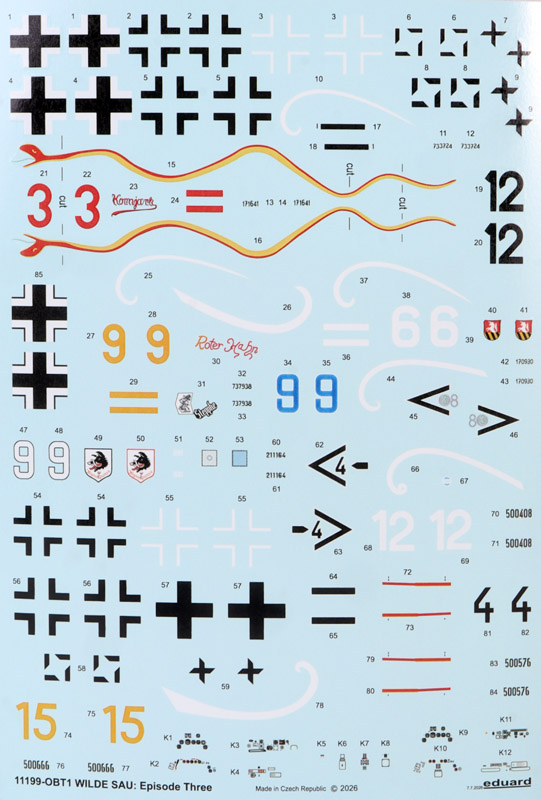
The unusual snake motif on one A-8 is an obvious attention-grabber, but the more subdued schemes are equally interesting for modellers who enjoy researching late-war Luftwaffe camouflage. The D-9 option with its yellow-green fuselage and contrasting upper-wing colours should be particularly appealing to anyone looking for something beyond the familiar combinations.

Details are:
-
Fw 190A-8, W.Nr. 73372?, II./JG 300, Bayreuth-Bindlach, Germany, Spring 1945
-
Fw 190A-8, W.Nr. 171641, Fw. Konrad Bauer, 5./JG 300, Erfurt-Bindersleben, Germany, August 1944
-
Fw 190A-8, Fw. Hannes Theis, 6./JG 300, Lobnitz, Germany, October-November 1944
-
Fw 190A-8, Lt. Gustav Salffner, CO of 7./JG 300, Lobnitz, Germany, March 1945
-
Fw 190A-8, W.Nr. 737938, 4./JG 301, Brunnthal, Germany, 1945
-
Fw 190A-8, W.Nr. 170930, Stab I./JG 301, Hagenow, Germany, April 1945
-
Fw 190A-8/R11, Ofw. Gunther Migge, 1./NJGr. 10, Werneuchen, Germany, March 1944
-
Fw 190D-9, W.Nr. 211164, Stab/JG 300, Prag-Ruzyn, Czechoslovakia, May 1945
-
Fw 190D-9, W.Nr. 500408, 5./JG 301, Bad Langensalza, Germany, May 1945
-
Fw 190D-9, W.Nr. 500666, II./JG 301, Erfurt-Nord Airfield, Germany, May 1945
-
Fw 190D-9, W.Nr. 500576, 12./JG 301, Wunsdorf, Germany, May 1945
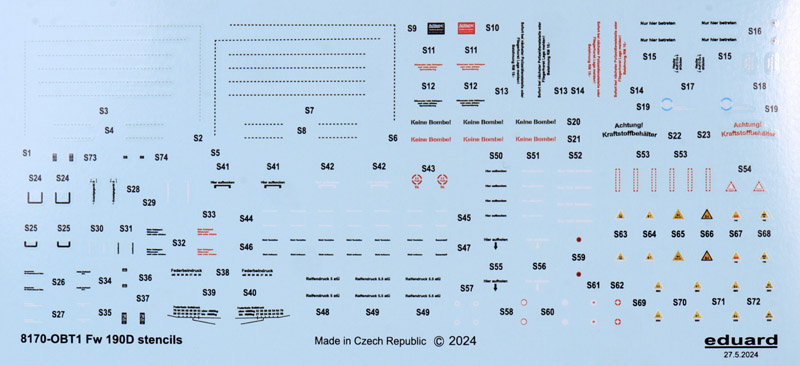
Smaller stencil decal sheets for each aicraft are included too.
The inclusion of pre-painted photo-etch, resin wheels and masks means that both models can be completed to a high standard straight from the box. The accessories are useful additions, and the range of markings makes it possible to build two aircraft with distinctly different appearances.
Eduard's Wilde Sau Episode Three: Until the Fall of the Empire is an appealing Dual Combo that brings together two important late-war German fighters. The newer-tool A-8 is an outstanding kit and a pleasure to build, while the D-9 benefits from a more measured approach to assembly. Both offer considerable potential, and the eleven marking options provide plenty of scope for individual choice.
The difference in tooling generation is worth noting. However, it does little to diminish the overall appeal of the package. The combination of two complete aircraft, useful supplementary details and an interesting selection of late-war markings makes this a worthwhile release for Luftwaffe modellers.
Highly Recommended.
Text and Images Copyright © 2026 by Brett Green
Page Created 27 October, 2026
Last updated
27 October, 2026
Back to HyperScale Main Page |
 Home
| What's New |
Features |
Gallery |
Reviews |
Reference |
Forum |