|
Spitfire Mk.Ia
ProfiPACK Edition
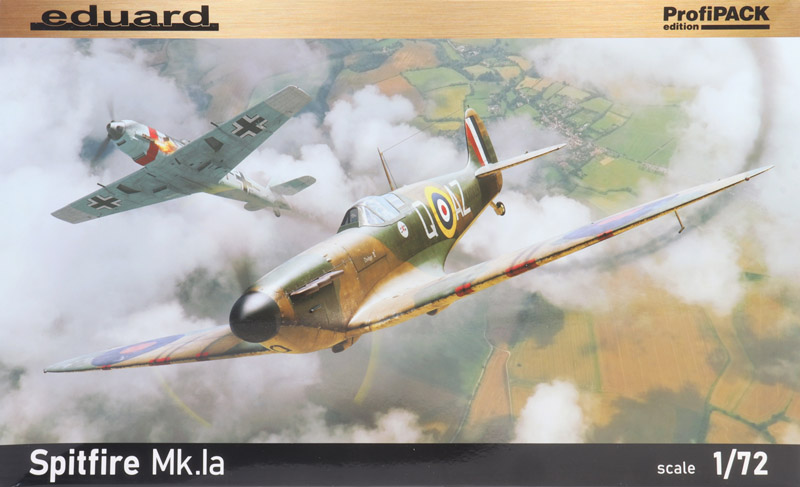
Eduard,
1/72 scale
S
u m m a r y |
| Catalogue Number: |
Eduard Kit No.70202 - Spitfire Mk. Ia ProfiPACK Edition |
| Scale: |
1/72 |
| Contents and Media: |
220 parts in grey plastic (many marked “not for use”); 24 parts in clear plastic (13 marked "not for use"); colour photo-etched fret; marking options for seven aircraft; instructions. |
| Price: |
USD$29.95 plus shipping,
available online from Eduard
GBP£16.20 EU Price (GBP£13.50 Export Price) plus shipping available online from Hannants |
| Review Type: |
FirstLook |
| Advantages: |
High level of detail; outstanding surface features including crisply recessed panels and subtle raised and recessed rivet lines where appropriate; separate parts for different styles of closed and open canopies; many options. |
| Disadvantages: |
None noted. |
| Conclusion: |
Eduard’s 1/72 scale Spitfire Mk.Ia is an impressive addition to the company’s growing family of Spitfire kits.
Its exceptional surface detail, thoughtful engineering and generous selection of options reflect the same uncompromising approach seen in Eduard’s larger 1/48 scale releases.
Seven marking options deliver an appealing selection of Battle of Britain-era subjects, while the extensive parts breakdown promises considerable scope for future variants.
Although the total parts count is substantial, many are optional or intended for other versions, so the actual assembly will be considerably less daunting than the numbers suggest.
For enthusiasts of the Spitfire, this kit offers an outstanding combination of detail, versatility and choice in the increasingly competitive 1/72 scale.
Highly Recommended |
Reviewed by Brett Green

The Supermarine Spitfire Mk.Ia emerged from the continuous development of the original Spitfire Mk.I, which entered RAF service with No. 19 Squadron in August 1938. Early aircraft featured a two-bladed wooden propeller and initially lacked full armament and pilot protection. Successive improvements introduced a three-bladed propeller, the Rolls-Royce Merlin III engine, an improved cockpit canopy, an armoured windscreen and additional armour.
The Mk.Ia designation was introduced to the distinguish this eight .303 machine gun wing from the cannon-armed Mk.Ib.
By the summer of 1940, the Mk.Ia had become a central component of RAF Fighter Command during the Battle of Britain. The Spitfire Mk.Ia initially faced the Messerschmitt Bf 109E and Bf 110, alongside Heinkel He 111, Dornier Do 17 and Junkers Ju 88 bombers during the Battle of Britain. Later variants confronted increasingly capable opponents, including the Focke-Wulf Fw 190 and Messerschmitt Bf 109G
Its development continued through the Mk.II and the more powerful Mk.V, followed by increasingly capable variants that served in fighter, interception, ground-attack and reconnaissance roles throughout the Second World War.
Successive Spitfire developments, particularly the Mk.V and Mk.IX, restored and maintained the type’s competitive edge as the air war intensified.
This Mk.Ia is the latest in Eduard's growing line of 1/72 scale Spitfire kits.
The parts breadown and uncompromising detail is uncannily like Eduard's 1/48 scale Spitfires. Indeed, this 1/72 scale Spitfire contains even more grey and clear plastic parts than its 1/48 scale counterpart.
Eduard's small scale Spitfire Mk.Ia comprises around 220 comprises parts in grey plastic (many of these marked not for use) , 24 parts in clear plastic (13 parts marked not for use), decals for seven marking options and instructions. Also keep in mind that many other parts are optional, further reducing the actual build count.
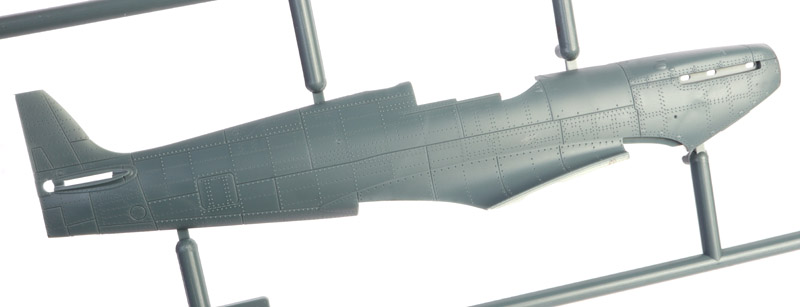
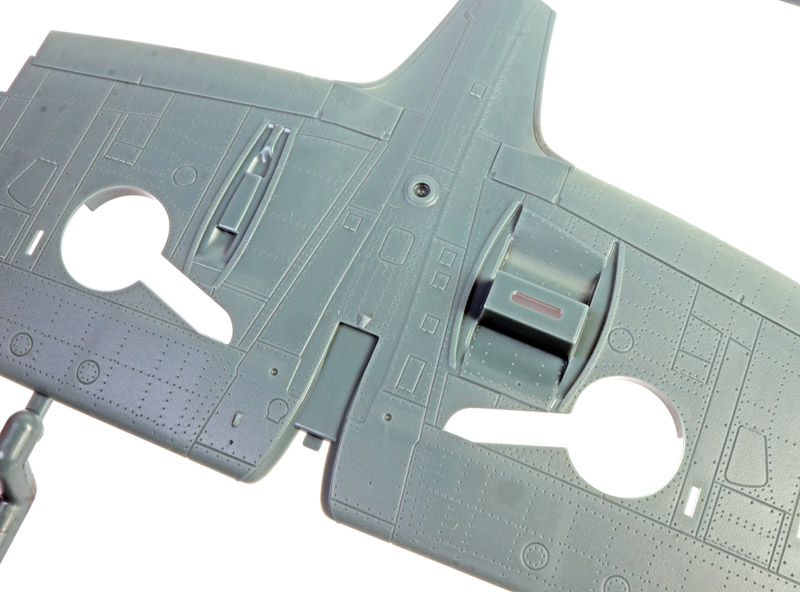
The first thing you will notice as you remove the sprues from their bags is the exuisitely subtle and crisp surface textures. Recessed panel lines, rows of rivets and shrewdly executed fasteners. The photos do not quite do justice to the subtlty of the textures.
The fuselage and wings are on Sprue F.
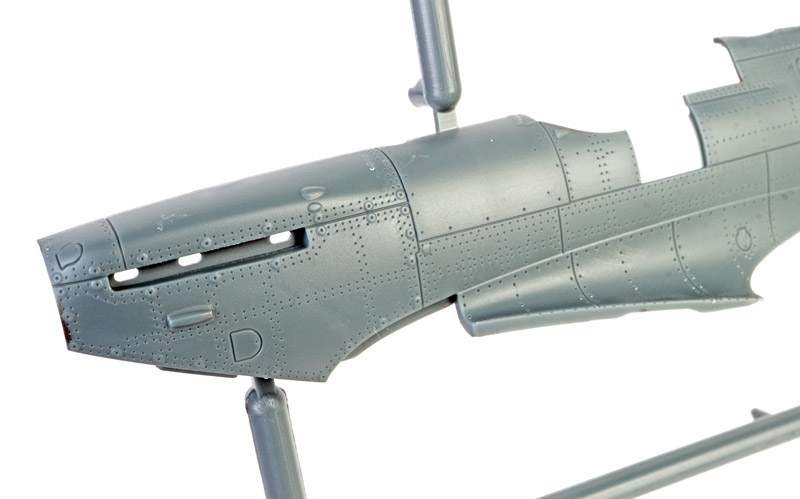
Next we have the wings.
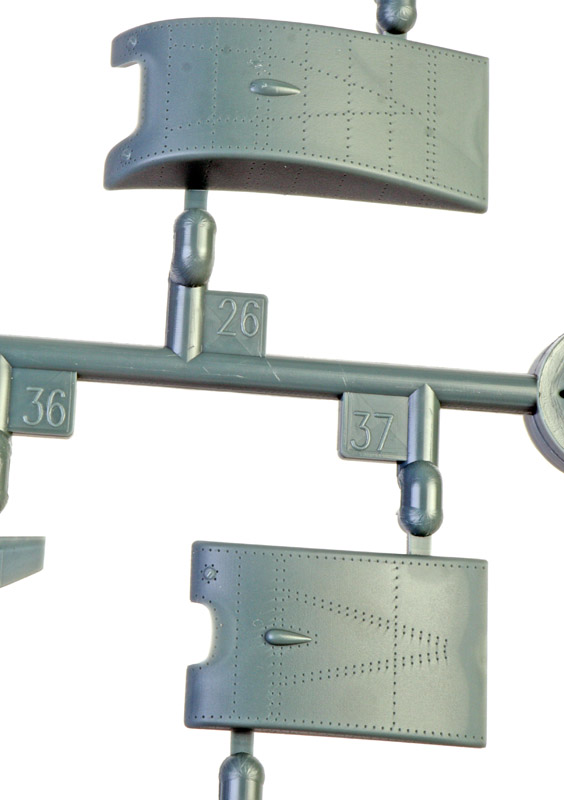
Sprues M and N are generic grey plastic parts. These are common for any of Eduard's future 1/72 scale Spitfire Mk.I to V and perhaps later too, with many options related to control surfaces, exhausts, propellers, undercarriage and much more.
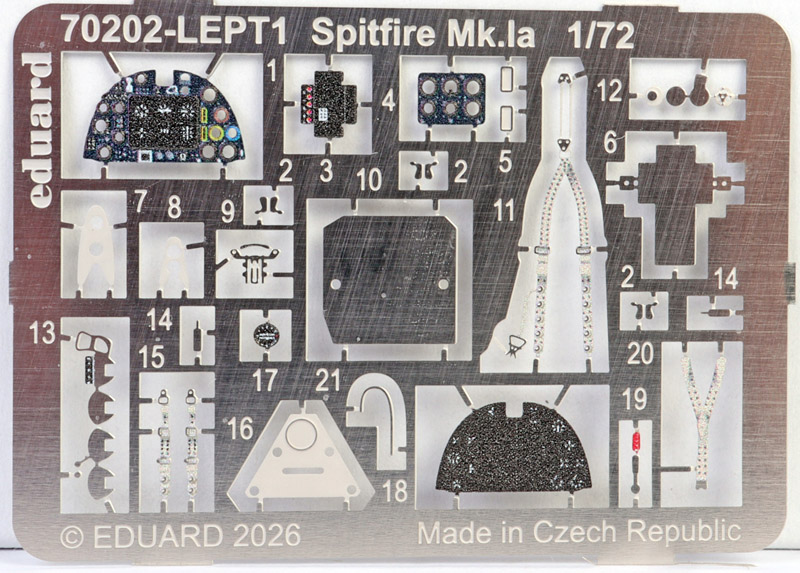
The colour photo-etched fret provides an instrument panel sandwich, harness straps, pilot's rear armour and other smaller details.
Engineering and Options
The kit is broken down conventionally. The fuselage is full-length with the only insert being the forward wing root.
The lower cowl is separate too.
Ailerons and the rudder are separate, while the flaps are moulded closed. The elevators are moulded with the horizontal stabilisers in the neutral position. A choice of fabric or metal skinned ailerons is offered.
The canopy side door is a separate part, with the option of posing the door open or closed.
The clear parts are free from distortion and quite thin.
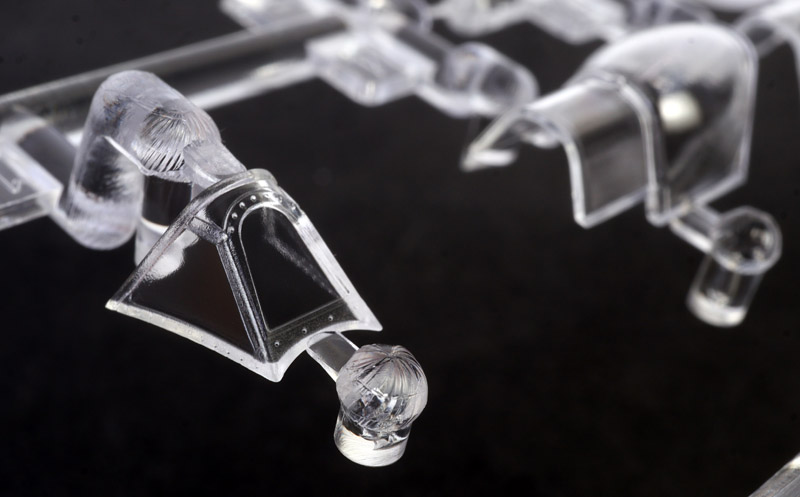
The closed canopy options comprises a combined sliding section and rear section, while the open canopy supplies a separate sliding section to sit over the rear clear part.
Markings
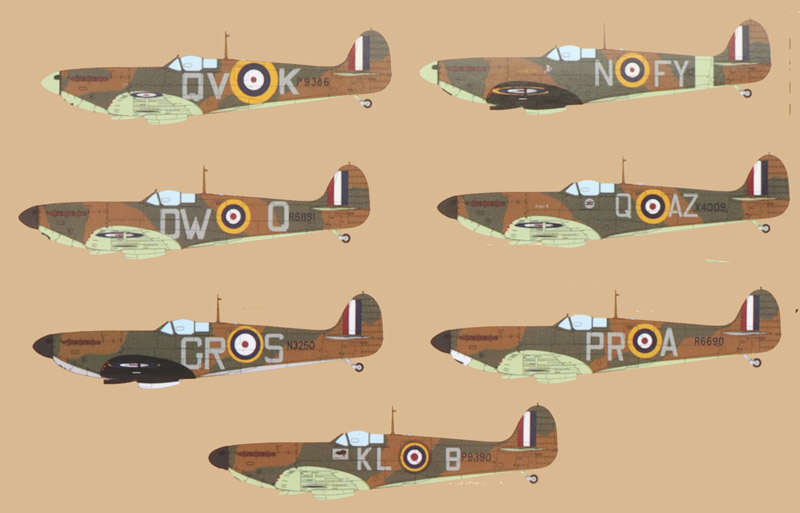
Markings are supplied for seven subjects.
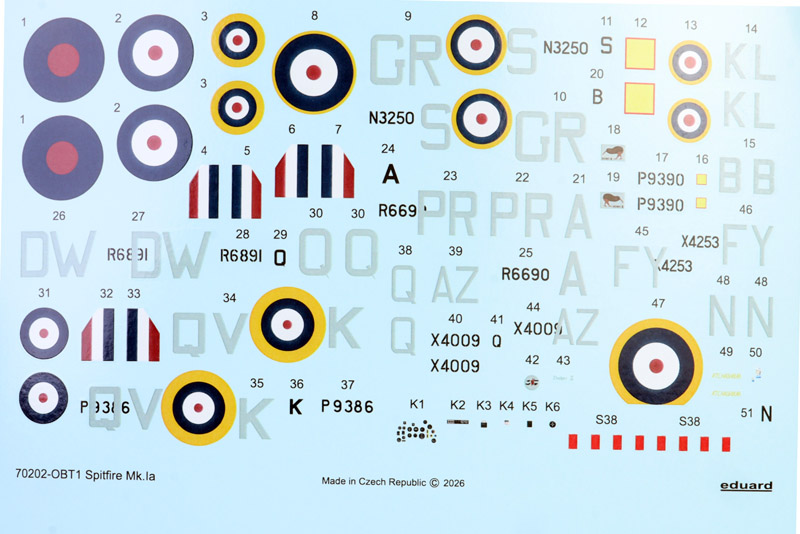
These are:
-
N3250, P/O Allan R. Wright, No. 92 Squadron, RAF Croydon, The United Kingdom, late May/early June 1940
-
P9390, P/O Alan C. Deere, No. 54 squadron, RAF Hornchurch, The United Kingdom, June-July 1940
-
R6690, P/O John C. Dundas, No. 609 Squadron, RAF Middle Wallop/RAF Warmwell, United Kingdom, August 1940
-
R6891, Sgt RonaldF. Hamlyn, No. 610 squadron, RAF Biggin Hill, United Kingdom, August 1940
-
P9386, S/Ldr Brian J. Lane, No. 19 Squadron, RAF Fowlmere, the United Kingdom, August-September 1940
-
X4009, F/Lt Paterson C. Hughes, No. 234 squadron, RAF Middle Wallop, The United Kingdom, September 1940
-
X4253, P/O Wilfrid G. Duncan Smith, No. 611 Squadron, RAF Hornchurch, The United Kingdom, February 1941
Stencil markings are supplied on a separate decal sheet.
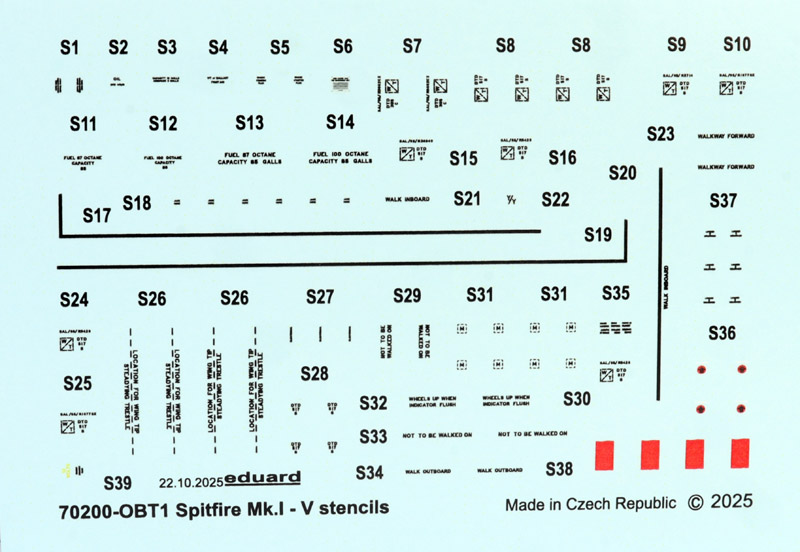
Instrument dial decals, harness straps and red leading edge machine gun patches are on the decal sheet too.
Eduard’s 1/72 scale Spitfire Mk.Ia is an impressive addition to the company’s growing family of Spitfire kits.
Its exceptional surface detail, thoughtful engineering and generous selection of options reflect the same uncompromising approach seen in Eduard’s larger 1/48 scale releases.
Seven marking options deliver an appealing selection of Battle of Britain-era subjects, while the extensive parts breakdown promises considerable scope for future variants.
Although the total parts count is substantial, many are optional or intended for other versions, so the actual assembly will be considerably less daunting than the numbers suggest.
For enthusiasts of the Spitfire, this kit offers an outstanding combination of detail, versatility and choice in the increasingly competitive 1/72 scale.
Highly Recommended
Thanks to Eduard for the sample
Review Text and Images Copyright © 2026 by Brett Green
Page Created 29 October, 2025
Last updated
29 October, 2026
Back to HyperScale Main Page
Back to Reviews Page |
 Home
| What's New |
Features |
Gallery |
Reviews |
Reference |
Forum |