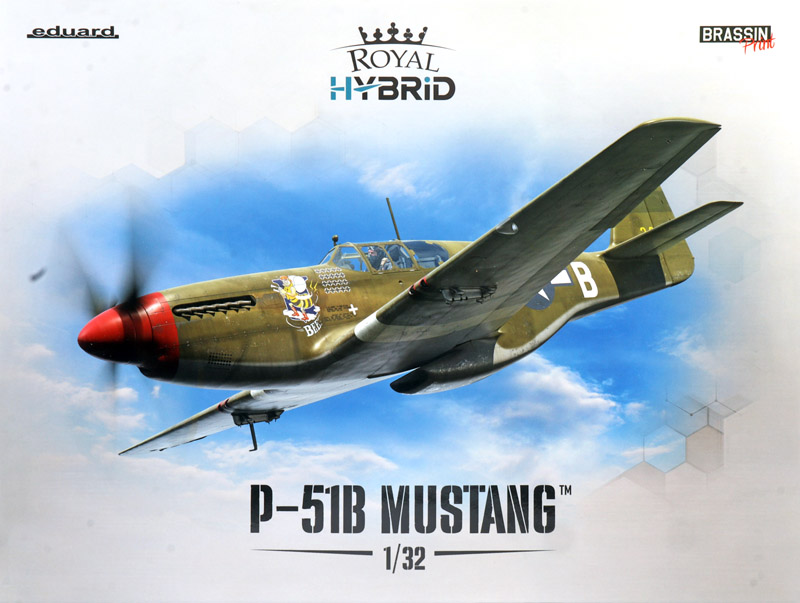
Eduard Kit No. 932011 - P-51B Mustang Royal Hybrid
Scale:
1/32
Contents and Media:
84 grey plastic parts (eight marked "not for use"); 72 grey 3D-printed resin parts; 33 clear plastic parts (five marked "not for use"); nine brass photo-etched parts on a single fret; die-cut self-adhesive masks; foam wheel-well painting plugs; 112 page reference book; decals for eight USAAF aircraft..
Extraordinary level of detail; state-of-the-art surface textures; appropriate use of multi-media; clever design and parts breakdown; 3d printed and conventional resin parts; many options; includes reference book and wheel well plugs.
Disadvantages:
None noted.
Conclusion:
Eduard's new 1/32 scale Royal Hybrid P-51B Mustang is an impressive step forward for the company’s innovative Hybrid range.
The combination of crisply moulded plastic components with superbly executed 3D-printed detail delivers exceptional fidelity while simplifying assembly in areas that have traditionally challenged modellers.
The engineering is thoughtful throughout, surface detail is outstanding, and the inclusion of high-quality decals, masks and multiple configuration options rounds out a comprehensive package.
Whether your interest lies in the Merlin Mustang itself or the Eighth Air Force's long-range escort campaign over Europe, this kit offers an excellent foundation for an accurate and highly detailed replica.
Reviewed by Brett Green
Background
Between March and June 1944, the North American P-51B and P-51C Mustang transformed the United States Army Air Forces' daylight bombing campaign over Europe. Powered by the Packard-built Rolls-Royce Merlin engine, the Mustang combined outstanding high-altitude performance with exceptional fuel economy, giving it the range to escort B-17 Flying Fortresses and B-24 Liberators deep into Germany and back. No previous Allied fighter could match this capability.
The Mustang gradually replaced Republic P-47 Thunderbolts and, to a lesser extent, Lockheed P-38 Lightnings on long-range escort missions. While both were formidable fighters, the P-47 lacked the endurance for the deepest penetrations into Germany, and the P-38 suffered reliability and maintenance issues in the European theatre. The Mustang's combination of speed, range and agility made it the ideal escort fighter.
The primary Mustang-equipped units in Britain included the 4th, 339th, 352nd, 355th, 357th and 361st Fighter Groups. Under the command of Major General James H. Doolittle, fighter tactics also evolved. Rather than remaining tethered to the bomber formations, Mustang pilots were encouraged to sweep ahead, engage German fighters before they reached the bombers, and attack Luftwaffe airfields and aircraft on the ground. The P-51's exceptional endurance made these aggressive tactics possible.
In combat, the Mustang proved more than a match for its principal opponents. The Messerschmitt Bf 109G possessed an excellent climb rate and heavy armament, while the Focke-Wulf Fw 190A excelled at low and medium altitudes. However, the Mustang offered superior range, excellent high-altitude performance, outstanding visibility and impressive energy retention, enabling skilled pilots to dictate the terms of combat.
The Mustang's greatest contribution was strategic rather than tactical. Its presence denied the Luftwaffe opportunities to attack unescorted bomber formations and steadily eroded Germany's experienced fighter force. During the months leading up to the Normandy invasion, Mustang groups also flew fighter sweeps, escorted bombers and attacked transport networks and airfields across occupied Europe.
Although victory resulted from many factors, including overwhelming Allied production, improved tactics and the contributions of other fighter types, the P-51B/C played a decisive role in achieving Allied air superiority. By June 1944, the Merlin-powered Mustang had become the premier long-range escort fighter of the Second World War. Whether escorting heavy bombers deep into Germany or sweeping ahead to engage the Luftwaffe over occupied Europe, the P-51B/C had fundamentally changed the nature of the Allied air offensive.
It was these aircraft and the men who flew them that Eduard has chosen to commemorate in this impressive new 1/32 scale Royal Hybrid release.
FirstLook
This is the debut release in Eduard's all-new 1/32 scale P-51B Mustang series.
Eduard Hybrid is a recent range that combines traditional injection-moulded plastic components with 3D-printed resin parts to create models offering finer detail, improved fit and simpler assembly than conventional multimedia kits.
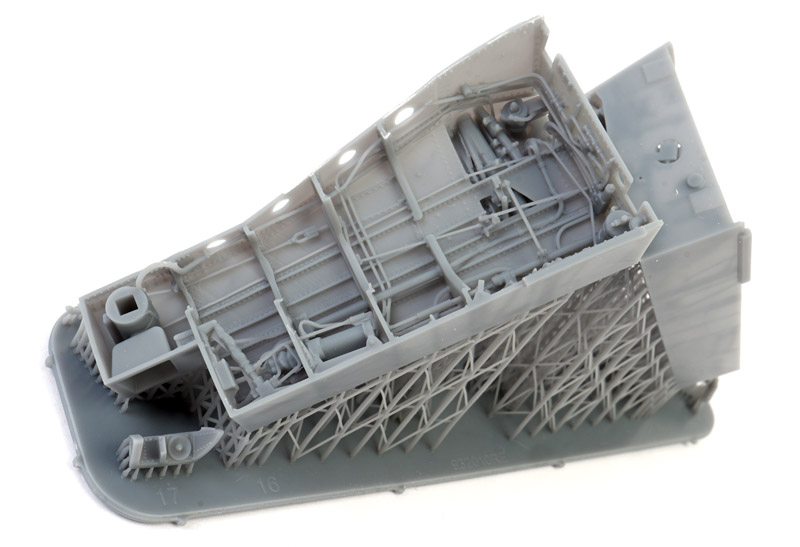
The kit comprises just 84 grey plastic parts (eight marked "not for use"), 72 grey 3D-printed resin parts, 33 clear plastic parts (five marked "not for use"), nine brass photo-etched parts on a single fret, die-cut self-adhesive masks, foam wheel-well painting plugs, decals for eight USAAF aircraft and a 112 page reference book.
You can subtract another handful of optional plastic parts depending on your chosen configuration.
The parts breakdown is conventional, with the injection-moulded plastic providing the primary airframe components while the 3D-printed parts supply the majority of the fine detail.
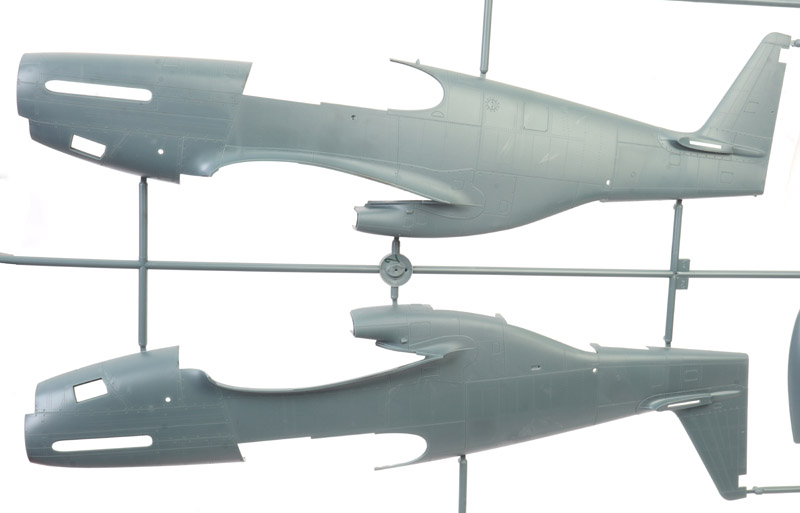
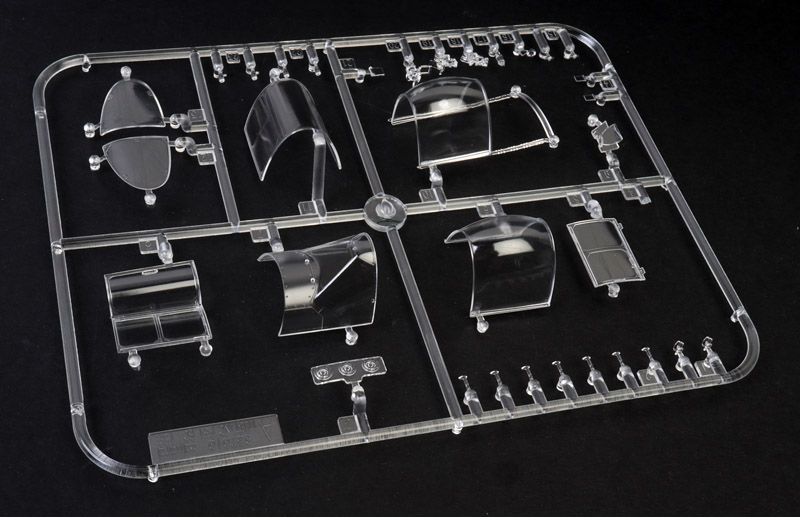
The fuselage is moulded with the early non-fillet fin. Both the standard framed canopy and clear vision Malcolm Hood are included.
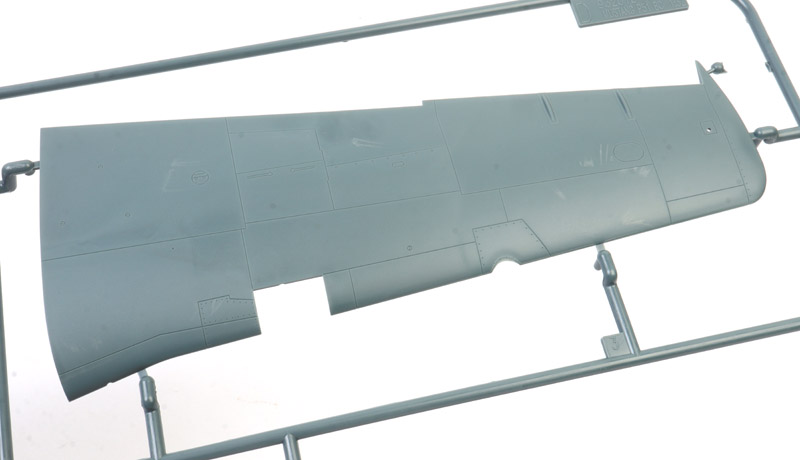
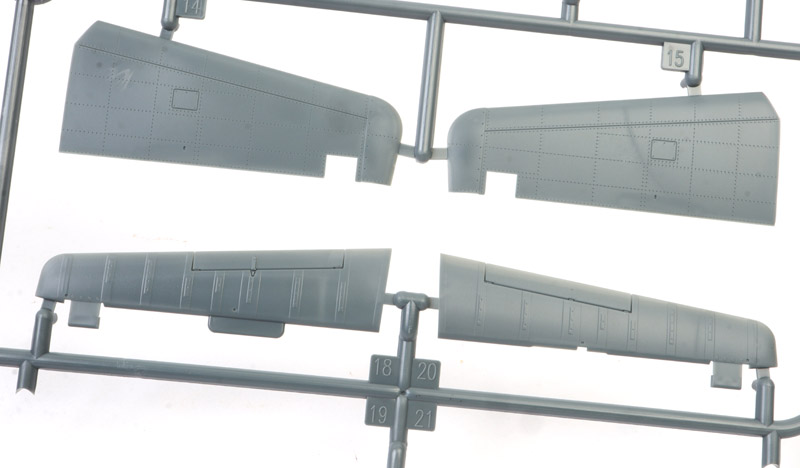
The plastic components comprise the basic airframe: fuselage, wings, tailplanes, control surfaces including separate positionable flaps, plus details such as the 90-gallon drop tanks, undercarriage doors, propeller blades and other ancillary parts.
Surface detail is beautifully executed, featuring crisp recessed panel lines and restrained rows of recessed rivets. The wings correctly feature recessed panel lines but omit rivet detail (except the centre lower wing section), reflecting the puttied and smoothed finish of the full-sized aircraft. I think this approach will satisfy most modellers.
The fabric-covered control surfaces display restrained and convincing raised rib tapes.
The 3D-printed resin is where the real gold dust lies. These delicate parts are protected inside two small cardboard boxes, with each printing base secured using double-sided tape. My resin parts arrived entirely unscathed despite the long trip to Australia.
The 3D-printed parts include:
Main wheels with two styles of wheel covers
Main undercarriage legs (plastic alternatives are also supplied)
Fully detailed one-piece wheel wells
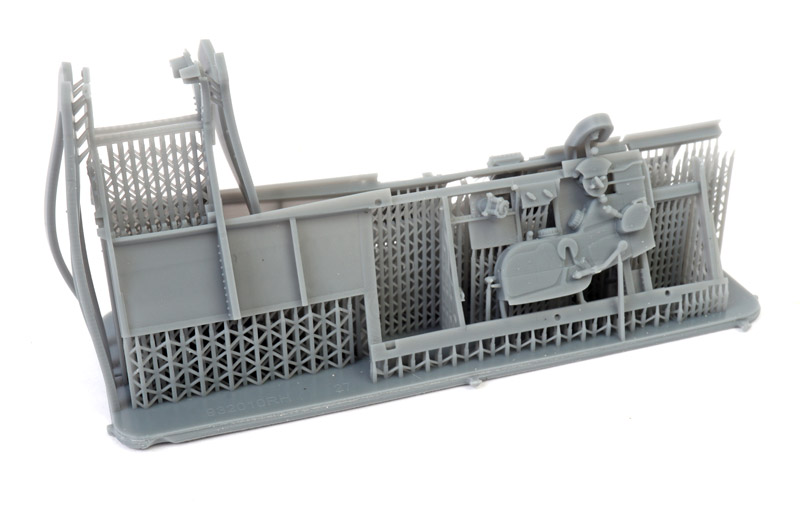
Integral cockpit floor and rear fuselage structure
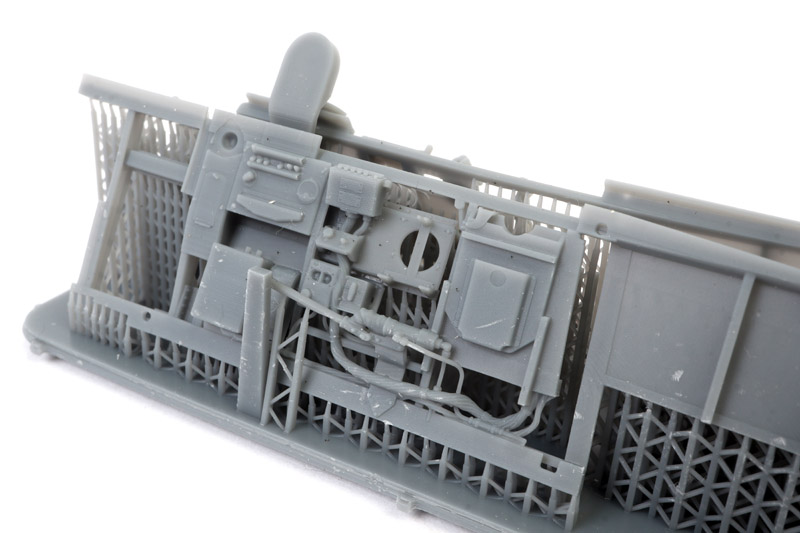
Full-length cockpit sidewalls
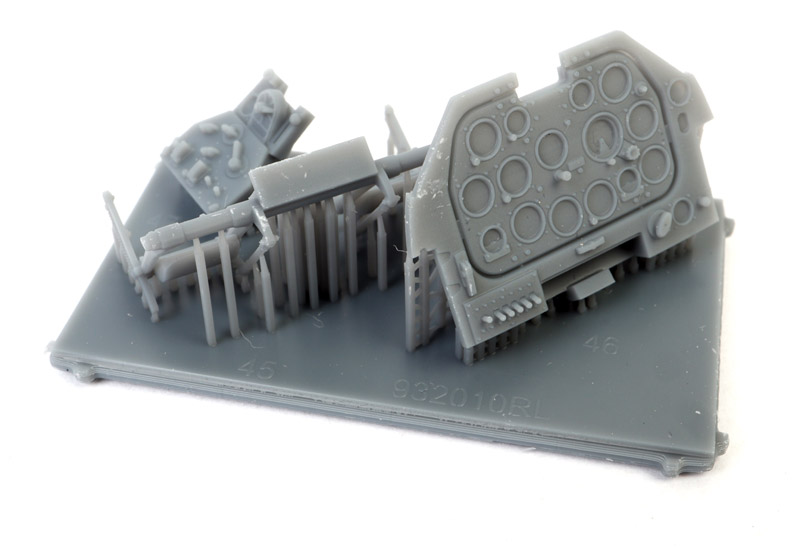
Instrument panel
Auxiliary panel
Rudder pedals
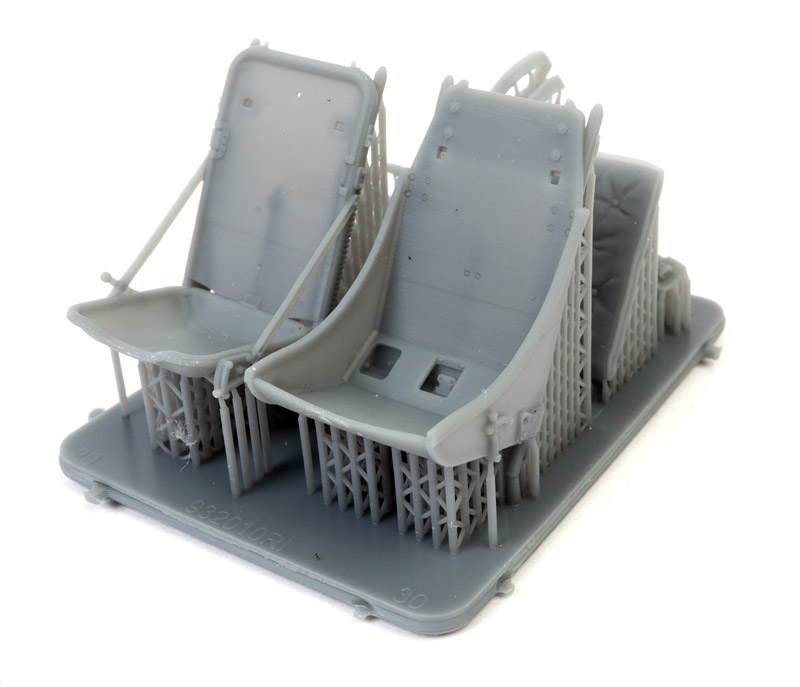
Two styles of pilot's seat
Pilot's seat armour and mounting
Separate harnesses for either an occupied or empty seat
Two styles of armoured windscreen glass and coaming
Rear-view mirrors
Oxygen hose
Battery and radio equipment
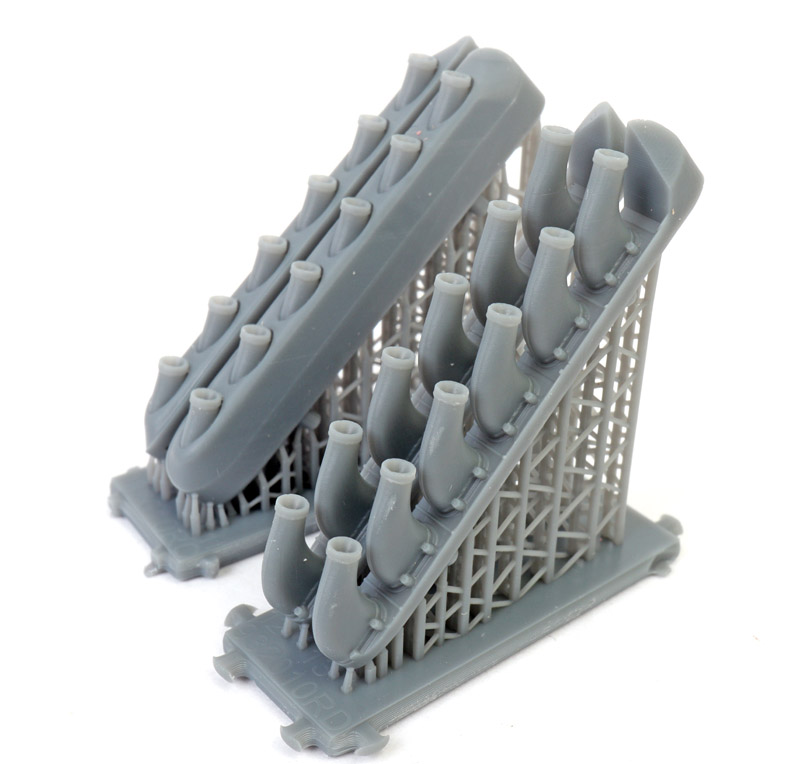
Shrouded and unshrouded exhausts
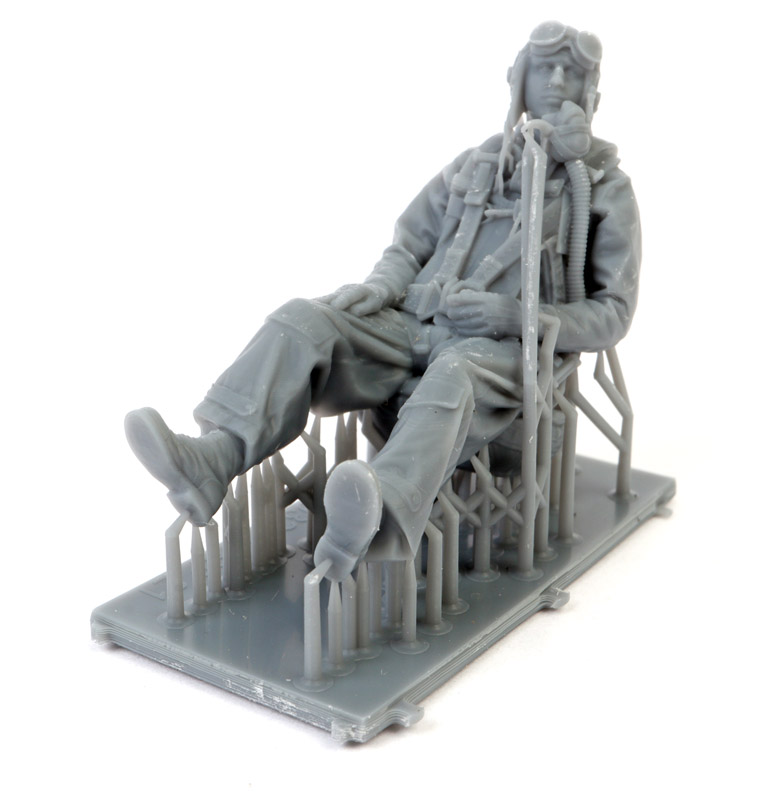
Seated pilot figure
Construction begins with the superbly detailed cockpit. The modeller first chooses between the two pilot's seats and whether to install the beautifully sculpted seated pilot figure.
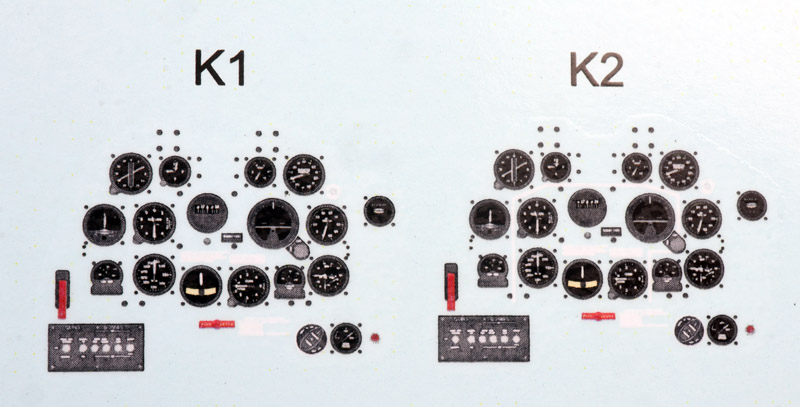
The instrument panel is resin with decal overlay for the dial and switch detail.
Amongst Eduard's many clever design innovations is the decision to print the harnesses as separate parts. Two versions are supplied: one with the shoulder straps arranged around the seated pilot's shoulders, and another draped naturally over an empty seat.
The cockpit sidewalls are each printed as a single, highly detailed component. Behind the pilot, separate parts represent the battery, radio and IFF equipment.
A single Hamilton Standard cuffed propeller assembly is supplied. The blades are moulded in opposing pairs for straightforward assembly.
The exhausts are offered in both shrouded and unshrouded configurations. Each bank is printed as a single length with hollowed-out exhaust stubs.
The main wheel wells are simply outstanding. Structural detail, plumbing and electrical wiring are all represented with remarkable finesse, resulting in an exceptionally busy and convincing appearance.
The main undercarriage legs are supplied in both resin and plastic, allowing the modeller to choose their preferred medium.
Tyres and wheel hubs are separate parts. The tyres feature a finely moulded diamond tread pattern.
The ailerons, landing flaps and rudder are all separate parts. The flaps feature a combination of recessed and raised rivet detail and are designed to be displayed lowered.
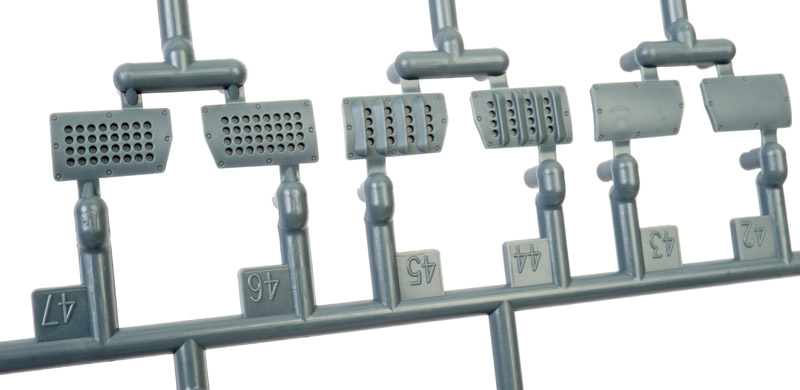
Three styles of carburettor air intake for the lower engine cowling are also included.
The wing leading-edge gun inserts are separate parts with the gun muzzles already hollowed out. This clever engineering eliminates a centreline seam through the gun barrels.
The radiator exit flap may be posed open.
External stores comprise two 75-gallon metal drop tanks.
The clear parts are beautifully moulded—thin, distortion-free and exceptionally transparent. The windscreen incorporates a small section of the upper fuselage, ensuring a precise fit and a clean painting demarcation.
Both canopies provide options for open or closed. I particularly like the way Eduard has moulded the open framed canopy as a single piece incorporating one side panel. This should improve both alignment and strength.
The gunsight, navigation lights and various lenses are also moulded in clear plastic, with spare examples included for several of these tiny parts.
Markings
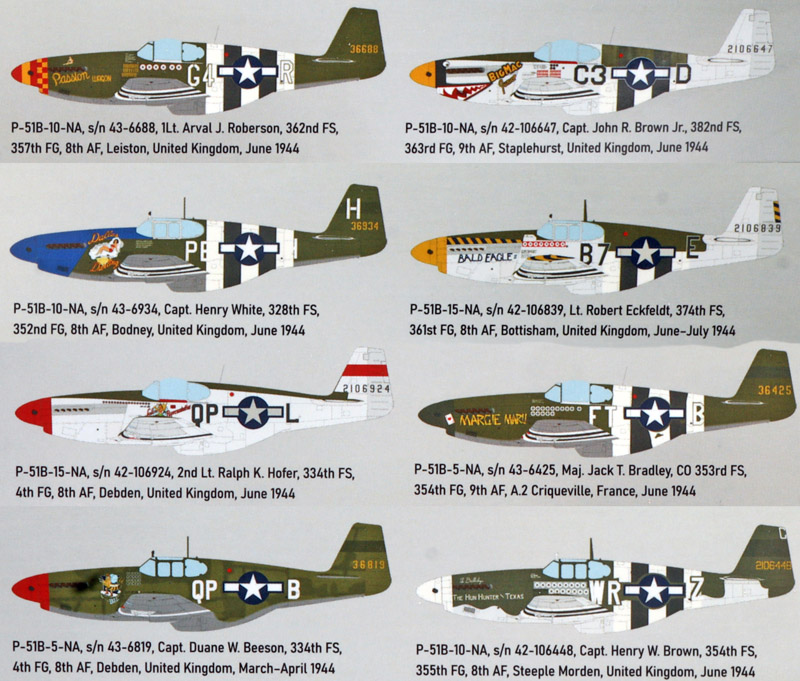
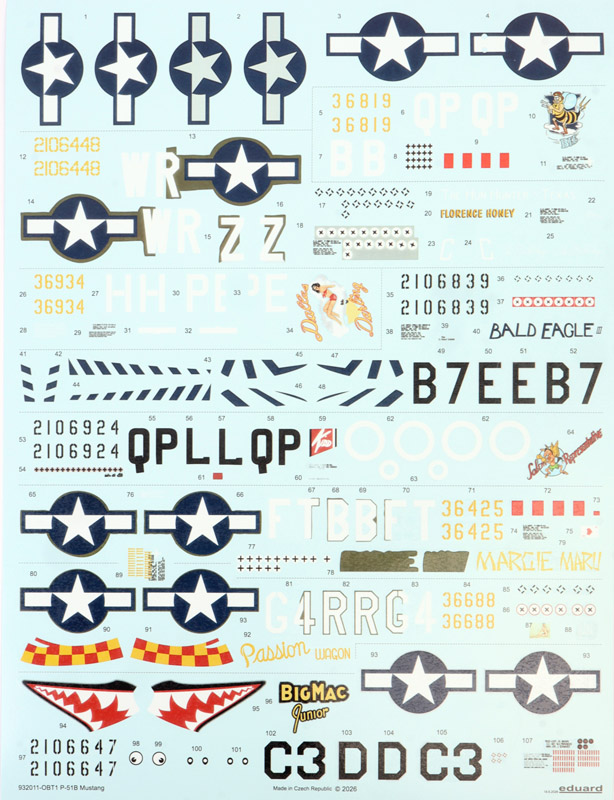
Markings are supplied for eight USAAF P-51B and P-51C Mustangs based in the United Kingdom between March and June 1944.
A great selection of different colours and markings are offered. Here are the specific subjects:
P-51B-5-NA, s/n 43-6819, Capt. Duane W. Beeson, 334th FS, 4th FG, 8th AF, Debden, United Kingdom, March"April 1944
P-51B-10-NA, s/n 42-106448, Capt. Henry W. Brown, 354th FS, 355th FG, 8th AF, Steeple Morden, United Kingdom, June 1944
P-51B-10-NA, s/n 43-6934, Capt. Henry White, 328th FS, 352nd FG, 8th AF, Bodney, United Kingdom, June 1944
P-51B-15-NA, s/n 42-106839, Lt. Robert Eckfeldt, 374th FS, 361st FG, 8th AF, Bottisham, United Kingdom, June"July 1944
P-51B-15-NA, s/n 42-106924, 2nd Lt. Ralph K. Hofer, 334th FS, 4th FG, 8th AF, Debden, United Kingdom, June 1944
P-51B-5-NA, s/n 43-6425, Maj. Jack T. Bradley, CO 353rd FS, 354th FG, 9th AF, A.2 Criqueville, France, June 1944
P-51B-10-NA, s/n 43-6688, 1Lt. Arval J. Roberson, 362nd FS, 357th FG, 8th AF, Leiston, United Kingdom, June 1944
P-51B-10-NA, s/n 42-106647, Capt. John R. Brown Jr., 382nd FS, 363rd FG, 9th AF, Staplehurst, United Kingdom, June 1944
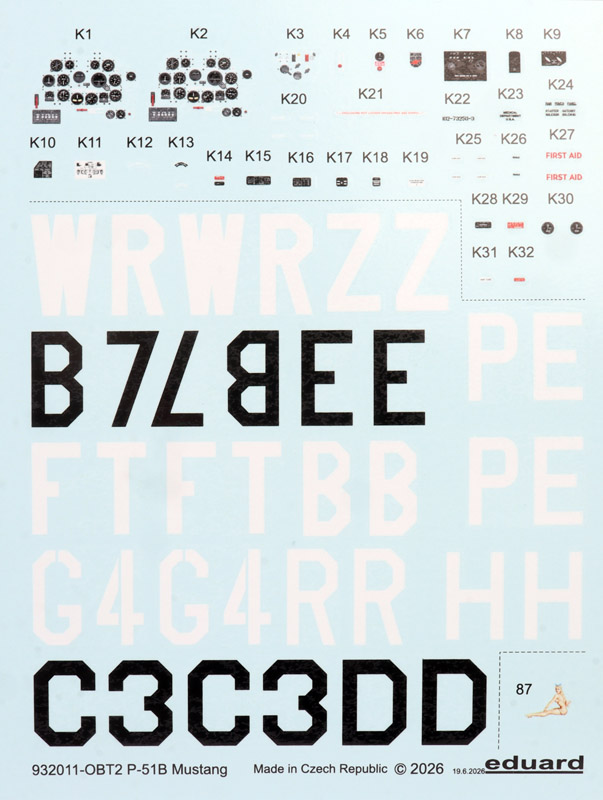
Decals are printed perfectly by Eduard.
Another thoughtful touch is that, where appropriate, the decals incorporate the outlines of temporary markings such as D-Day invasion stripes, or code letters that had been painted out. This adds an extra level of realism without requiring complex masking or painting. This is the frst time that Eduard has done this as far as I can recall.
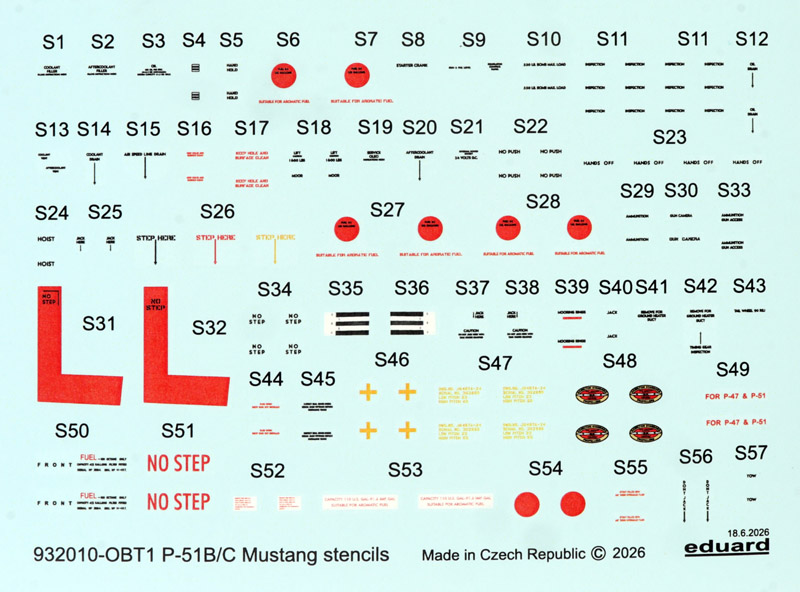
Two additions sheets are also supplied.
Eduard masks are provided.
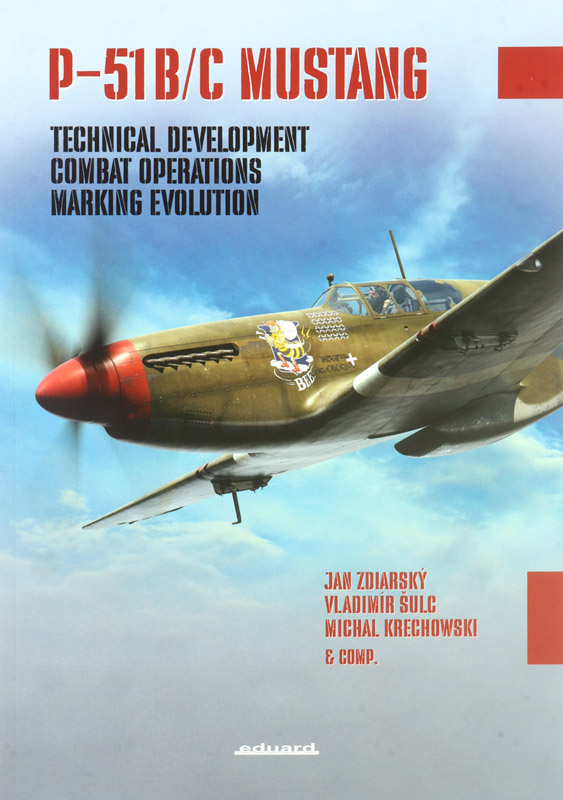
Eduard has also included a substantial 112 page reference book covering technical development, combat operations and marking evolution. I will review this separately in the coming days.
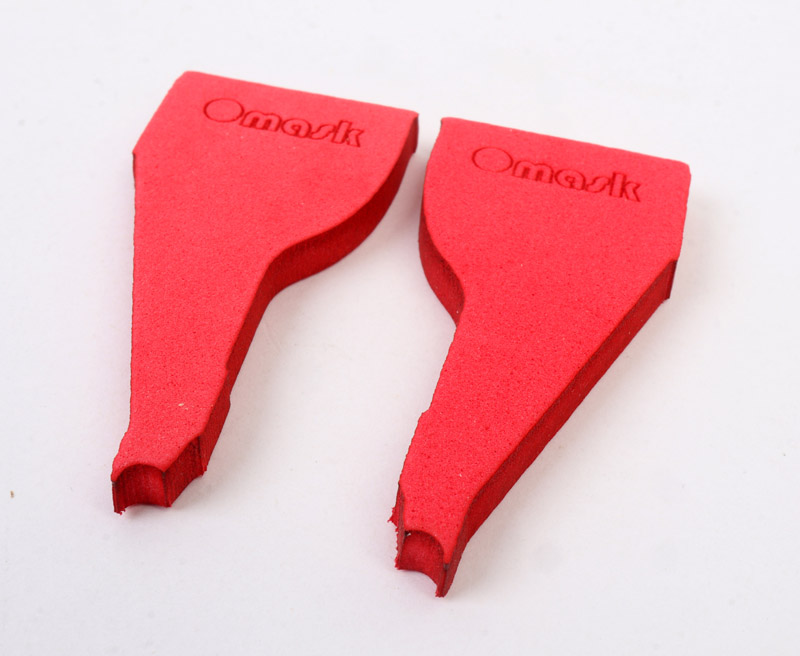
A set of Omask foam wheel well plugs rounds out the impressive package.
Conclusion
Eduard's new 1/32 scale Royal Hybrid P-51B Mustang is an impressive step forward for the company’s innovative Hybrid range. The combination of crisply moulded plastic components with superbly executed 3D-printed detail delivers exceptional fidelity while simplifying assembly in areas that have traditionally challenged modellers.
The engineering is thoughtful throughout, surface detail is outstanding, and the inclusion of high-quality decals, masks and multiple configuration options rounds out a comprehensive package.
Whether your interest lies in the Merlin Mustang itself or the Eighth Air Force's long-range escort campaign over Europe, this kit offers an excellent foundation for an accurate and highly detailed replica.
 Home
| What's New |
Features |
Gallery |
Reviews |
Reference |
Forum |
Home
| What's New |
Features |
Gallery |
Reviews |
Reference |
Forum |