Spitfire Mk.Vb (Early)
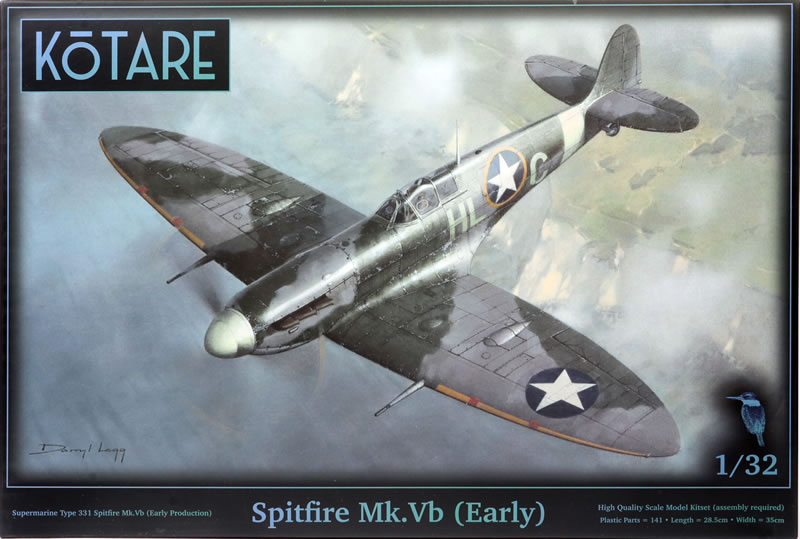
Kotare Models, 1/32 scale
S
u m m a r y : |
Description and Item No.: |
Kotare Models Kit No. K32006 - Spitfire Mk.Vb (Early) |
Contents and Media: |
137 parts in grey plastic (less 13 marked not for use, with a further ten or so provided as optional parts that are not required for this version); nine clear parts (two marked not for use); decals offering three marking options; comprehensive instructions. |
Price: |
USD$109.00 plus shipping available online from Kotare Models' webstore |
Scale: |
1/32 |
Review Type: |
First Look |
Advantages: |
Clever parts breakdown; new parts speciffically for the Spitfire Mk. Vb; manageable number of parts; beautifully detailed; perfectly moulded; authentic surface textures; comprehensive instructions and notes; high quality Cartograf decals. |
Disadvantages: |
None noted. |
Recommendation: |
Kotare’s 1:32 scale Spitfire Mk.Vb (Early) continues the company’s impressive run of form and builds confidently on the strengths of their earlier Mk.I releases. The restrained parts count, intelligent engineering and consistently high moulding quality combine to produce a kit that is both a pleasure to examine in the box and is clearly designed to be built.
Surface textures are subtle and convincing, the cockpit is outstanding straight from the box, and the inclusion of thoughtful features such as rigging guides, variant-specific parts and clear, well-researched instructions reflects Kotare’s deep understanding of the subject and of modellers’ needs. Importantly, none of this complexity is forced upon the builder; choices are logical, optional, and clearly explained.
This is not a kit that relies on sheer parts count to impress. Instead, it will reward careful assembly and painting, offering an accurate, well-detailed Spitfire Mk.Vb without gimmicks or needless complication. Whether built straight from the box or used as the foundation for super-detailing, Kotare’s Spitfire Mk.Vb (Early) is an outstanding addition to their 1:32 Spitfire family.
Highly Recommended. |
Reviewed by Brett Green

The Supermarine Spitfire Mk.Vb was never intended to be a definitive solution. Instead, it emerged as an expedient response to a rapidly changing air war—and in doing so became one of the most important and widely used fighters of the Second World War. Robust, adaptable and produced in vast numbers, the Mk.Vb carried the RAF through one of its most dangerous transitional periods and left an enduring legacy far greater than its “interim” origins suggest.
An Urgent Need
By late 1940, the RAF faced a looming problem. While the Spitfire Mk.I and Mk.II had proven decisive during the Battle of Britain, intelligence reports and early encounters pointed to increasingly capable German fighters. The full redesign that would become the Spitfire Mk.VIII and Mk.IX was still some distance away. What was needed was a quick performance boost using existing airframes and production lines.
The answer was the Rolls-Royce Merlin 45, offering a substantial increase in power over earlier engines. Rather than delay for a new airframe, Supermarine adapted the proven Spitfire structure to accept the new engine. The result was the Spitfire Mk.V—an aircraft born of necessity, but destined for ubiquity.
Evolution – Same Grace, More Grunt
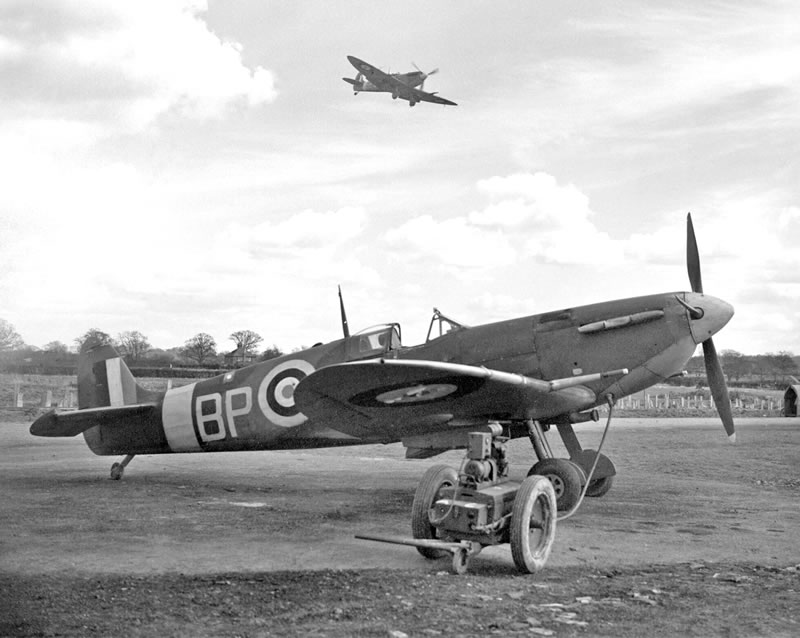
At its core, the Spitfire Mk.Vb was a refined Mk.I/II airframe with a more powerful engine and heavier armament. The “b” wing configuration became the most common, mounting two 20 mm Hispano cannon and four .303 Browning machine guns, striking an effective balance between firepower and weight.
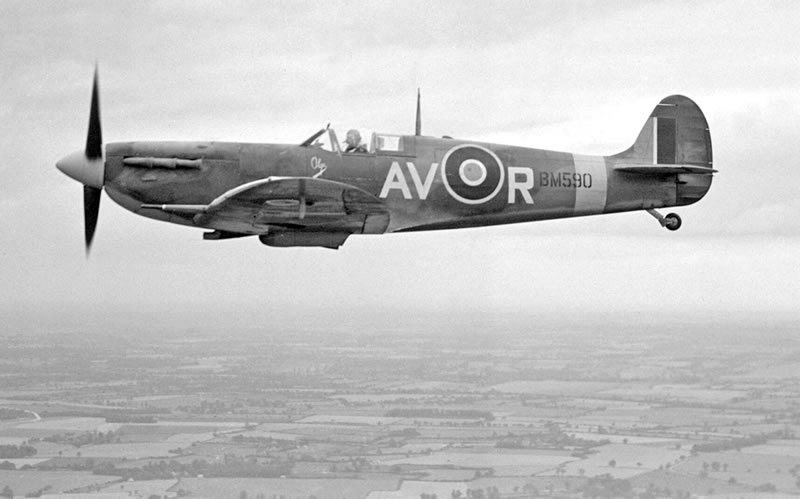
Externally, the Mk.Vb retained the classic Spitfire lines, but subtle changes accumulated over time: different propellers, revised oil coolers, strengthened structures, and later, clipped wings for improved low-altitude performance. The design’s greatest strength lay in its adaptability—allowing it to be tailored for everything from high-altitude interception to desert warfare.
Early, Mid and Late Mk.Vb Characteristics
Early Mk.Vbs were often straightforward conversions, retaining features such as external armour, fabric-covered ailerons, and early canopy styles. Performance was a clear step up from earlier marks, but the aircraft was still very much a product of 1940 thinking.
Mid-production Mk.Vbs introduced metal skinned ailerons, improved propellers, and refined systems. These aircraft formed the bulk of Fighter Command’s strength through 1941–42 and were increasingly adapted for overseas service.
Late Mk.Vbs reflected the pressures of global war. Tropicalised Mk.Vb Trop aircraft carried bulky Vokes or Aboukir filters, while others received clipped wings, additional armour, or field-modified equipment. Finish quality varied, but combat capability remained competitive.
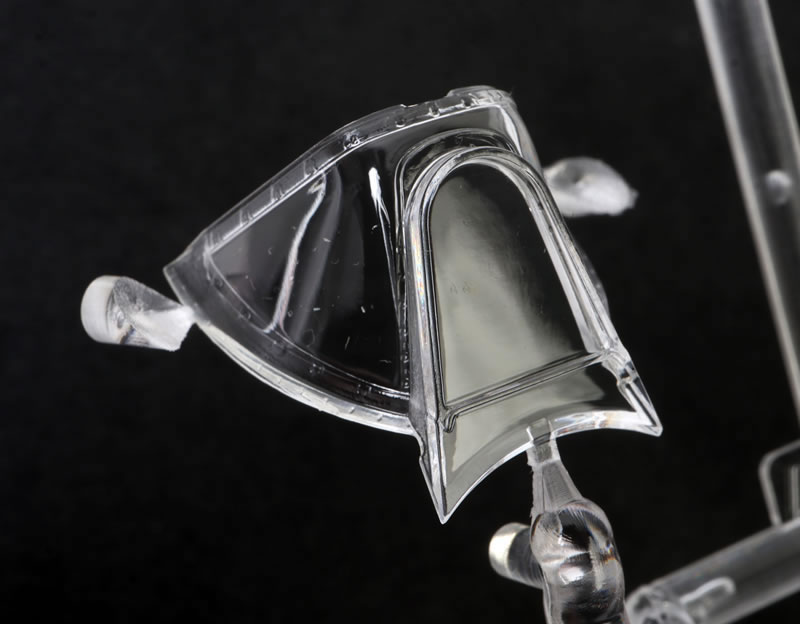
Armour protection also evolved during Mk.Vb production. Early Mk.Vbs typically retained the external armoured windscreen, a flat, bullet-resistant glass panel mounted ahead of the standard curved windscreen, a feature carried over from late Mk.I and Mk.II aircraft. While effective, it slightly compromised forward visibility and contributed to drag. As production matured, this was progressively replaced by internal armoured glass mounted behind the standard windscreen within the cockpit.
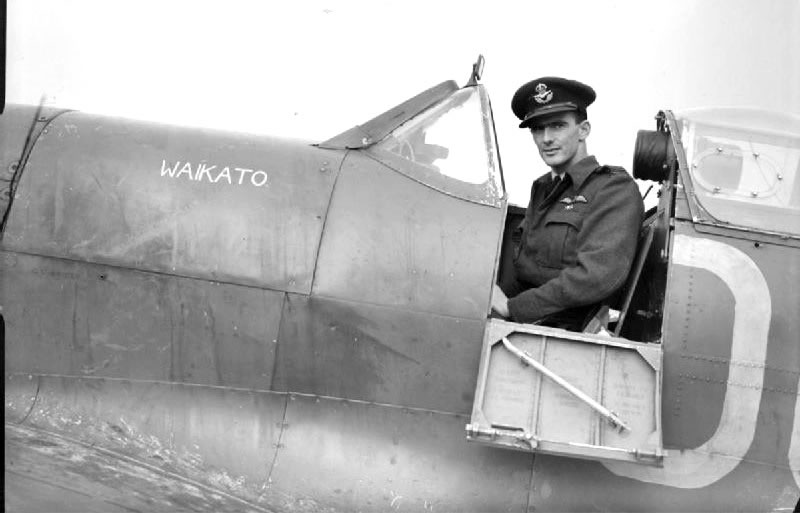
This internal armour provided equivalent protection with cleaner external lines and improved pilot visibility, and it became standard on mid- to late-production Mk.Vbs, including the majority of aircraft built from late 1941 onward. Operational requirements, field repairs, and local modifications meant that overlap was common, and both arrangements could be seen in service well into 1942.
Service Introduction
The Mk.Vb entered service in early 1941, rapidly equipping front-line RAF squadrons. It served across almost every major theatre:
- North-West Europe, facing the rising threat of the Fw 190
- North Africa and the Mediterranean, where tropicalised aircraft were essential
- Malta, where the Mk.Vb played a decisive role in saving the island
- The Far East, where it faced very different tactical challenges
Few fighters of the war could claim such geographic reach.
Focke-Wulf Face-Off
Initially, the Mk.Vb enjoyed a clear advantage over the Bf 109 E and early Bf 109 F. However, the arrival of the Focke-Wulf Fw 190 A in mid-1941 abruptly shifted the balance. At low and medium altitudes, the German fighter outperformed the Spitfire Mk.Vb in speed and roll rate, forcing the RAF onto the defensive.
Despite this, the Mk.Vb remained dangerous in skilled hands. Its turning ability, climb, and excellent cockpit visibility allowed experienced pilots to survive—and win—against more modern opponents. Ultimately, it was the Mk.Vb that held the line until the arrival of the Merlin 61-powered Mk.IX restored parity.
An Interim That Defined an Era
In total, more than 3,900 Spitfire Mk.Vs were built, with the Vb forming the majority. Though overshadowed by later marks, the Mk.Vb’s importance cannot be overstated. It fought when nothing better was available, adapted to every conceivable role, and served wherever the RAF needed a modern fighter—often under the harshest conditions imaginable.
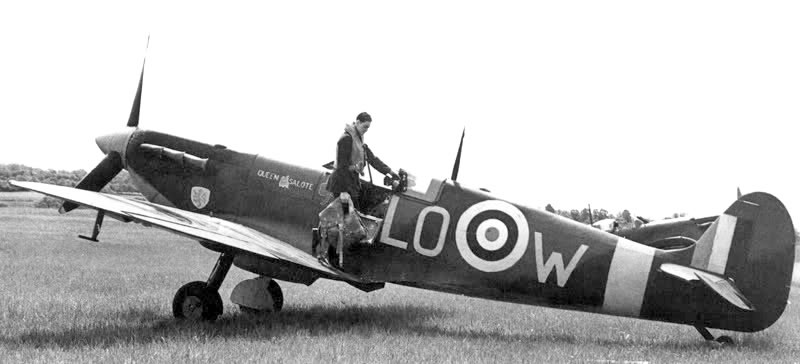
The Spitfire Mk.Vb may not have been the fastest, the most powerful, or the most refined of the breed. But it was the right aircraft at the right time, and without it, the RAF’s air war between 1941 and 1942 would have been far more perilous. In that sense, the Mk.Vb stands not merely as an interim solution, but as one of the true pillars of Spitfire history.
Spitfire Mk.Vb in 1:32 scale
The Spitfire Mk.Vb has been relatively poorly served in 1:32 scale.
Hasegawa’s 1970s-vintage Spitfire Mk.Vb was a product of its time with raised panel lines and basic detail, although it is quite accurate in outline.
The kit may be built as a standard Mk.Vb with full or clipped wings, or a tropicalised version with both Vokes or Aboukir filter supplied.
Windscreen options cover both internal and external armour layouts, and you are even offered a choice between Rotol and de Havilland propellers.
However, the upper engine cowling is slightly flat on top, and the fuselage is a bit too narrow behind the cockpit. A number of sink marks are also present.
The only other 1:32 scale Spitfire Mk.Vb today is from Hobby Boss. Sadly, this suffers from a number of inaccuracies including the windscreen, fuselage width and more.
So here we are in 2026 with no 1:32 scale kit truly worthy of this interim but indispensable fighter.
Kotare's 2023 debut release was a 1:32 scale mid-production Spitfire Mk.Ia. This kit was heaped with well-deserved praise, and subsequent releases were equally well received.
Kotare Models has now expanded the family to include a 1:32 scale Spitfire Mk.Vb (Early).
This variant may be identified as an early production Spitfire Mk.Vb from the external windscreen armour and the earliest adoption of metal-skinned ailerons.
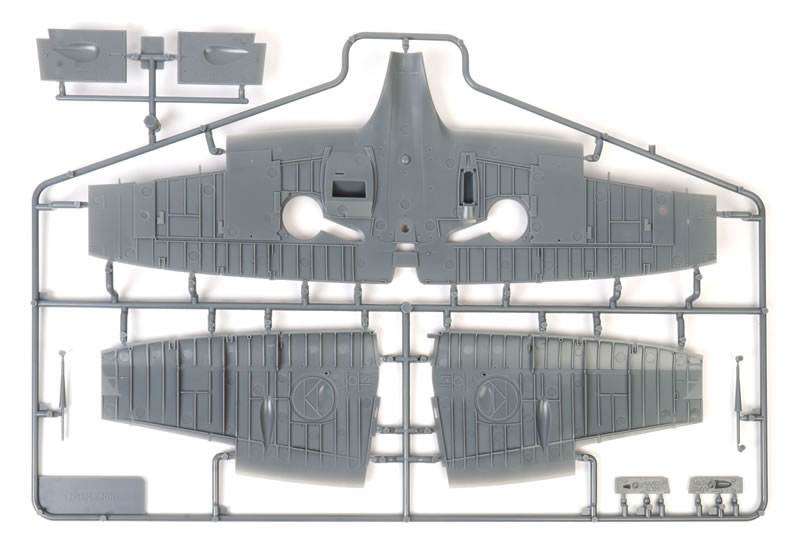
The kit comprises 137 parts in grey plastic (13 marked not for use, with a further ten or so provided as optional parts that are not required for this version), nine clear parts (two marked not for use), decals offering three marking options, and comprehensive instructions presented in a 32-page A4-sized booklet.
Compared to the initial Spitfire Mk.I (Mid) kit, this release incorporates a number of new and modified parts.
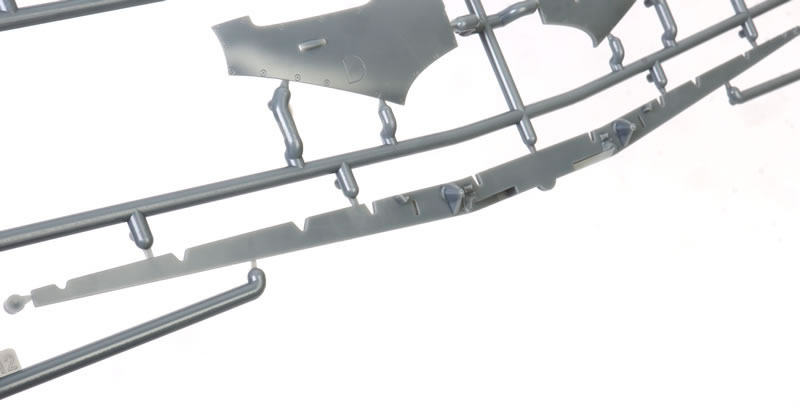
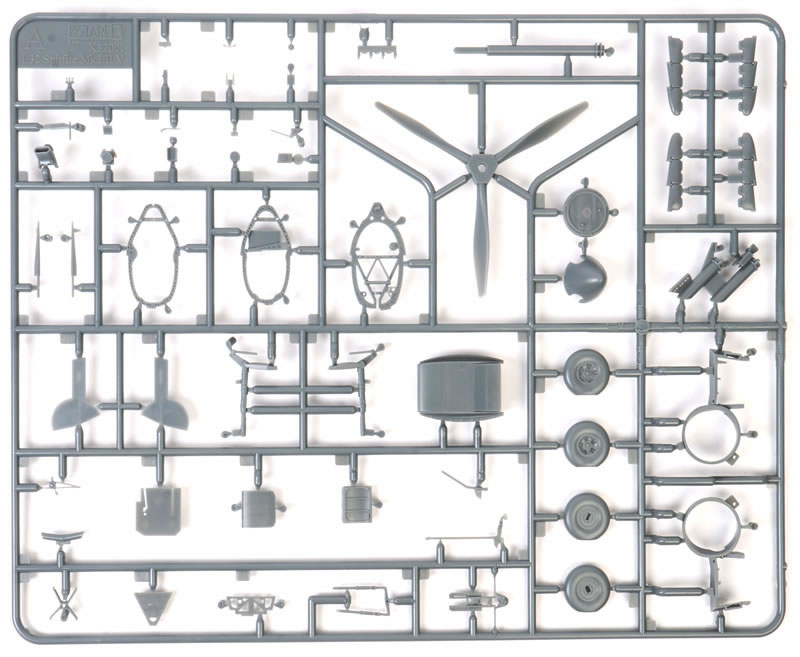
The kit is made up from the following sprues:
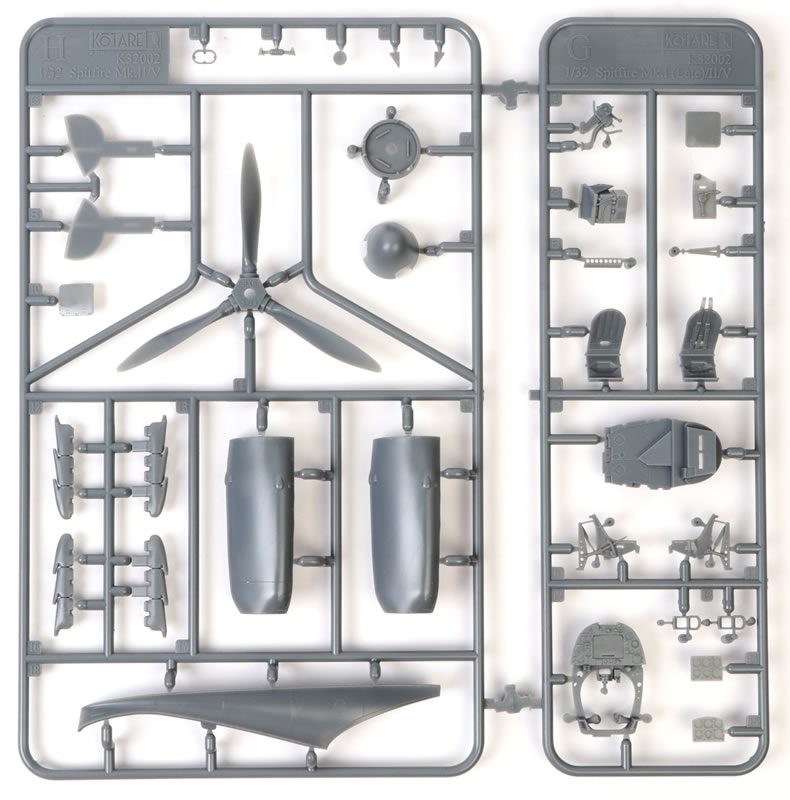
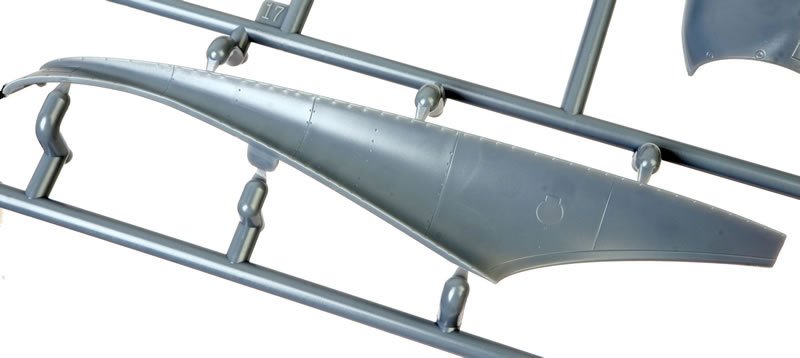
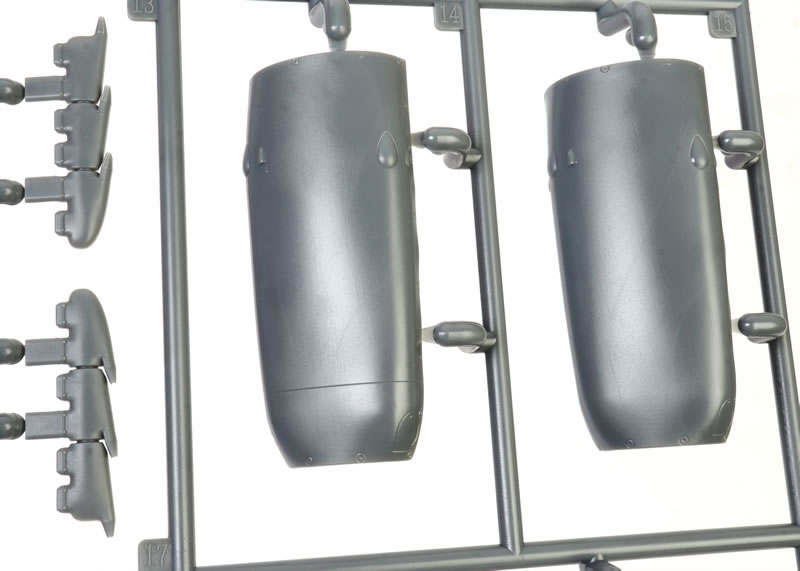
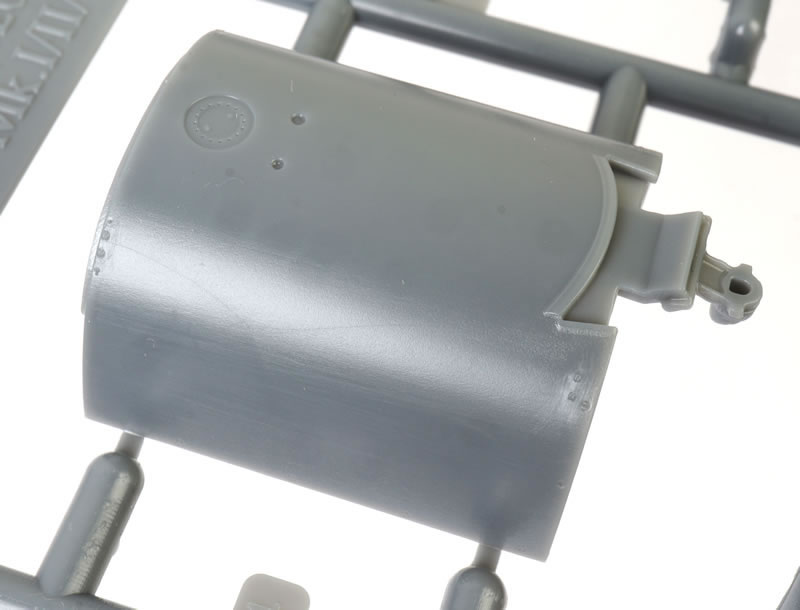
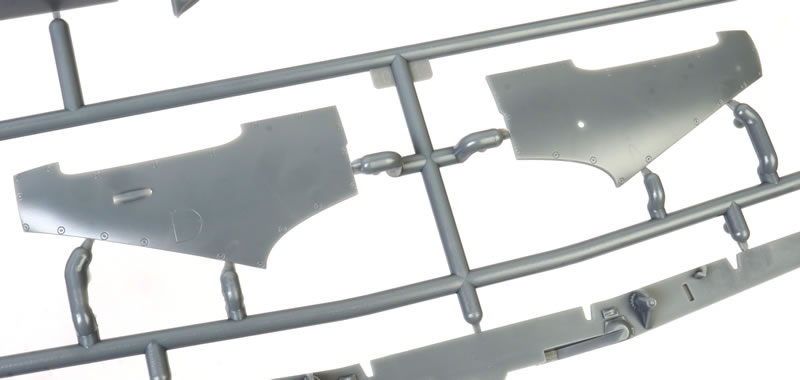
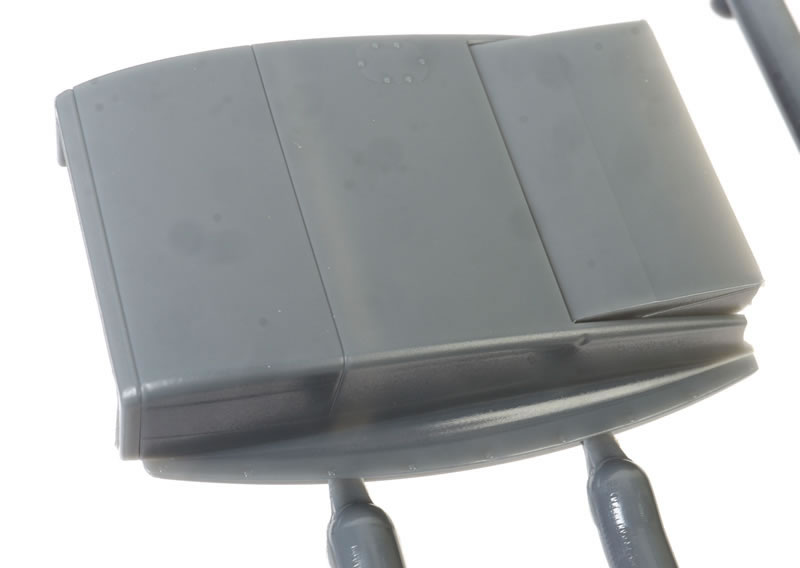
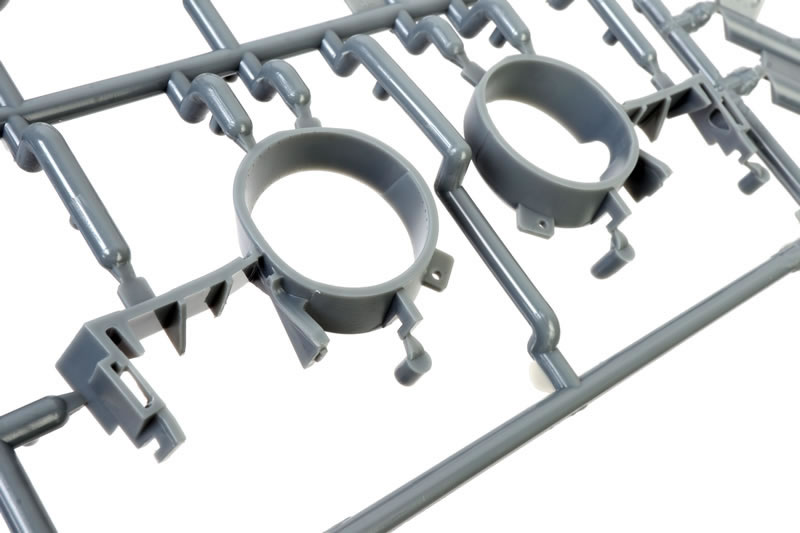
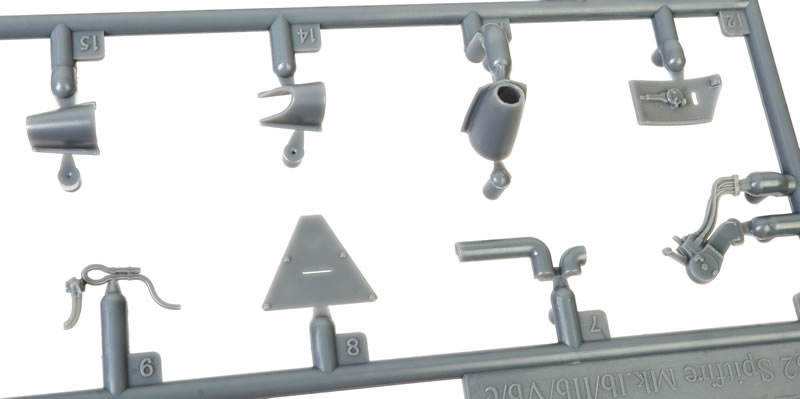
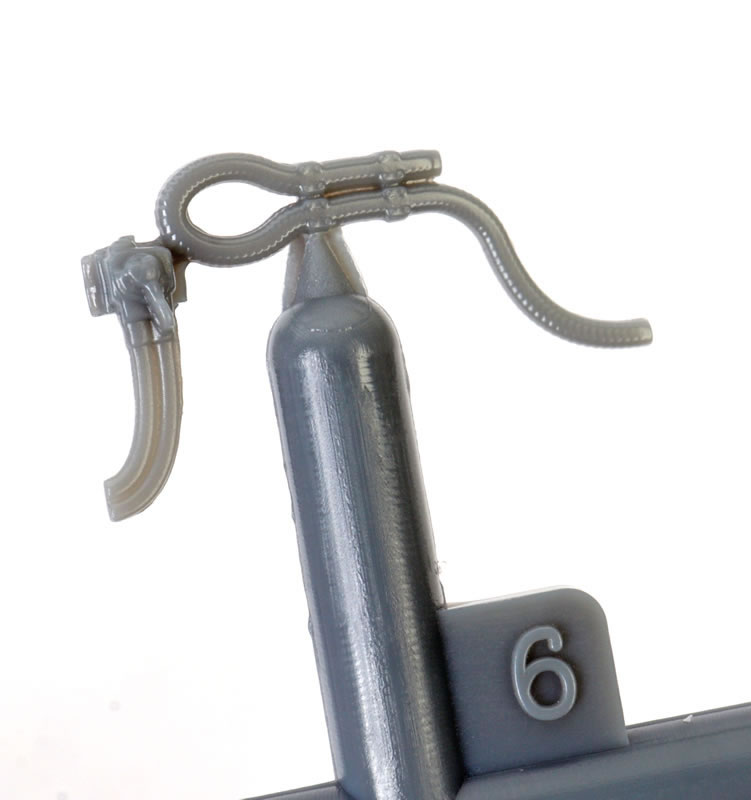
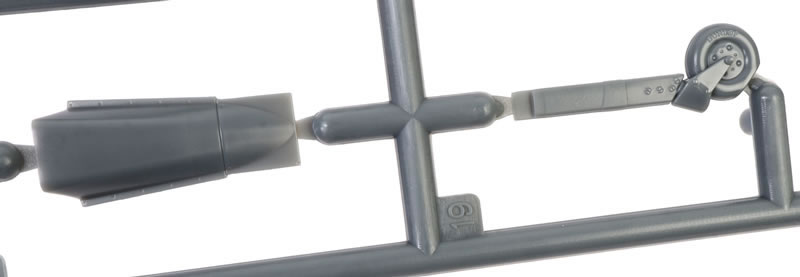
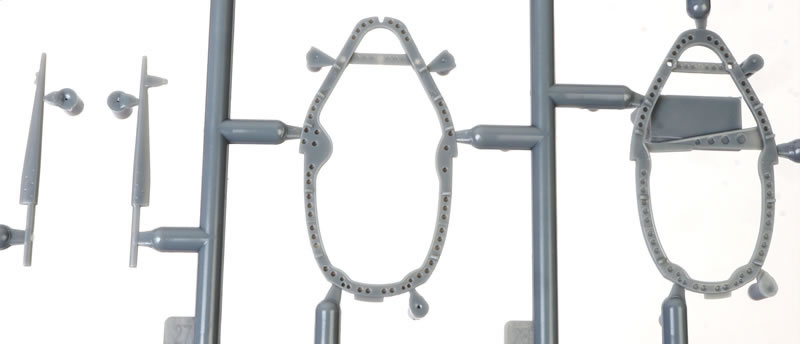
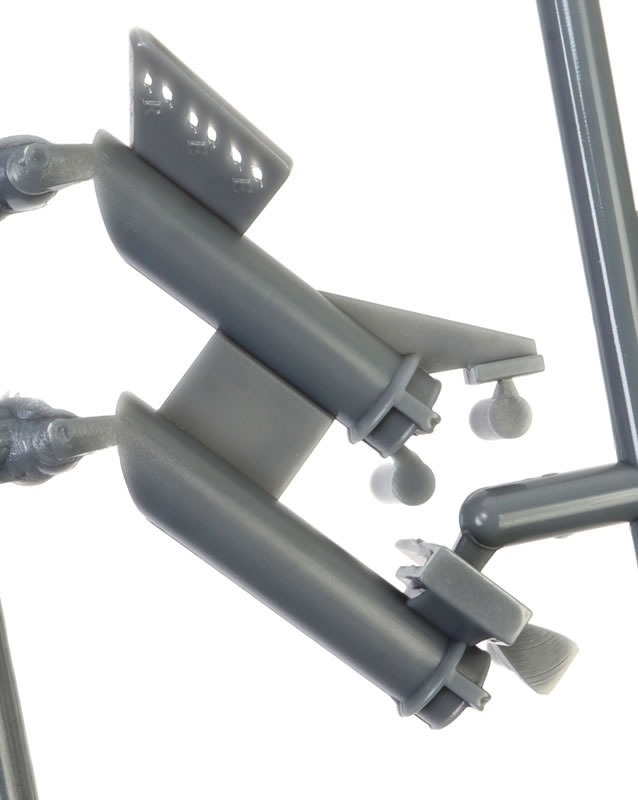
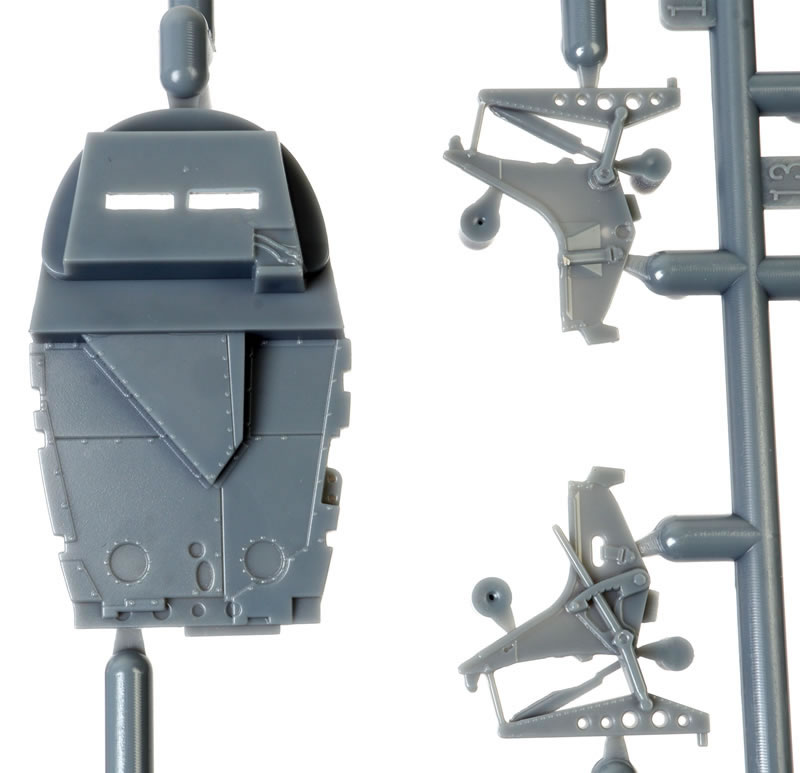
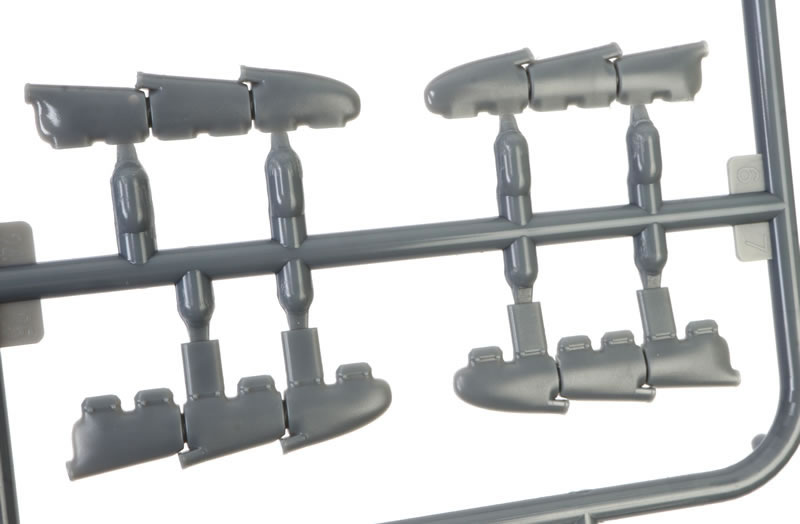
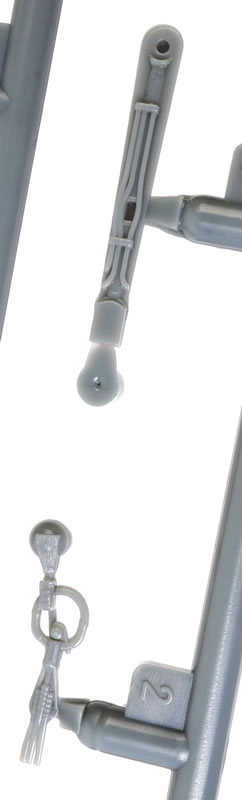
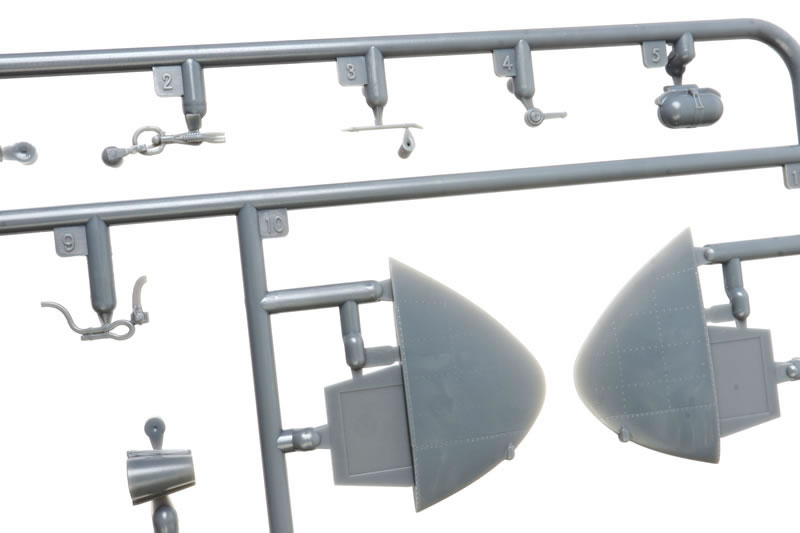
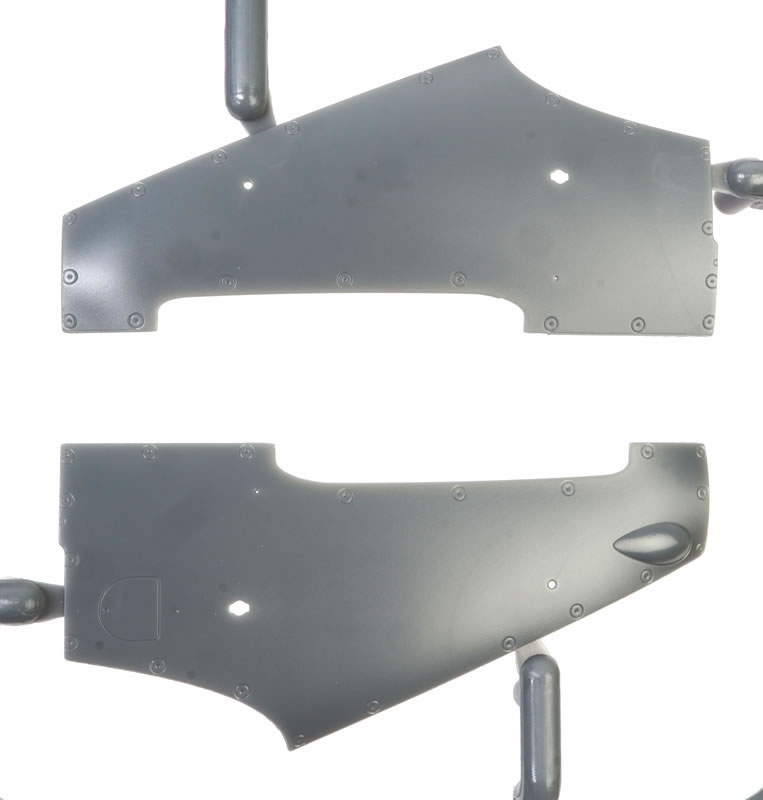
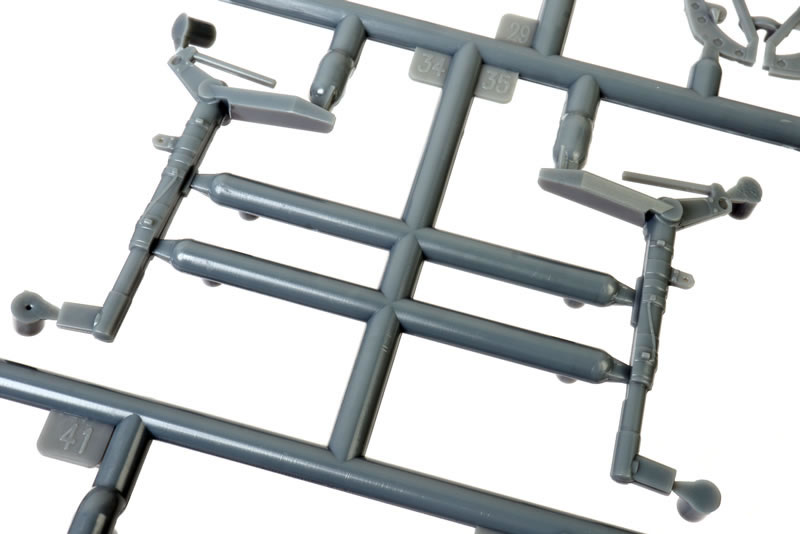
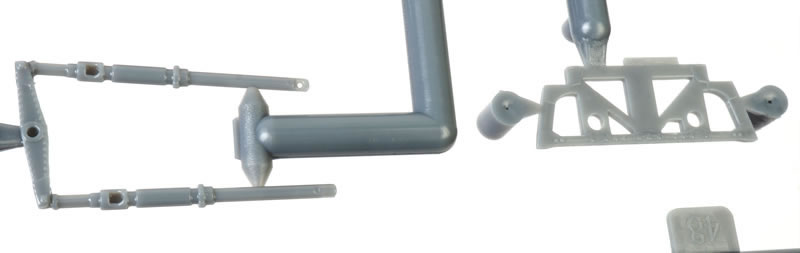
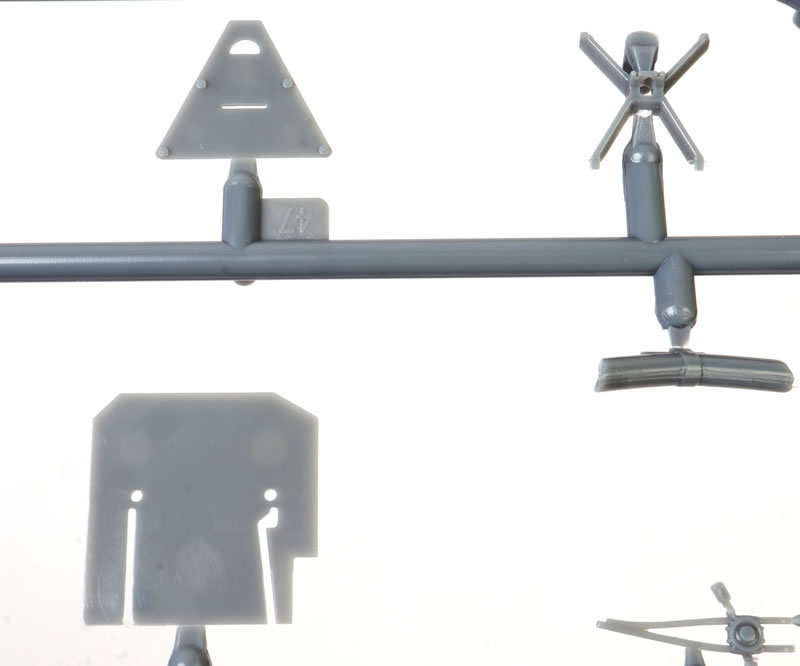
According to Kotare, there are 38 all-new tooled parts. These include wings, 20 mm cannon barrels, alternate magazine fairings, control column, engine-driven undercarriage controls, cockpit sidewalls, starboard engine cowlings, ailerons, and oil cooler fairings. Additional new parts include a windscreen with de-icing, canopy hood with Martin-Baker jettison system, fireproof bulkhead, dual-height rudder pedals, instrument panel with rectangular and curved flying panels, composite pilot's seat with and without Sutton Type K harness detail, IFF Mk.II, ice and snow guard, port wing fillets with electrical connection door, Supermarine and CBAF undercarriage doors, top engine cowlings, open and closed cockpit doors with optional crowbar, de Havilland and Rotol propellers, and wheels with weighted tyres featuring correct alignment.*
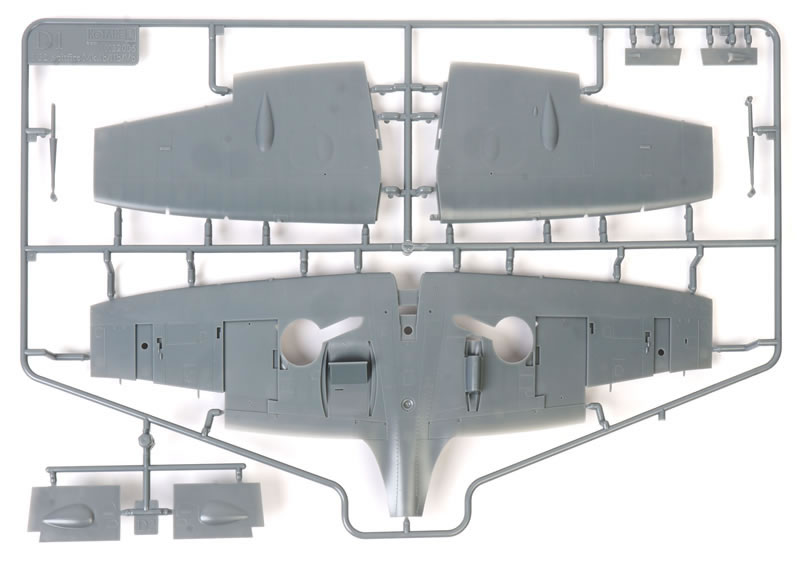
It appears that no stone has been left unturned.
Now let's talk about the number of parts. In today's era of "uber-kits", manufacturers seem to be locked in a race to achieve ever higher part counts. This trend is particularly noticeable in military subjects, but aircraft kits have not been immune.
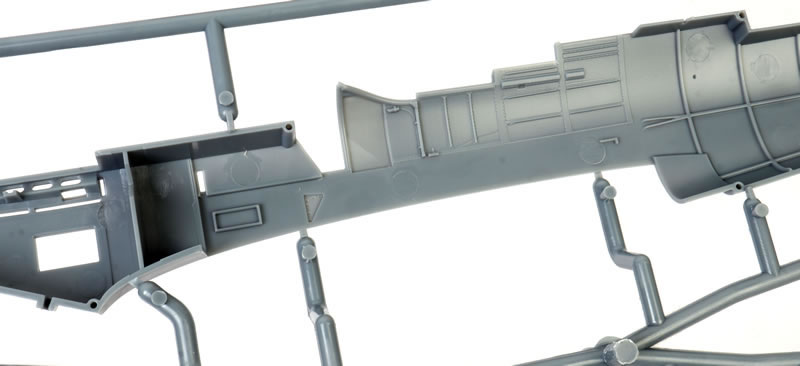
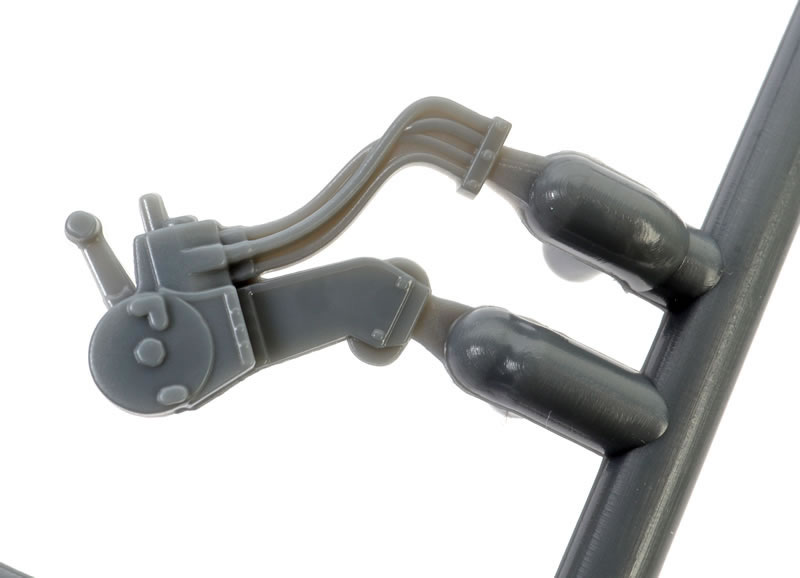
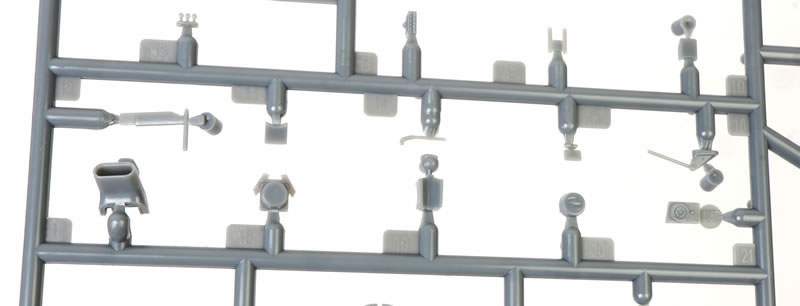
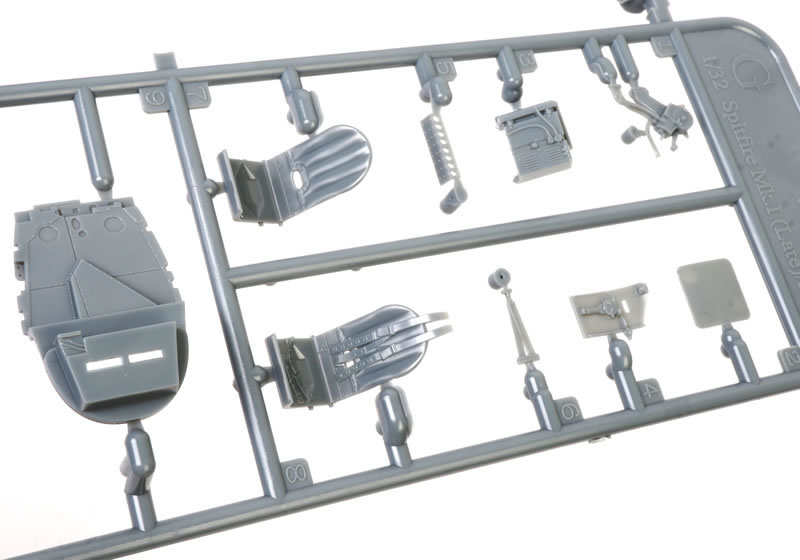
Kotare bucks this trend with a very modest 137 grey plastic parts. Impressively, this has been achieved without compromising detail. Much of the detail is moulded as single parts. For example, the port-side lower cockpit sidewall is presented as one piece, with oxygen bottles, throttle quadrant, dials and boxes all moulded in place-yet the level of detail remains excellent.
The kit is replete with similar examples. Why design a seven-part sub-assembly when a single, well-moulded part will do? This philosophy appears to underpin Kotare's Spitfire range.
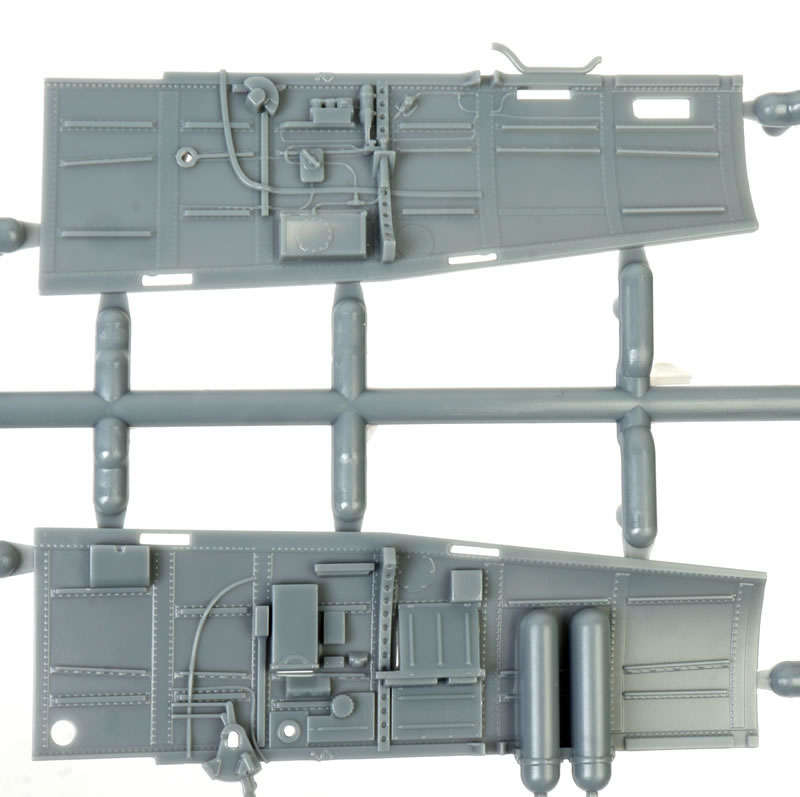
I think this approach will appeal to many modellers who want a beautifully detailed kit but feel intimidated by the daunting part counts of many recent releases. It also firmly positions Kotare's Spitfire Mk.Vb as a kit to be built, not a box destined for the shelf.
Let's take a closer look.
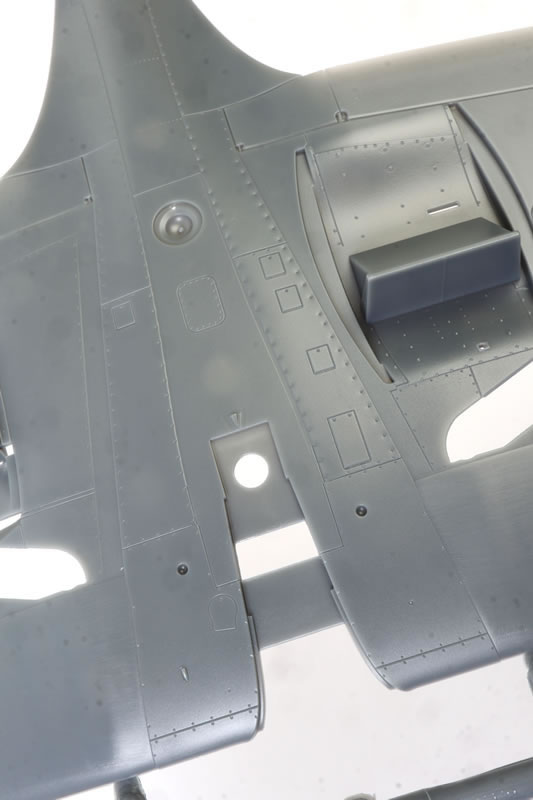
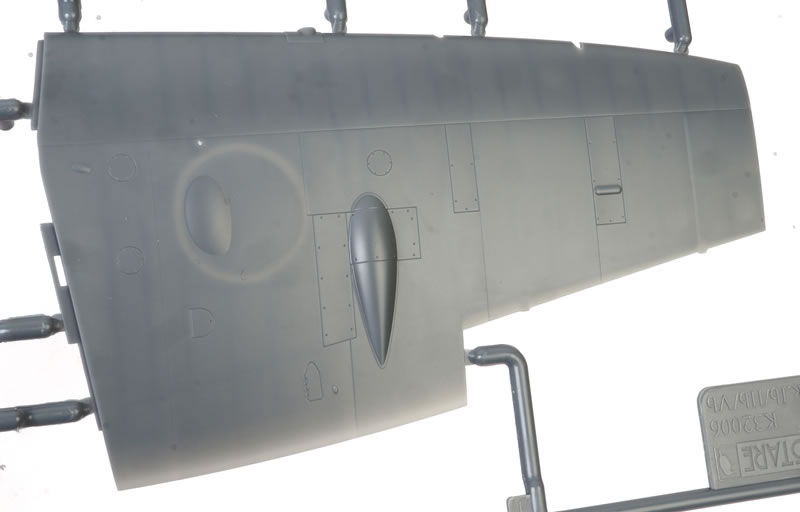
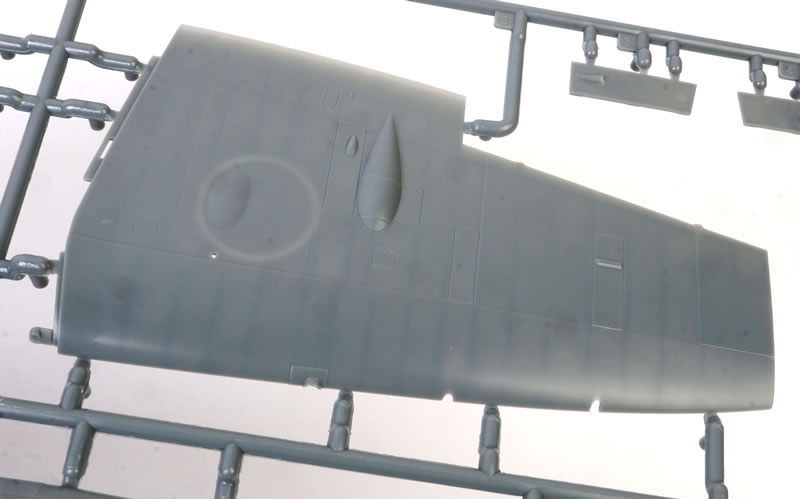
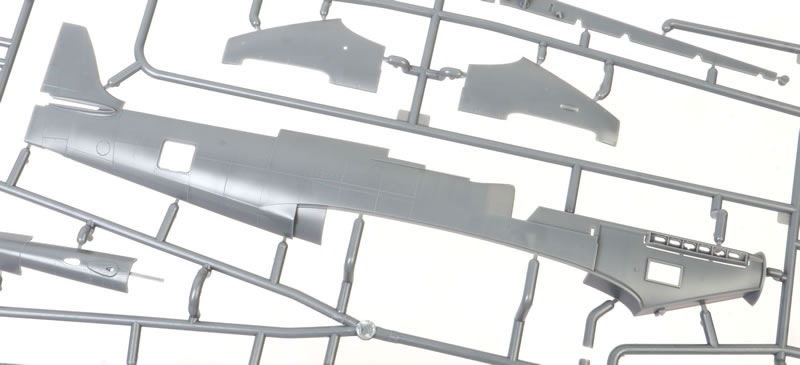
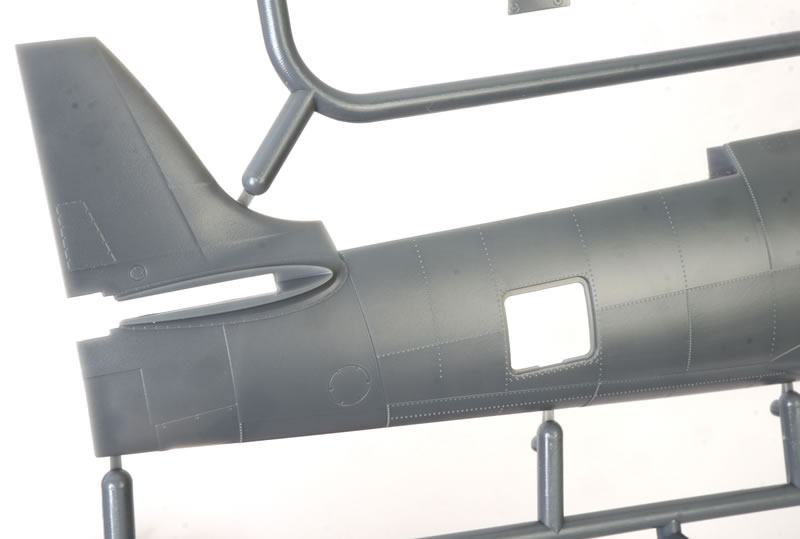
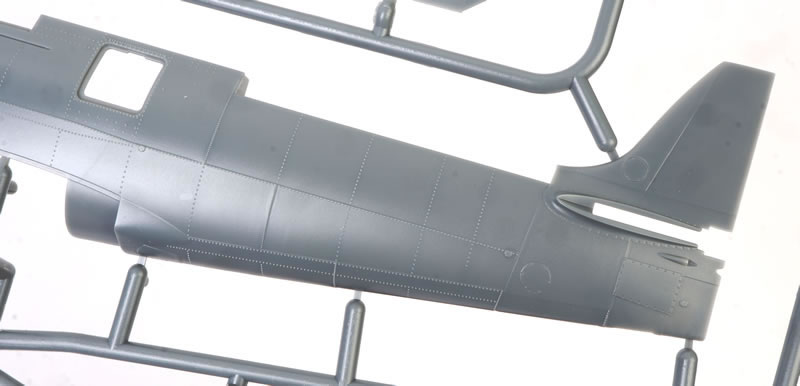
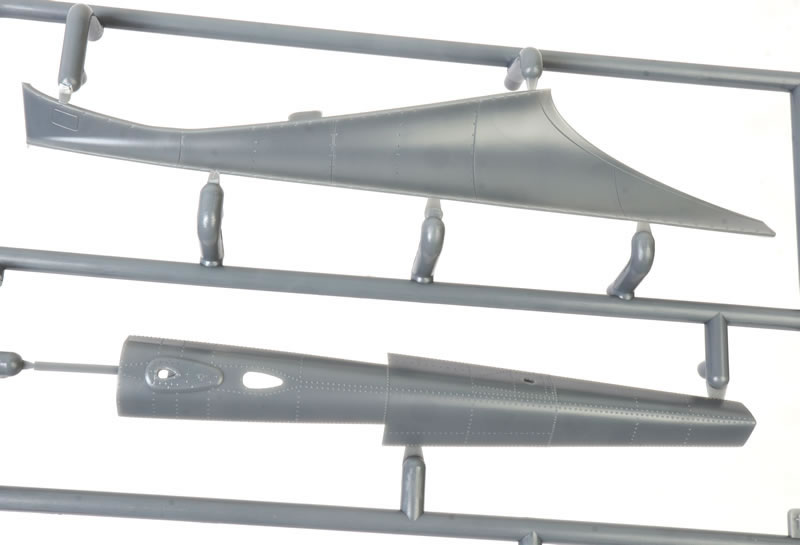
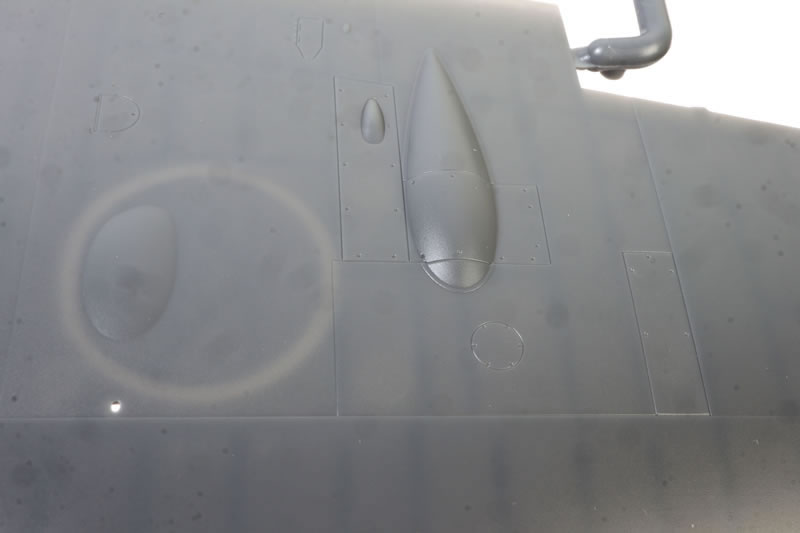
Surface textures are subtle and convincing. A combination of recessed panel lines, recessed fasteners and restrained raised rivets delivers an authentic overall effect. Fabric detail is limited to rows of stitching.
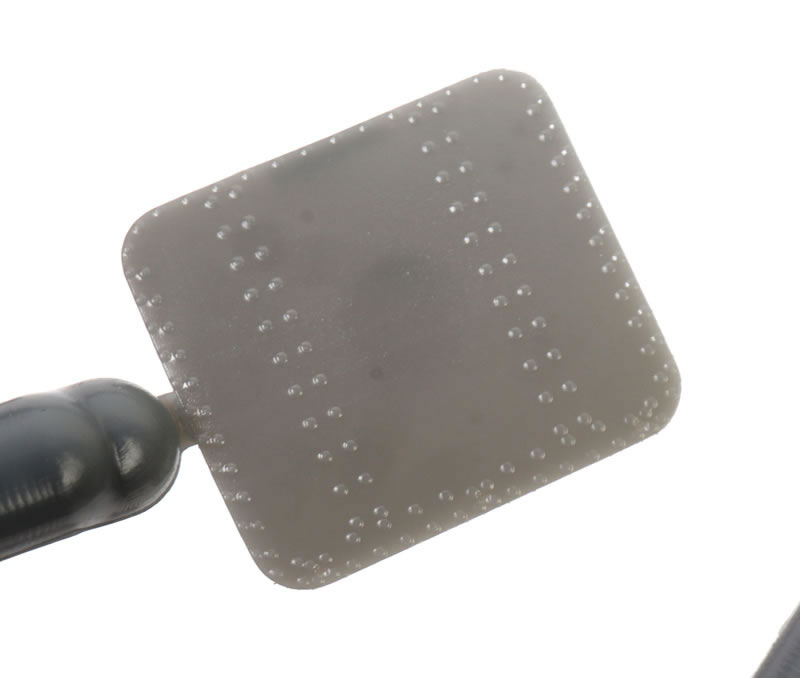
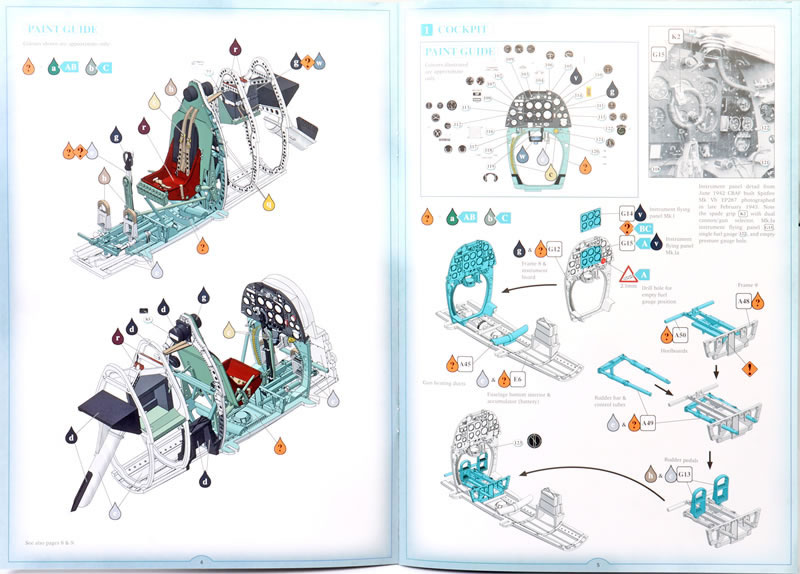
The cockpit is a work of art. The seat, sidewalls and instrument panel are worthy of special mention. The instrument panel is a single solid plastic part, with dial, bezel and switch detail crisply moulded in place. The compass and its mount are integrally moulded at the bottom of the panel. Decals are supplied for the dial faces in singles, pairs and trios.
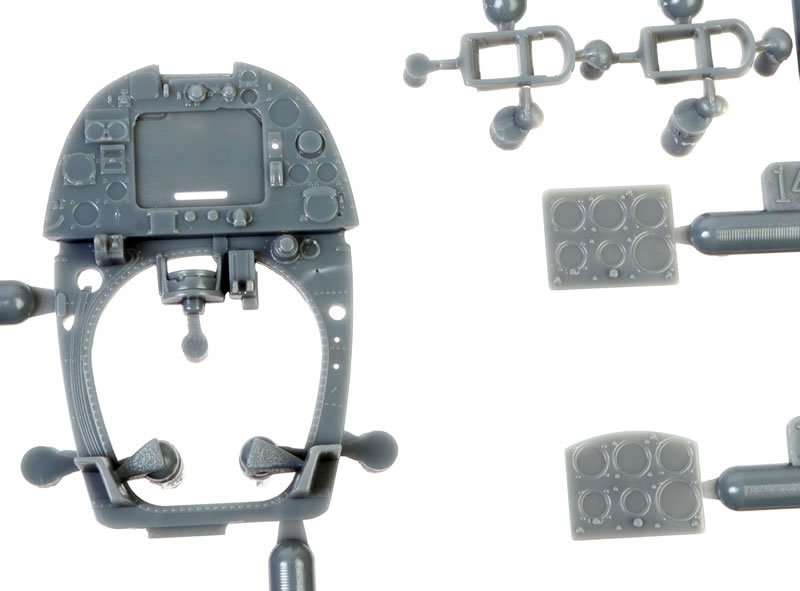
I particularly like that Kotare provides the option of a seat with moulded-on Sutton harness detail.
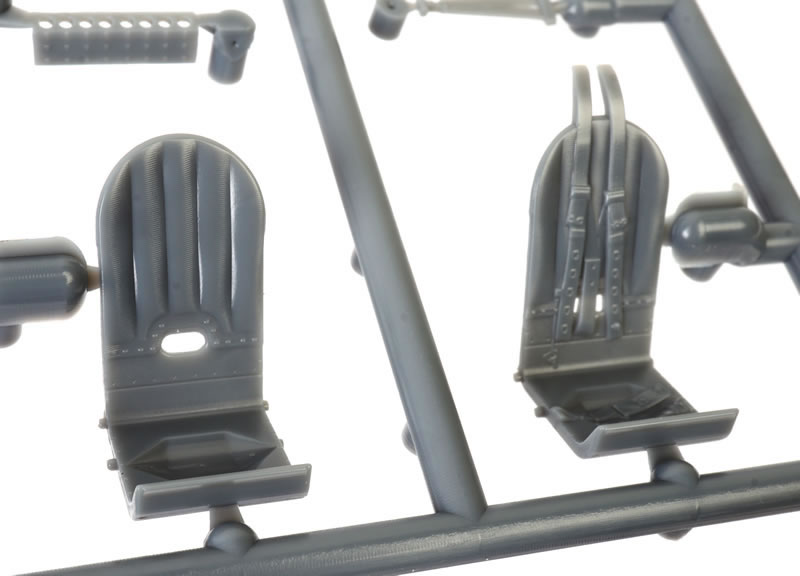
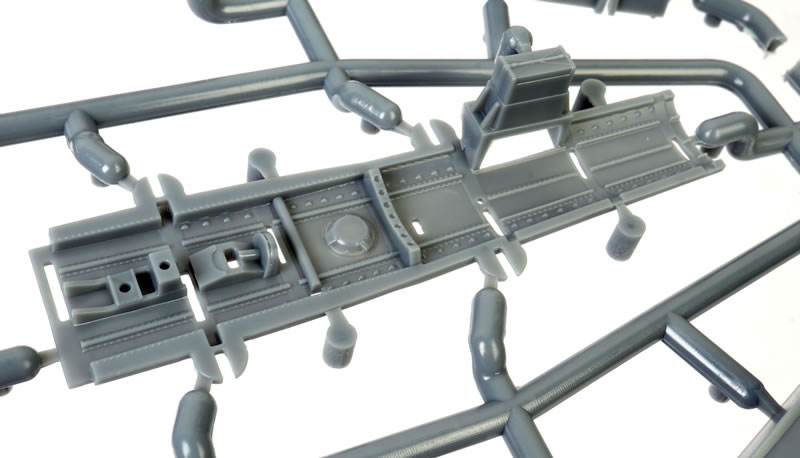
The cockpit floor accurately depicts the Spitfire's distinctive bottomless, multi-layered structure. The control column is a separate part, allowing it to be posed to taste. There is also plenty of detail moulded into the fuselage interior aft of the pilot's position.
Another thoughtful touch is the inclusion of a rigging guide for the rudder, aileron and elevator control cables, undercarriage retraction cables, and the attachment line for the shoulder harness mount.
The instructions discuss interior finishes in some depth, including two full pages dedicated to cockpit colours.
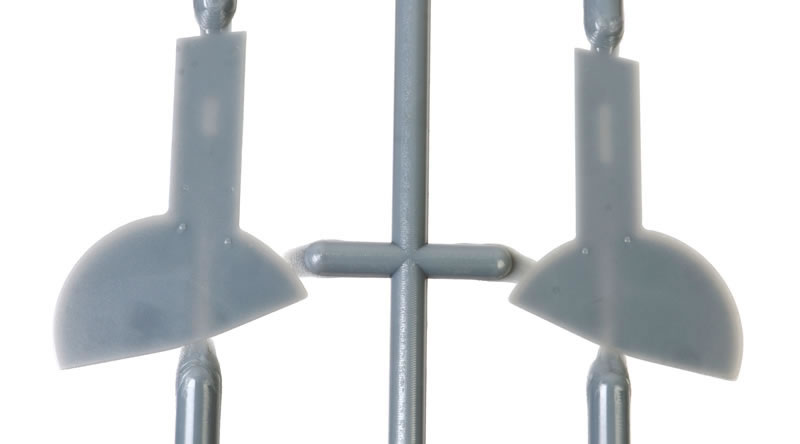
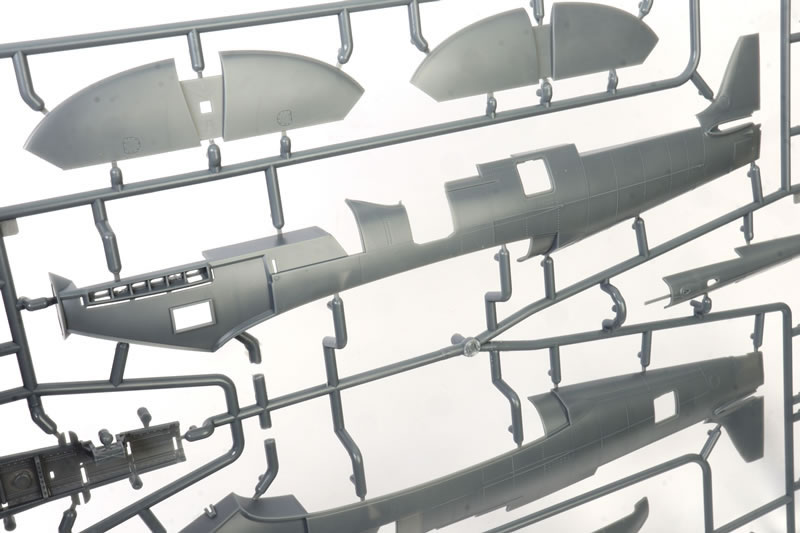
The fuselage features a number of separate inserts and hatches, including the accumulator door, wireless access hatch, engine cowlings and a separate spine. These elements allow for multiple variants to be produced now and, presumably, in the future. The cockpit door may be posed open or closed.
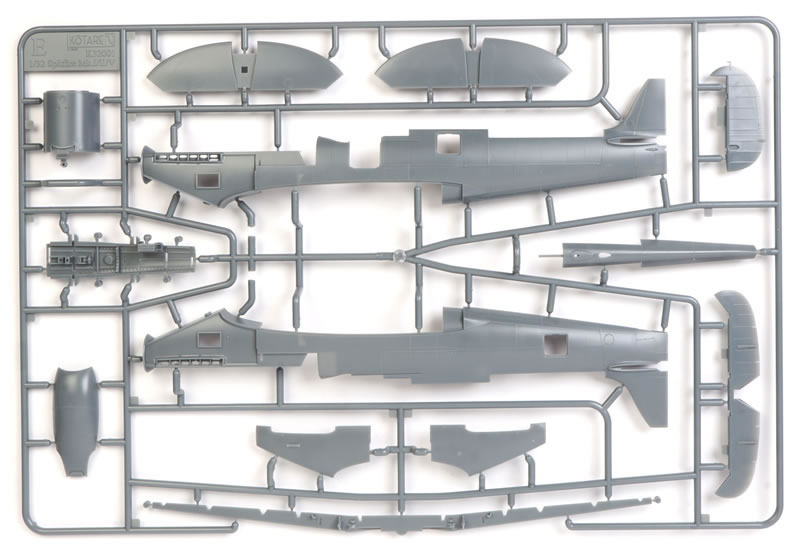
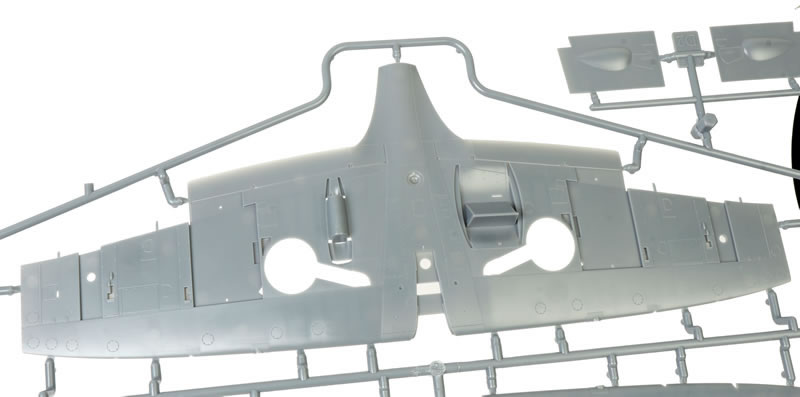
The wings are broken down conventionally, with a full-span lower wing and separate port and starboard upper panels. A long wing spar ensures the correct dihedral. The wheel well walls are moulded as single parts for each side.
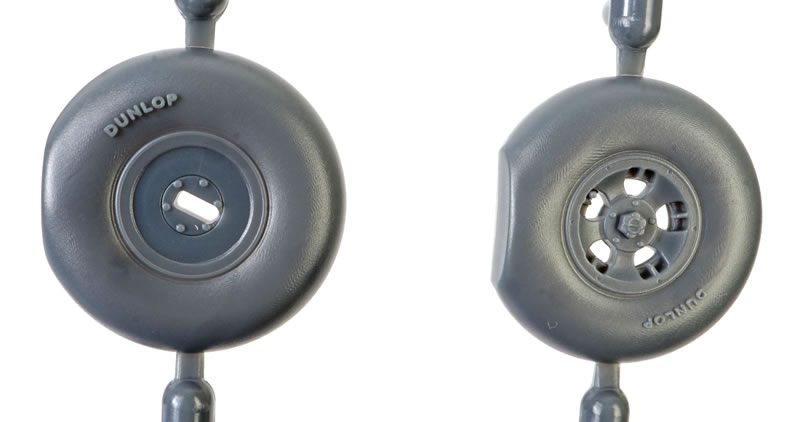
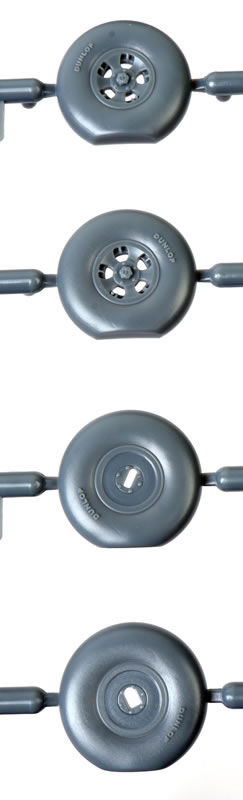
The five-spoke main wheels are supplied in two parts each-no vinyl, thankfully. They are convincingly bulged and flattened, and keyed to ensure the flat spot sits correctly on the ground.
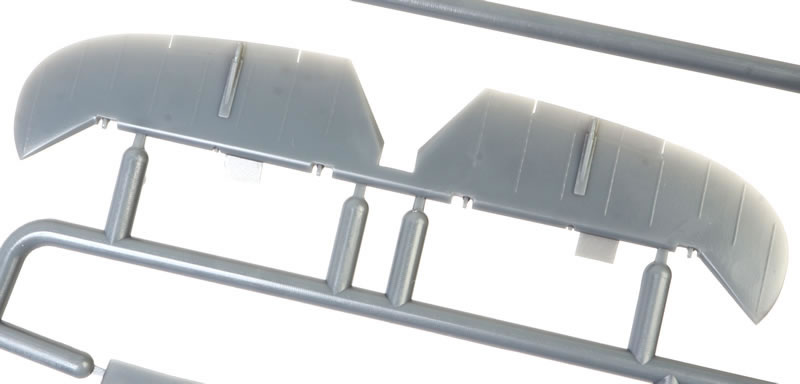
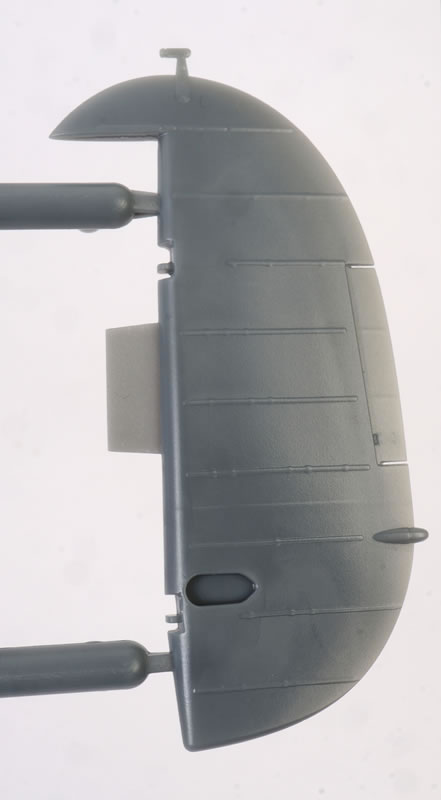
The wing fillets are separate parts, as are the ailerons, elevators and rudder. The rudder and elevators include locating tabs, which may be removed if you prefer to pose these control surfaces deflected.
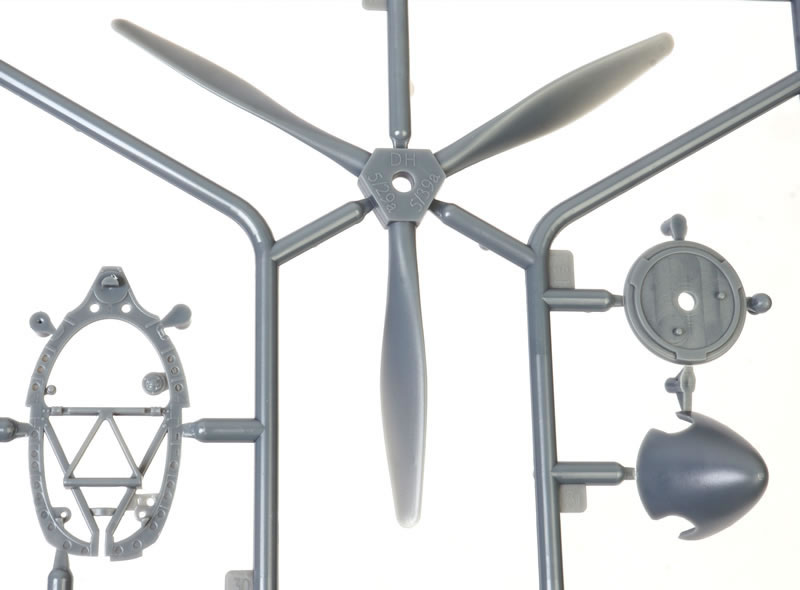
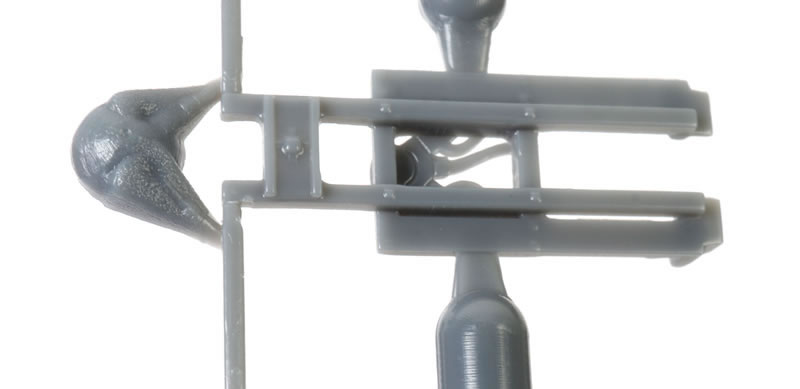
The kit offers a choice of de Havilland or Rotol spinner and propeller assemblies. The propellers are moulded as single pieces with the pitch already set. Mirror and TR.1133 aerial mast are also included.
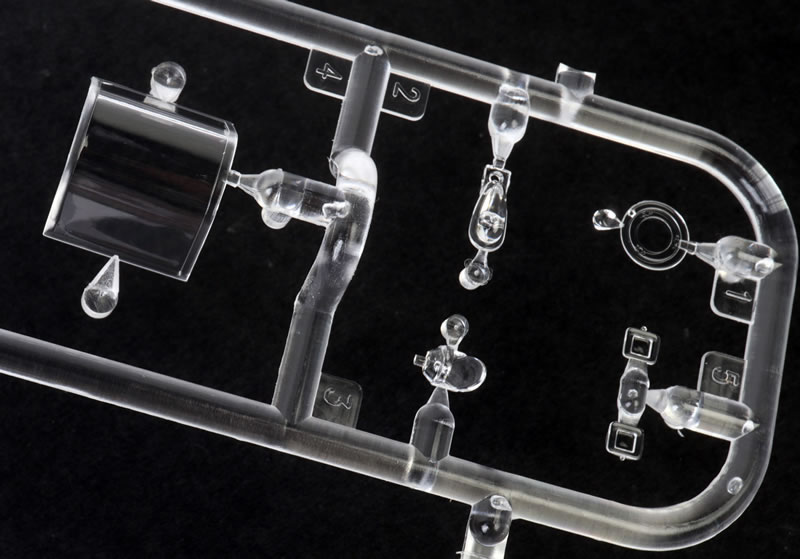
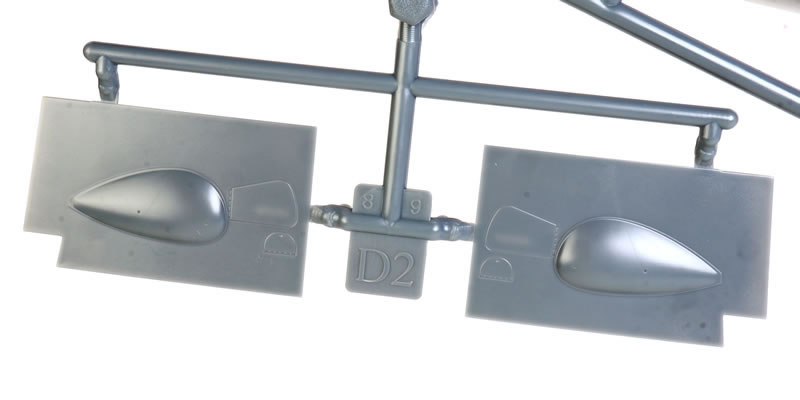
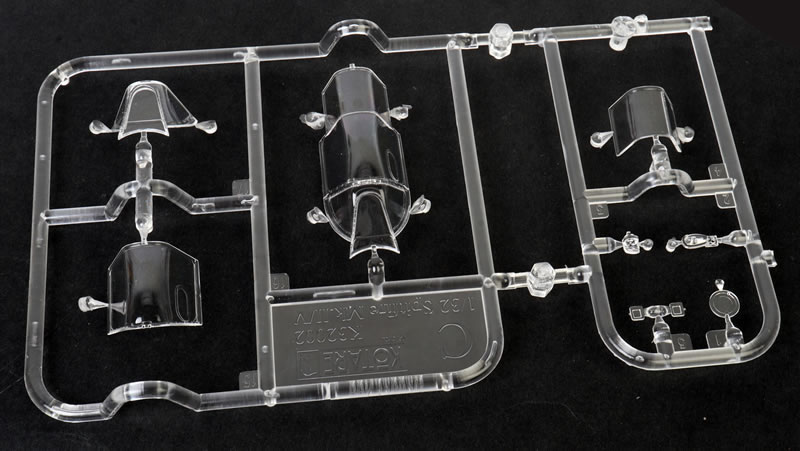
The clear parts are thin and free from distortion.
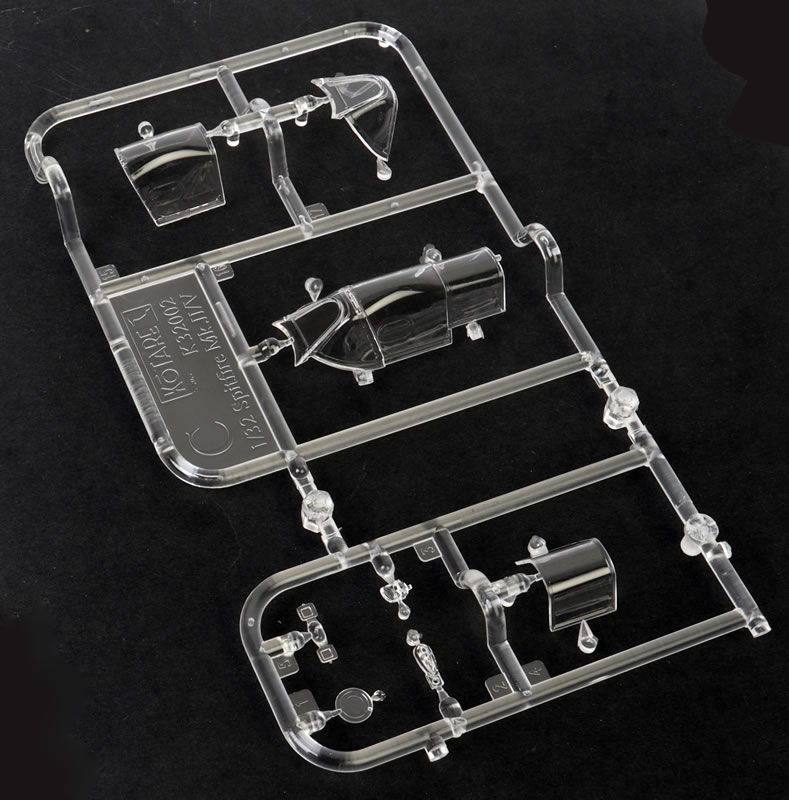
New clear components include the de-icing windscreen and the canopy hood with Martin-Baker jettison system. The canopy may be posed closed using a single piece, or open using separate windscreen, sliding section and rear hood. In both cases, the external armoured glass is moulded integrally with the windscreen.
Instructions and Markings
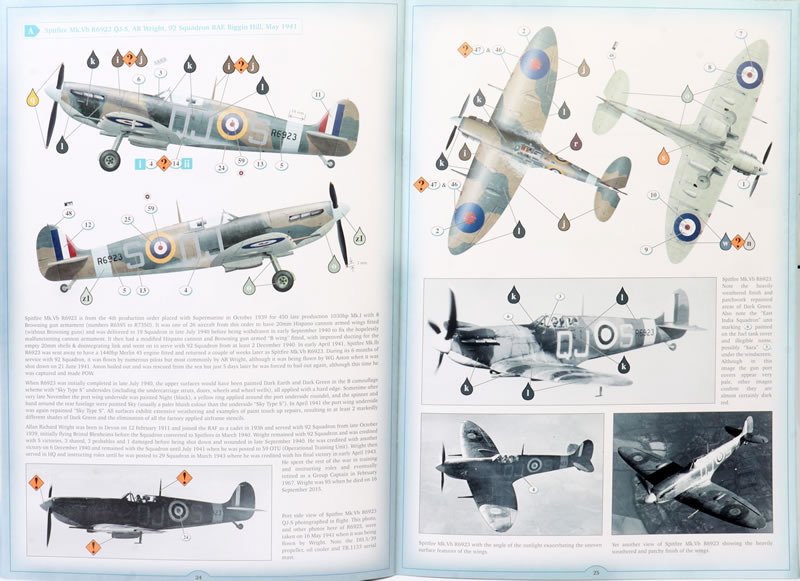
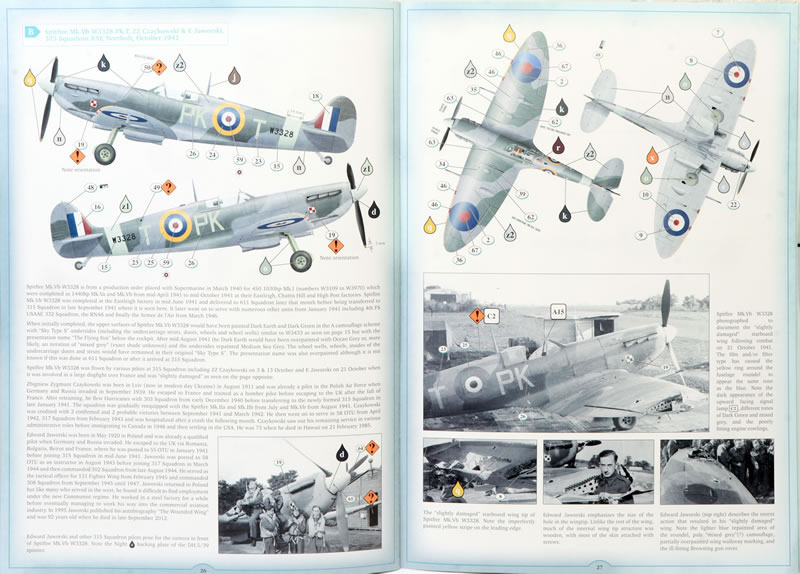
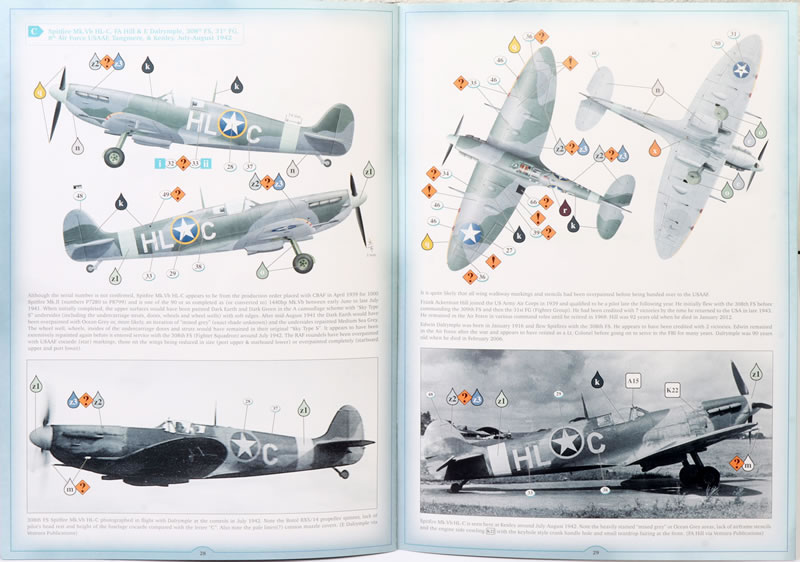
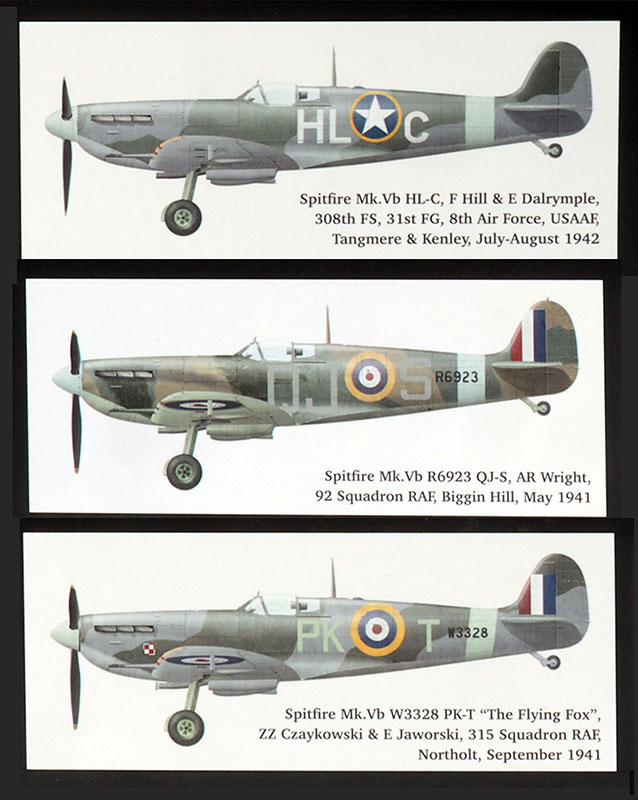
The instructions are as much an educational as they are assembly directions. Numerous detail notes are supplemented by well-captioned reference photos and illustrations throughout. The 32-page full-colour A4 booklet covers assembly in 15 stages and includes four-view colour profiles, reference photos and notes for each of the three marking options, a stencil placement guide and additional reference material.
The marking options are:
-
Spitfire Mk.Vb R6923 QJ-S, AR Wright, 92 Squadron RAF, May 1941
-
Spitfire Mk.Vb W3328 PK-T, ZZ Czaykowski & E Jaworski, 315 Squadron RAF, October 1941
-
Spitfire Mk.Vb HL-C, FA Hill & E Dalrymple, 308th FS, 31st FG, 8th Air Force USAAF, July-August 1942
The large, glossy decal sheet provides markings for all three aircraft, along with stencils, instrument panel decals and nicely leading-edge machine-gun patches. Registration and colour saturation are excellent on my sample. Another nice addition s a set of red, blue, white and yellow plain decals in case you need to patch up any damaged decals.
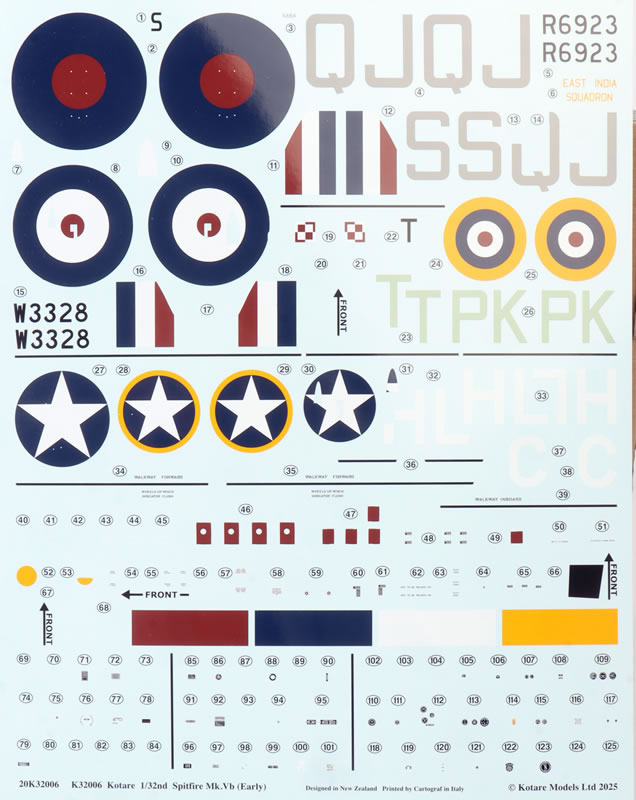
The decals are printed by Cartograf, another sure indicator of quality.
Kotare’s 1:32 scale Spitfire Mk.Vb (Early) continues the company’s impressive run of form and builds confidently on the strengths of their earlier Mk.I releases. The restrained parts count, intelligent engineering and consistently high moulding quality combine to produce a kit that is both a pleasure to examine in the box and is clearly designed to be built.
Surface textures are subtle and convincing, the cockpit is outstanding straight from the box, and the inclusion of thoughtful features such as rigging guides, variant-specific parts and clear, well-researched instructions reflects Kotare’s deep understanding of the subject and of modellers’ needs. Importantly, none of this complexity is forced upon the builder; choices are logical, optional, and clearly explained.
This is not a kit that relies on sheer parts count to impress. Instead, it will reward careful assembly and painting, offering an accurate, well-detailed Spitfire Mk.Vb without gimmicks or needless complication. Whether built straight from the box or used as the foundation for super-detailing, Kotare’s Spitfire Mk.Vb (Early) is an outstanding addition to their 1:32 Spitfire family.
Highly Recommended.
*New parts summary from Kotare Models’ website.
Thanks to Kotare Models for the sample
Text and Images Copyright © 2026 by Brett Green
Page Created 27 January, 2026
Last updated
27 January, 2026
Back to HyperScale Main Page
Back to Reviews Page
|
 Home
| What's New |
Features |
Gallery |
Reviews |
Reference |
Forum |
Search
Home
| What's New |
Features |
Gallery |
Reviews |
Reference |
Forum |
Search